Big Think
@bigthink·8.8M subscribers·10.1K videos
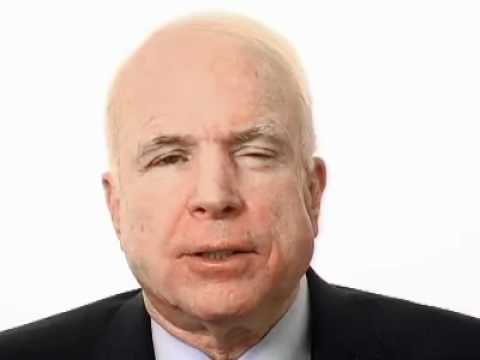
Becoming a Bill Clinton Speechwriter | Michael Waldman | Big Think
Posted
April 24, 2012
Views
471
Likes
5
Engagement
1.06%
April 24, 2012
471
5
1.06%
Every word spoken in this episode is indexed. Type any phrase to jump straight to the moment it was said.
Type any word or phrase that may have been spoken. Click a result to seek the player to that exact moment.
Try a name, a topic, or a quoted line
 6:15Now Playing
Becoming a Bill Clinton Speechwriter
New videos DAILY
Join Big Think Edge for exclusive videos
----------------------------------------------------------------------------------
With four State of the Union Addresses under his belt, Michael Waldman gave Clinton his rhetoric.
----------------------------------------------------------------------------------
Michael Waldman:
Michael Waldman is a nationally prominent public interest lawyer, government official, teacher and writer. He became director of the Brennan Center in October 2005.
Mr. Waldman was Director of Speechwriting for President Bill Clinton from 1995-1999, serving as Assistant to the President. He was responsible for writing or editing nearly 2,000 speeches, including four State of the Union speeches and two Inaugural Addresses. Previously, he was Special Assistant to the President for Policy Coordination (1993-1995). Mr. Waldman was the top administration policy aide working on campaign finance reform, one of the Center's signature issues, and drafted the administration's public financing proposal.
He is the author of several books, including My Fellow Americans: The Most Important Speeches of American Presidents (Sourcebooks, 2003); POTUS Speaks: Finding the Words that Defined the Clinton Presidency (Simon & Schuster, 2000); and Who Robbed America? A Citizens' Guide to the Savings and Loan Scandal (Random House, 1990).
Prior to his government service, Mr. Waldman was the director of Public Citizen's Congress Watch, then the capital's largest consumer lobbying office. After leaving the White House, he was a Lecturer in Public Policy at Harvard University's John F. Kennedy School of Government (2001-2003), teaching courses on political reform, public leadership and communications. Most recently he has been a litigator in private practice in New York. Mr. Waldman appears frequently on television and radio to discuss public policy, the presidency and the law. Michael Waldman is a graduate of Columbia College (B.A., 1982) and New York University School of Law (J.D., 1987), where he was a member of the Law Review.
----------------------------------------------------------------------------------
TRANSCRIPT:
Question: How did you start working for Bill Clinton?
Michael Waldman: Politics is tremendously fun. It’s for young people. It’s for people who have the capacity to work all night, and then work all night again the next night and the night after that. The Little Rock campaign for Clinton was considered very aggressive and very state-of-the-art for the Democrats who were used to getting cuffed around in these elections. And we prided ourselves on responding to charges in the first news cycle, and that was considered a very big deal, but what that means was within 24 hours. Now that was before the Internet. It was really before there were a lot of cable channels. It was before Blackberries. If someone waited 24 hours to respond to a charge or a crisis, they would be committing political malpractice, but back then, it was considered very, very state-of-the-art. And you know campaigns are always full of young people, and even White Houses are always full of young people. What was more unusual for Clinton was there weren’t as many old hands around, so whoever wins next time should pay some close attention to that.
Question: How did you become a speech writer?
Michael Waldman: I didn’t train to be a speech writer and I didn’t start as a speech writer on Clinton’s campaign. I was a lawyer. I was a writer who had written books. I had a policy background. And that’s really the best training to be a presidential speech writer. Clinton made me chief speech writer, not because of my liquid pros. I mean I’m sure I had to be good enough and I’m sure I was, but because he thought I understood his policies. And so I worked on the campaign and my writing caught his eye. He had me work on the first Inaugural and State of the Union Address, but then I went and did other things. I was a policy aid in charge of campaign finance reform for two years, and then became head speech writer during one of these various power struggles, policy intrigue. But when a president speaks, it’s not about the words. It’s not about them sounding good. It’s about the policy. And the presidential speeches are where presidential policy, and personality and politics all come together. That’s part of what made it fun and a great thing to be part of at a young age.
Question: Any favoriate speeches?
Read the full transcript at
Sentinel Indexing in Progress
Metadata and chapters are available. Claim extraction for this episode is pending.
All video content is delivered via YouTube embedded players in accordance with the YouTube Terms of Service. Sentinel provides research tools that promote discovery and accountability across political media.