Big Think
@bigthink·8.8M subscribers·10.1K videos
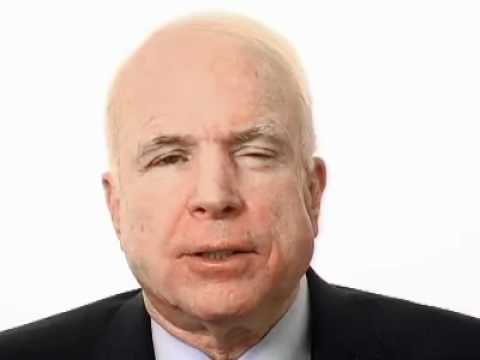
What is America's place in the world? | Peter Thiel | Big Think
Posted
April 24, 2012
Views
1,381
Likes
26
Comments
3
Engagement
2.10%
April 24, 2012
1,381
26
3
2.10%
Every word spoken in this episode is indexed. Type any phrase to jump straight to the moment it was said.
Type any word or phrase that may have been spoken. Click a result to seek the player to that exact moment.
Try a name, a topic, or a quoted line
 3:02Now Playing
What is America's place in the world?
New videos DAILY
Join Big Think Edge for exclusive videos
----------------------------------------------------------------------------------
The U.S. will be in a more competitive situation with other countries than it has been for a very long time.
----------------------------------------------------------------------------------
Peter Thiel:
Peter Thiel is an American entrepreneur, hedge fund manager and venture capitalist. He is Clarium’s President and the Chairman of the firm’s investment committee, which oversees the firm’s research, investment, and trading strategies. Before starting Clarium, Peter served as Chairman and CEO of PayPal, an Internet company he co-founded in December 1998 and was acquired by eBay for $1.5 billion in October 2002.
Prior to founding PayPal, Peter ran Thiel Capital Management , the predecessor to Clarium, which started with $1 million under management in 1996. Peter began his financial career as a derivatives trader at CS Financial Products, after practicing securities law at Sullivan & Cromwell.
In addition to managing Clarium, Peter is active in a variety of philanthropic and educational pursuits; he sits on the Board of Directors of the Pacific Research Institute, the Board of Visitors of Stanford Law School, and is an adviser to the Singularity Institute for Artificial Intelligence. Peter received a BA in Philosophy from Stanford University and a JD from Stanford Law School. He is self-described libertarian and a minority investor in Big Think.
----------------------------------------------------------------------------------
TRANSCRIPT:
Topic: America’s standing the world
Peter Thiel: There’s a very open question about how the U.S. is going to fit in with the rest of the world; how that relationship is going to evolve in the years ahead. And you have a lot of big debates about whether the U.S is a declining power or wether its decline has been way too much foretold and is not at all the case.
I do think it is the case that the U.S. will be moving towards a more competitive situation than it has found itself in for a very long time. And that for much of the 20th century, the U.S. was sort of this unwitting beneficiary of the rest of the world doing crazy things and blowing itself up. Sort of all the smart people fled to the U.S. We had all the factories, and we’re, on a relative basis, in very good shape.
That’s started to change. I think the rest of the world has got a lot of crazy stuff going on in many places; but the absolute insanity level seems to have lessened quite a bit from what it was for much of the 20th century. In that competitive world, it’s likely that we’ll end up with very, very different policies.
One counter-intuitive instance of this is that I don’t think you will have a collapse of the dollar or massive inflation like we had at various parts of the 20th century.
In 1971, when Connelly, the [Richard] Nixon Treasury Secretary, took the dollar off the gold standards, he famously remarked to the press, “Well it’s our money, but it’s the rest of the world’s problem”--because the rest of the world was stuck having no choice but to have dollars.
Now that we’re in a more competitive world – and that includes competition between currencies, dollars, euros, and to a lesser extent pounds, and Swiss francs, or maybe even renminbi in China one day – you will not be able to take that sort of a cavalier policy, and there will be no hyper inflation I think. Instead we’re going to have a much tougher monetary policy.
And that of course suggests that you have all sorts of bubbles. Like the housing bubble in the U.S. at this time is probably a symptom in part of a belief that housing prices always go up. That sort of expectation was bred by this 20th century history of inflation which was structurally linked to a world in which the U.S. wasn’t competing with anybody else.
So I think there are sort of all these ways these big picture things intersect with some smaller ones.
Topic: Boom, bubble, bust.
Peter Thiel: I’ll give you a third example of something where I think is not at all been thought through very carefully, and that I think is a very strange fact about the financial markets.
If you look at the markets over the last quarter century, there have been more booms, and bubbles, and busts than in all of previous history put together. And they’ve been bigger in scope.
So the first big one probably since Japan in the late 1980s where the emperor’s palace was deemed to be worth more than the state of California at the peak.
You had another one in Asia in the mid-90s.
Read the full transcript at
Sentinel Indexing in Progress
Metadata and chapters are available. Claim extraction for this episode is pending.
All video content is delivered via YouTube embedded players in accordance with the YouTube Terms of Service. Sentinel provides research tools that promote discovery and accountability across political media.