Big Think
@bigthink·8.8M subscribers·10.1K videos
Behind the Scenes of the George W. Bush Administration | Big Think
Posted
April 24, 2012
Views
1,591
Likes
13
Engagement
0.82%
April 24, 2012
1,591
13
0.82%
Every word spoken in this episode is indexed. Type any phrase to jump straight to the moment it was said.
Type any word or phrase that may have been spoken. Click a result to seek the player to that exact moment.
Try a name, a topic, or a quoted line
See what was published immediately before and after this episode.
 8:12Now Playing
Behind the Scenes of the George W. Bush Administration
New videos DAILY
Join Big Think Edge for exclusive videos
----------------------------------------------------------------------------------
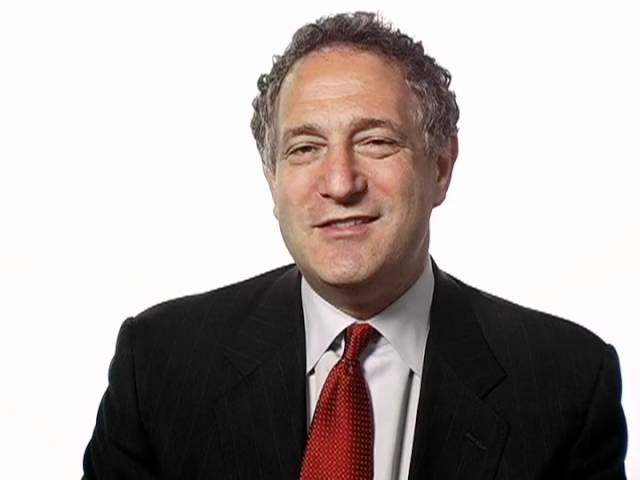
Richard Haass writes about his experiences in his new book, “War of Necessity, War of Choice,” and describes the motivations behind the Iraq War.
----------------------------------------------------------------------------------
Dr. Richard Haass:
Dr. Richard Haass is president of the Council on Foreign Relations, a position he has held since July 2003. He is the author or editor of eleven books on American foreign policy, including War of Necessity, War of Choice: A Memoir of Two Iraq Wars (Simon and Schuster, May 2009). He is also the author of one book on management: The Bureaucratic Entrepreneur: How to Be Effective in Any Unruly Organization (Brookings, 1999).
From January 2001 to June 2003, Dr. Richard Haass was director of policy planning for the Department of State, where he was a principal adviser to Secretary of State Colin Powell. Confirmed by the U.S. Senate to hold the rank of ambassador, Dr. Haass also served as U.S. coordinator for policy toward the future of Afghanistan and U.S. envoy to the Northern Ireland peace process. For his efforts, he received the State Department's Distinguished Honor Award.
Dr. Haass has extensive additional government experience. From 1989 to 1993, he was special assistant to President George H. W. Bush and senior director for Near East and South Asian affairs on the staff of the National Security Council. In 1991, Dr. Haass was awarded the Presidential Citizens Medal for his contributions to the development and articulation of U.S. policy during Operations Desert Shield and Desert Storm. Previously, he served in the Departments of State (1981-85) and Defense (1979-80) and was a legislative aide in the U.S. Senate.
Dr. Haass also was vice president and director of foreign policy studies at the Brookings Institution, the Sol M. Linowitz visiting professor of international studies at Hamilton College, a senior associate at the Carnegie Endowment for International Peace, a lecturer in public policy at Harvard University's John F. Kennedy School of Government, and a research associate at the International Institute for Strategic Studies. A Rhodes Scholar, Dr. Haass holds a BA from Oberlin College and the Master and Doctor of Philosophy degrees from Oxford University. He has received honorary doctorates from Hamilton College, Franklin & Marshall College, Georgetown University, and Oberlin College.
Dr. Richard Haass was born in Brooklyn, New York, in 1951. He lives in New York City with his wife and two children.
----------------------------------------------------------------------------------
TRANSCRIPT:
Question: Did George W. Bush have a grudge against Saddam Hussein?
Richard Haass: I don't believe that. I think one or two of the people in the administration had a thing about Iraq and it was mentioned from time to time and Paul O’Neal if you may recall in his memoir talked about how Iraq was mentioned early on and people around, the Secretary of Defense Mr.Rumsfeld, including the Deputy Secretary Paul Wolfowitz, people around the Vice President Dick Cheney, did mention Iraq intermittently but there was no intensity to it and there was no real opportunity to move with it.
It’s an interesting historical debate whether this administration would’ve gradually found the way over time to do what it did visibly Iraq hadn’t not been for 9/11. It’s possible but it would’ve taken longer and it would’ve been far more difficult to galvanize the support within the administration and beyond. But again, coming back to your basic point pre- 9/11, Iraq was simply not high up on the radar screen.
Question: Did the Bush administration have good intentions when invading Iraq?
Richard Haass:What people felt was the importance of doing this for various principles. It was not in anyway to spread religion. What I believed that motivated George W. Bush had nothing to do with religion in the proselytizing sense or anything like that. What it had to do more than anything else I believe was that he thought that after 9/11 that the United States needed to make a powerful statement to the world.
To use another phrase that Richard Nixon made famous in another context that the United States was not going to be a pitiful helpless giant and for George [W.] Bush and Dick Cheney and Don Rumsfeld and Condoleezza Rice and others, the accomplishment of ousting the Taliban and liberating Afghanistan did not take care of that, it did not send the message that they wanted to. It simply wasn’t big enough.
Read the full transcript at
Sentinel Indexing in Progress
Metadata and chapters are available. Claim extraction for this episode is pending.
All video content is delivered via YouTube embedded players in accordance with the YouTube Terms of Service. Sentinel provides research tools that promote discovery and accountability across political media.