Big Think
@bigthink·8.8M subscribers·10.1K videos
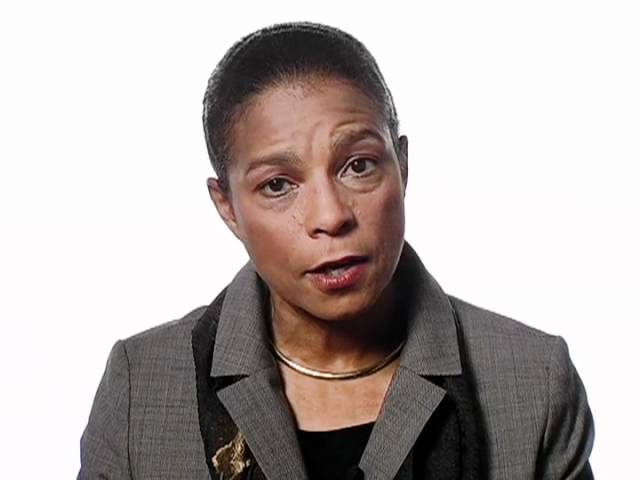
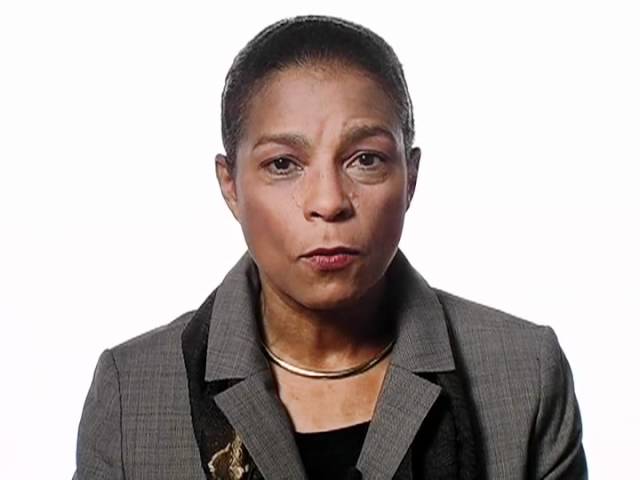
Big Think Interview with Adi Ignatius | Big Think
Posted
April 24, 2012
Views
684
Likes
2
Engagement
0.29%
April 24, 2012
684
2
0.29%
Every word spoken in this episode is indexed. Type any phrase to jump straight to the moment it was said.
Type any word or phrase that may have been spoken. Click a result to seek the player to that exact moment.
Try a name, a topic, or a quoted line
See what was published immediately before and after this episode.
 28:29Now Playing
Big Think Interview with Adi Ignatius
New videos DAILY
Join Big Think Edge for exclusive videos
----------------------------------------------------------------------------------
A Conversation with the Editor-in-Chief of Harvard Business Review
----------------------------------------------------------------------------------
Adi Ignatius:
Adi Ignatius is Editor in Chief of the "Harvard Business Review". Previously, he served as Executive Editor of "Time" and was responsible for the magazine's business and international coverage. Before his career with "Time", Mr. Ignatius served as the "Wall Street Journal's" Beijing Bureau Chief.
----------------------------------------------------------------------------------
TRANSCRIPT:
Question: How did you become interested in the subject of China?
Adi Ignatius: I was lucky enough to have gotten in one of the first commercial tours of China after Carter normalized relations with Beijing in the late ‘70s and, I had about 6 months to prepare and I was thinking -- we all felt like Marco Polo back then -- ''How do I prepare?'' I started taking Chinese lessons and I just absolutely fell in love with Chinese and with China when I made the trip and my career path was forged: qs soon as I graduated from college I went out to Hong Kong and worked for a magazine there and within a few years was ''The Wall Street Journal’s'' bureau chief in Beijing so that was really my passion in those years.
Question: How did you first come in contact with Zhao’s memoirs?
Adi Ignatius: The Zhao Memoir project was a tightly held secret among just a very few of us for more than a year and the person who brought me into it was my co-editor and co-producer in the project, Bao Pu. Bao Pu is a very interesting figure. He’s the son of a very important person in the modern Chinese politics, Bao Tong. Bao Tong was Zhao Ziyang’s primary aide and after the Tiananmen crackdown and killings on June 4th 1989, Zhao, who was the Communist Party secretary, was put in house arrest where he remained for the last 16 years of his life before he died in 2005.
Bao Tong, his aide, actually was sent to prison, under solitary confinement for many of the 7 years that he was away. His son, Bao Pu, is in Hong Kong. He is a U.S. passport holder and became the person who was entrusted with making this project happen.
Zhao, before he died under house arrest, was secretly under the nose of his captors recording 30 hours of tape—his secret journal about what really happened behind the scenes during Tiananmen: how the politburo really interacted with one another, how he tried to stop the crackdown and lost the argument and lost his job for it.
He entrusted a few people to smuggle the tapes out of the country. They eventually made it to Hong Kong where Bao Pu was entrusted with getting it together and making this project happen. He needed somebody like me—a Western journalist who could help polish the language, who could write introductions that would create context for American readers who don’t know all the Chinese history, and to find a publisher.
He brought me into this about a year and a half ago and we had to keep it secret because we have a fear that if the Chinese government knew about this they would squeeze Zhao’s children, most of whom are still in China and are doing business. They would squeeze them to say, ''Do whatever you can to stop this project'' and that would probably have succeeded. Somehow, we managed to keep this a very tightly held secret until publication.
Question: Why was Zhao's story an important story for you to tell?
Adi Ignatius: After the crackdown in 1989, the Chinese government has sort of spun its version of what really happened, what was that movement all about—this was 20 years ago, a whole generation. So there are a lot of young Chinese people who don’t really know the truth about what happened then.
The truth as Zhao describes it is this was not a protest movement that threatened the state or order. In fact, it was almost entirely peaceful, and the people who participated had various reasons for taking part but they were idealistic.
What Zhao’s book makes clear is there was somebody at the highest levels, in fact the highest level, who saw that we did not need to crack down this movement, that there was an energy there that was about making China a better place, helping China’s reforms continue—and people in China don’t realize that. The line that they’re fed now is that there was rebellion, there were some bad people manipulating it, it had to be put down, and any reason will government would do the same thing they did if there was rebellion in their capital.
Read the full transcript at
Sentinel Indexing in Progress
Metadata and chapters are available. Claim extraction for this episode is pending.
All video content is delivered via YouTube embedded players in accordance with the YouTube Terms of Service. Sentinel provides research tools that promote discovery and accountability across political media.