Big Think
@bigthink·8.8M subscribers·10.1K videos
A Sea-Change for Healthcare? | Big Think
Posted
April 24, 2012
Views
260
Likes
1
Comments
1
Engagement
0.77%
April 24, 2012
260
1
1
0.77%
Every word spoken in this episode is indexed. Type any phrase to jump straight to the moment it was said.
Type any word or phrase that may have been spoken. Click a result to seek the player to that exact moment.
Try a name, a topic, or a quoted line
See what was published immediately before and after this episode.
 4:26Now Playing
A Sea-Change for Healthcare?
New videos DAILY
Join Big Think Edge for exclusive videos
----------------------------------------------------------------------------------
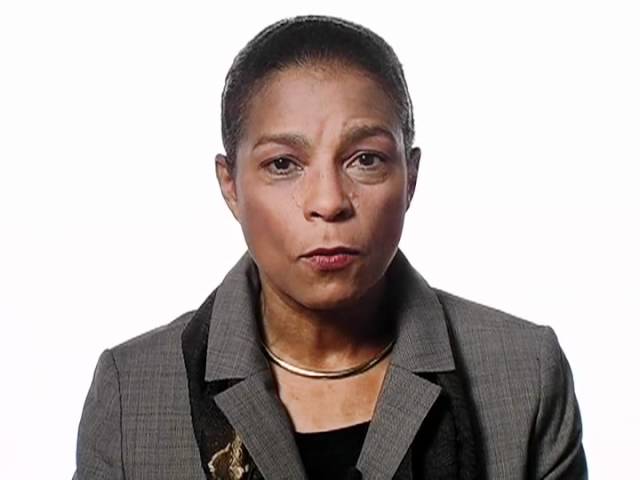
Risa Lavizzo-Mourey, CEO of the Robert Wood Johnson Foundation, implores hospitals to focus more on “ultimate outcomes”–patients getting better and staying healthy.
----------------------------------------------------------------------------------
Risa Lavizzo-Mourey:
Risa Lavizzo-Mourey, M.D., M.B.A., is the fourth president and CEO of the Robert Wood Johnson Foundation, a position she assumed in January 2003. She originally joined the staff in April 2001 as the senior vice president and director, Health Care Group. Prior to coming to the Foundation, Lavizzo-Mourey was the Sylvan Eisman Professor of Medicine and Health Care Systems at the University of Pennsylvania, as well as director of the Institute on Aging. She was the deputy administrator of the Agency for Health Care Policy and Research now known as the Agency for Healthcare Research and Quality within the Department of Health and Human Services. While in government service, Lavizzo-Mourey worked on the White House Health Care Policy team, including the White House Task Force on Health Care Reform where she co-chaired the working group on Quality of Care. Lavizzo-Mourey has served on many federal advisory committees, including the Task Force on Aging Research; the National Committee for Vital and Health Statistics, where she chaired the Subcommittee on Minority Populations; and the President's Advisory Commission on Consumer Protection and Quality in the Health Care Industry. She recently completed work as co-director of a congressionally requested Institute of Medicine study on racial disparities in health care resulting in the publication of Unequal Treatment, Confronting Racial and Ethnic Disparities in Health Care. She is the author of scores of articles and several books. Lavizzo-Mourey is a member of the Institute of Medicine of the National Academy of Sciences. She is the recipient of eight honorary doctorates and numerous other awards, including those received from the Harvard School of Public Health, Department of Health and Human Services, The National Academy of Sciences, American College of Physicians, National Library of Medicine, American Medical Women’s Association, National Medical Association and University of Pennsylvania. Lavizzo-Mourey earned a medical degree at Harvard Medical School, followed by a master of business administration at the University of Pennsylvania’s Wharton School. After completing a residency in internal medicine at Brigham and Women's Hospital in Boston, she was a Robert Wood Johnson Clinical Scholar at the University of Pennsylvania, where she received her geriatrics training.
----------------------------------------------------------------------------------
TRANSCRIPT:
Question: Why are healthcare outcomes sometimes not focused on?
Risa Lavizzo-Mourey:In healthcare, we don’t focus on outcomes. We tend to focus on outputs.
When you go to the doctor it’s all about the visit. When you go to the hospital, it’s about how many days that you are in the hospital. We measure what we do with healthcare in terms of outputs, visits, phone calls, prescriptions, emergency room encounters.
What we really need to do is shift that pivot to the point where we are focusing on the ultimate outcome which patients want desperately--which is to get better and to stay healthy. So by making that shift from outputs to outcomes, I think we will dramatically transform the way that healthcare is perceived by not only patients, but also by doctors and by payers.
When I think about healthcare and the outcomes of healthcare, I like to draw an analogy between an article of clothing and what goes into making that article of clothing. You take a jacket like the one I’m wearing. We want that to fit well, to keep us warm, to do the function that it was intended to do, and we want to pay a reasonable price for it and have it the high value and adorable goods.
If we were to think about healthcare that way, the patient wants a long life and to be healthy and to get a healthcare service that helps him or her do that without paying a lot of extra money to get it.
But if you think about the analogy between the coat, it is almost as if in healthcare we are paying for how many sleeves are on the coat or how many buttons are on the coat, or how many collars are on the coat and not whether it fits well and does the job that it’s intended to do.
So what we have to do in transforming the way, as I said, patients, providers and payers think about healthcare, is to get them to focus on those outcomes of care,
Read the full transcript at
Sentinel Indexing in Progress
Metadata and chapters are available. Claim extraction for this episode is pending.
All video content is delivered via YouTube embedded players in accordance with the YouTube Terms of Service. Sentinel provides research tools that promote discovery and accountability across political media.