Big Think
@bigthink·8.8M subscribers·10.1K videos
Big Think Interview with David Wessel | Big Think
Posted
April 24, 2012
Views
498
Likes
3
Engagement
0.60%
April 24, 2012
498
3
0.60%
Every word spoken in this episode is indexed. Type any phrase to jump straight to the moment it was said.
Type any word or phrase that may have been spoken. Click a result to seek the player to that exact moment.
Try a name, a topic, or a quoted line
Episode Timeline
Every episode in order around the one you’re watching — click any card and the page flips straight to it.
 46:22Now Playing
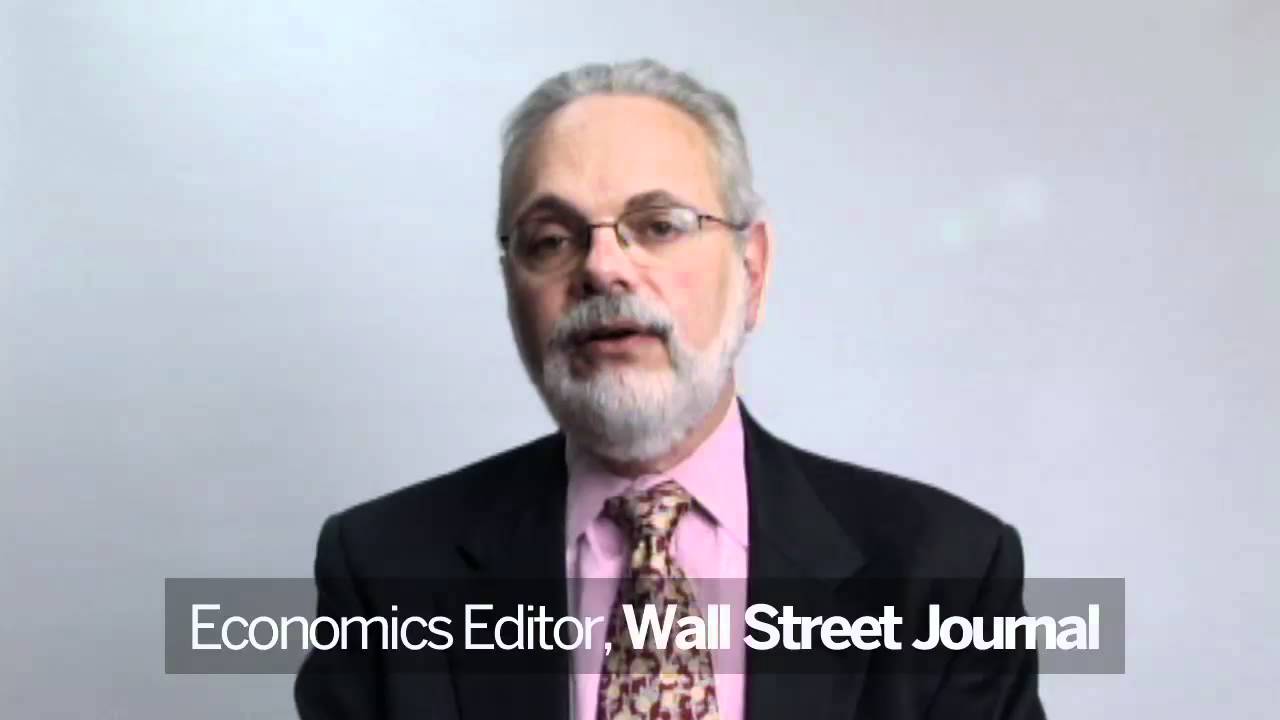
Big Think Interview with David Wessel
New videos DAILY
Join Big Think Edge for exclusive videos
----------------------------------------------------------------------------------
A conversation with the economics editor of the “Wall Street Journal.” This series was made possible by the Charles G. Koch Charitable Foundation.
----------------------------------------------------------------------------------
David Wessel:
David Wessel is economics editor for The Wall Street Journal and writes the Capital column, a weekly look at the economy and forces shaping living standards around the world. He is responsible for overseeing coverage of the Fed and the Journal’s daily coverage of the macro economy, global trade and economic trends. He appears frequently on National Public Radio.
His book, “In Fed We Trust: Ben Bernanke’s War on the Great Panic,” was published August 4, 2009.
Previously, Mr. Wessel was deputy bureau chief of The Wall Street Journal's Washington bureau. David joined The Wall Street Journal in 1984 in Boston, and moved to Washington in 1987. In 1999 and 2000, he served as the newspaper’s Berlin bureau chief.
He previously worked for the Boston Globe, the Hartford (Conn.) Courant and Middletown (Conn.) Press. A 1975 graduate of Haverford College, he was Knight Bagehot Fellow in Business & Economics Journalism at Columbia University in 1980-81.
David has shared two Pulitzer Prizes, one for Boston Globe stories in 1983 on the persistence of racism in Boston and the other for stories in The Wall Street Journal in 2002 on corporate wrong-doing. He is the co-author, with Wall Street Journal reporter Bob Davis, of Prosperity, a 1998 book on the American middle class.
----------------------------------------------------------------------------------
TRANSCRIPT:
Question: Who is most culpable for the crisis, Washington or Wall Street?
David Wessel: I think one of the extraordinary things about this crisis is the list of culprits. Almost no check on the financial system worked. The Bank Risk Management Committees didn't manage risk, the credit rating agencies stamped triple A, Gold Plated status on things that weren't, people made mortgages to people who couldn't pay them back, people got mortgages that couldn't pay them, the regulators were asleep, the financial press did a lousy job even though they tried to call attention to some of the excesses. But while some aspects of the crisis were made in Washington, I think this one really falls more squarely on Wall Street.
This crisis had its roots in an attitude that Washington should get out of Wall Street's way and just let Wall Street do its thing: innovate, and make the world better for us while making a lot of money for them, and that turned out to be a mistake.
Question: Who was responsible for the asset bubble that formed?
David Wessel: As you know, there’s a big argument there. What was the root cause of the bubble? Was it that the Asian economies were saving so much money that they flooded the world with liquidity and as a result everybody that wanted to borrow could borrow whether or not they had something good to do with the money? Or was it the monetary policy of the United States, the Federal Reserve, and some of the other central banks that kept rates artificially low, and that triggered the asset bubble and the borrowing binge?
I think clearly, both played a role. Ben Bernanke, when he was a member of the Federal Reserve Board, blamed very much the savings glut, and I think that underplays the role that the Fed actually played. So, I don’t think that the Fed was wrong, that the savings glut didn’t exist, but I don’t think the that the Fed did everything it could, particularly with its regulatory arm, to prevent the savings glut from turning into a credit bubble.
I think what we’ve learned is quite clear. The Federal Reserve used to believe, and they were explicit about it, that they could not and should not do anything to prick an asset bubble, stock prices, housing prices you name it. Instead, they should wait until a stock or asset bubble of some kind burst and only after it burst should they get into the act and that would be the mop up strategy. The only caveat was that if asset prices were somehow spilling over into the prices of goods and services, then maybe there was a case for the Fed to raise interest rates.
But Ben Bernanke himself had said that that view needs to be re-examined as a result of this devastating recession caused by the bursting of the housing and credit bubble.
Read the full transcript at
Sentinel Indexing in Progress
Metadata and chapters are available. Claim extraction for this episode is pending.
All video content is delivered via YouTube embedded players in accordance with the YouTube Terms of Service. Sentinel provides research tools that promote discovery and accountability across political media.