Big Think
@bigthink·8.8M subscribers·10.1K videos
Big Think Interview With Katherine Shear | Big Think
Posted
April 24, 2012
Views
627
Likes
6
Engagement
0.96%
April 24, 2012
627
6
0.96%
Every word spoken in this episode is indexed. Type any phrase to jump straight to the moment it was said.
Type any word or phrase that may have been spoken. Click a result to seek the player to that exact moment.
Try a name, a topic, or a quoted line
Episode Timeline
Every episode in order around the one you’re watching — click any card and the page flips straight to it.
 32:27Now Playing
Big Think Interview With Katherine Shear
New videos DAILY
Join Big Think Edge for exclusive videos
----------------------------------------------------------------------------------
TRANSCRIPT:
Big Think Interview With Katherine Shear
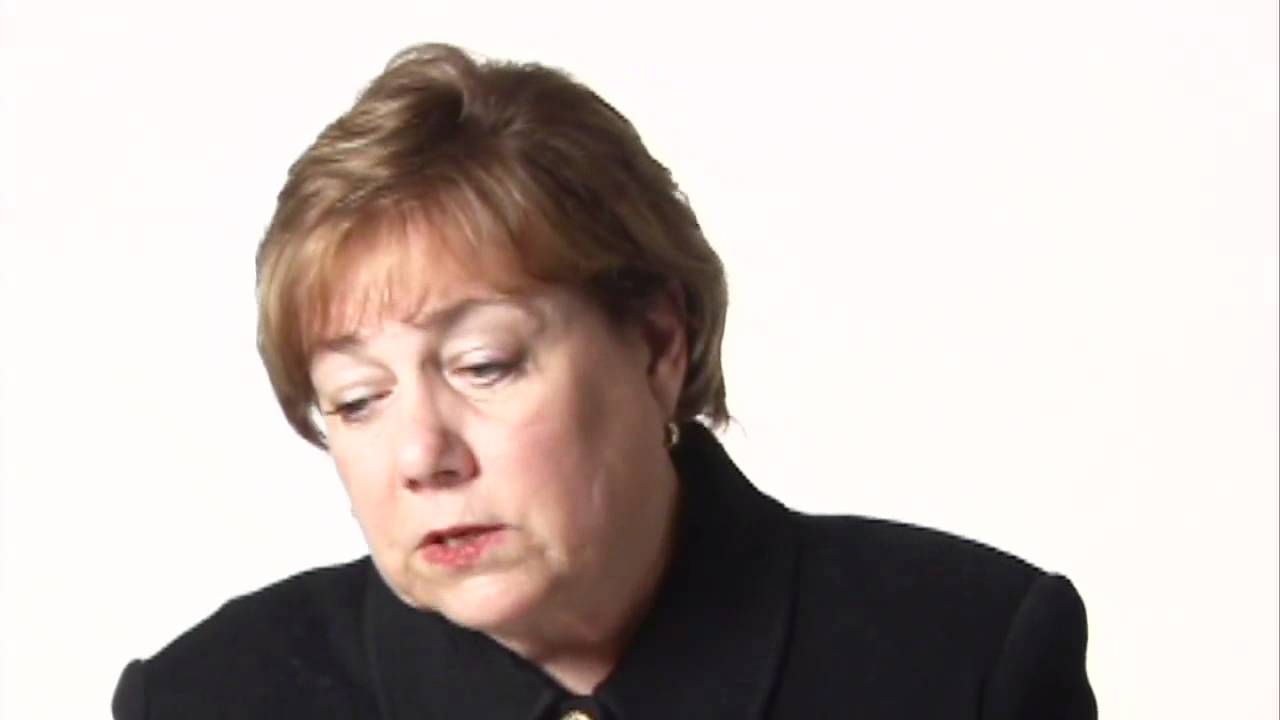
Dr. Katherine Shear: My name is Dr. Katherine Shear. And I am Professor of Psychiatry at Columbia University School of Social Work and Columbia College of Physicians and Surgeons.
Question: What propelled you into psychiatry?
Dr. Katherine Shear: Well, I basically was always interested in human behavior. And I sort of thought about majoring in English, but then I had an interest in science, so somehow I ended up in medical school and psychiatry just drew me. And then my specialty is really psychotherapy research. And that, I got interested in because I was very interested in psychotherapy, but at the time that I trained to do it, it was not very well defined, psychotherapy, and it hadn't been tested. There was no scientific basis for it. And since I was very interested in science, I thought it would be – I just felt, again, sort of impelled to try to figure out what works and if it works and what works and how it works and things like that.
Question: Do you have firsthand experience with depression or grief?
Dr. Katherine Shear: Well, let's see. I've certainly had experience with grief in basically both of my parents died. And then also, I lost a cousin who I was quite close to when she was 39 and I think I was about in my early 30s at that point. So I learned different things from each of those experiences. What I learned from my cousin's death, which was very surprising to me, was that in a strange sort of way, after she died, I actually started to feel more comfortable with death, which, if you had asked me before that, I would have said the opposite would have happened. But something about, you know, I just started having these thoughts every once in awhile that because my cousin's name was Jackie and because Jackie was there, somehow it would be okay for me to be there, too, or for other people to be there. So that was something I think I brought with me over the years without really thinking that much about it until I got interested in grief.
And then when my parents died, that was a very different experience. And there I had the opportunity to – again, people I was very, very close to – and I was involved in their care at the end of their lives and I was with them at their bedside, both of them, when they died. So that gave me, you know, a different kind of insight into what it feels like to be in that situation. I think, in particular, even though both of them were quite ill but they time they died, the very strong since of disbelief that you have very initially right after someone dies. And also, as prepared in the sense as I was for their death, each of them, the emotions were very, very strong for a period of time after that.
Question: Do your patients' cases ever move you personally?
Dr. Katherine Shear: Well, of course, you know I am a psychotherapist. And by definition, I think I'm a person – and most of us are – who are very moved by the people that we work with. So I would say pretty much everyone that I've worked with has touched me emotionally. And it's a very good question because I think that is one of the ways that we learn about people and how to work with people, is that we are open emotionally to people in our work with them and so we learn emotionally about them. And you're right; far beyond anything that we could learn by collecting the reading skills that we do collect and some of the more I guess scientific research.
Question: What triggers a panic attack?
Dr. Katherine Shear: So what triggers a panic attack is – I'm hesitating because there's sort of two main models of this. I mean, one is that – I guess both of them center on the idea that everyone, you know, is capable of having a panic attack. If a tiger suddenly ran into the room, you would probably have a panic attack. And so that means that we have the brain circuitry to have a panic attack. And the idea is that the circuitry is meant to be triggered by actual immediate danger. And people who have clinical panic attacks have those attacks when there is no real danger. And so what we think is the trigger is more easily set off, so to speak.
Now, what sets it off? It can almost be like a loose wire. You can think of it as a loose wire in your fire alarm system or something. So sometimes it can just set off. But a lot of times, there's a lot of evidence that what triggers a panic attack is an actual bodily sensation of the sort that you have when you have anxiety. So if you think about adrenalin rush, you have heart palpitations; you get a little short of breath, you feel a little shaky, sweaty.
Read the full transcript at
Sentinel Indexing in Progress
Metadata and chapters are available. Claim extraction for this episode is pending.
All video content is delivered via YouTube embedded players in accordance with the YouTube Terms of Service. Sentinel provides research tools that promote discovery and accountability across political media.