Big Think
@bigthink·8.8M subscribers·10.1K videos
Big Think Interview with Gavin Friday | Big Think
Posted
April 24, 2012
Views
21,831
Likes
329
Comments
49
Engagement
1.73%
April 24, 2012
21,831
329
49
1.73%
Every word spoken in this episode is indexed. Type any phrase to jump straight to the moment it was said.
Type any word or phrase that may have been spoken. Click a result to seek the player to that exact moment.
Try a name, a topic, or a quoted line
Episode Timeline
Every episode in order around the one you’re watching — click any card and the page flips straight to it.
 30:43Now Playing
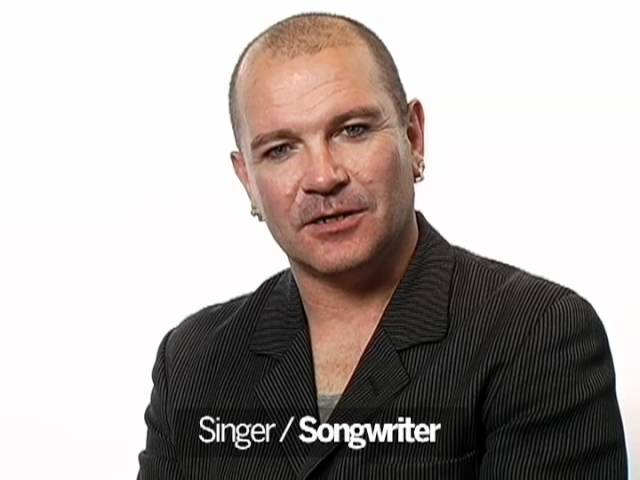
Big Think Interview with Gavin Friday
New videos DAILY
Join Big Think Edge for exclusive videos
----------------------------------------------------------------------------------
A conversation with the Irish musician.
----------------------------------------------------------------------------------
Gavin Friday:
Gavin Friday was born in Dublin on October 8, 1959 and founded the band Virgin Prunes in 1977. In 1986 Gavin briefly abandoned music to paint, which culminated in the 1988 exhibition entitled ‘I didn’t come up the Liffey in a bubble’ at Dublin’s Hendriks Gallery. From 1987 to 2005 Friday composed and performed with pianist Maurice Roycroft (The Man Seezer). ‘Each Man Kills the Thing He Loves’ (1989), their compelling moody debut produced by Hal Willner, explored the world of Brel (whose song ‘Next’ is covered on the album), Piaf, Brecht and Weill. The follow up was 1992’s ‘Adam ‘N’ Eve.’
In Summer 1999, Gavin travelled to Kosovo on behalf of the charity Concern, to film a documentary highlighting to plight of Kosovan refugees. ‘Artists for Kosovo’, a slide-show of work by renowned Irish artists set to Friday/Seezer music opened in Dublin’s Temple Bar. Later that year the video documentary ‘Three Wishes For Kosovo’ was completed and Gavin’s children’s charity project for Kosovo, ‘Muc the flying piggy bank’ was launched. The project encouraged kids in schools around Ireland to set up their own collections for the charity.
Gavin Friday's film work includes the songs written with Bono for the popular 1993 film ‘In the Name of the Father’. They recorded the title track as well as the Sinead O’Connor sung hit ‘You Made Me the Thief of Your Heart’. In 1996 Friday and Seezer contributed the song ‘Angel’ to the ‘Romeo + Juliet’ soundtrack and wrote their first piece of score for the Australian film ‘Angel Baby’. His subsequent film scores have included ‘The Boxer’ (1998), ‘Disco Pigs’ (2001) and ‘In America’ (2002). In late 2005, Friday and Seezer teamed up with legendary producer Quincy Jones to score the Jim Sheridan directed 50 Cent biopic ‘Get Rich or Die Trying.’ Gavin also performed the surreal and personal one man show ‘I Didn’t Come up the Liffey in a Bubble’ at the Dublin Fringe Festival.
Gavin Friday is currently working on his fourth solo album with writing partner Herb Macken
----------------------------------------------------------------------------------
TRANSCRIPT:
Question: What was it like growing up in Ireland?
Gavin Friday: Well I was born nearly 50 years ago, so I was a child of the '60s basically, which is a real blank. I really started growing up, I think, in the '70s. I'm a glam-rock kid. But Dublin, Ireland in those days was a very dark place, as in it was a very poor, almost third world. Economically, the whole world is going through a recession at the moment. In the '60s, '70s, and the '80s in Ireland was a real recession. It wasn't a pleasant place. It was massive unemployment, we had huge political problems with the north and it was dull and gray. So I formed a band and tried to escape it all.
So it's a great country; a really beautiful, great country, but it's had its troubles. The last 15 years we had one of the biggest economic booms. We became -- overnight, we became almost the wealthiest country in Europe. And last year, the bubble burst. But I think a few bubbles have burst in a few countries. So we are all going through the same things. But let's say Ireland, in the '70s and the '80s was tough, but if you grow up with a tough background it makes you strong.
Question: How has Irish Catholicism influenced you and your work?
Gavin Friday: One of the biggest problems I found with Irish politics and the economic thing was after the war, after World War II, most of the European countries started to develop economically and socially, but whatever way the Catholic church they took a grip and they almost governed the country. I mean, we were almost like a dictatorship. There is good and bad, but we experienced an awful lot of bad, especially from the institutions that taught children the Christian brothers, etcetera. All those stories are all coming out now; not just in Ireland, in Canada, and all over the world. So it was pretty intense. The Catholic church [was] like our Edgar J. Hoover if you know what I mean. They ruled the roost. But it had a huge profound influence on me in that as you get older you realize that you can't blame everything; that there is good and bad, and things get misdirected. So I would call myself a black Catholic. I still have this attraction to it because all religions I'm not a fan of. I'm a fan of sort of belief in spirituality. So I would be into Christ rather than the Catholics
Question: What were your main influences as a child?
Read the full transcript at
Sentinel Indexing in Progress
Metadata and chapters are available. Claim extraction for this episode is pending.
All video content is delivered via YouTube embedded players in accordance with the YouTube Terms of Service. Sentinel provides research tools that promote discovery and accountability across political media.