Big Think
@bigthink·8.8M subscribers·10.1K videos
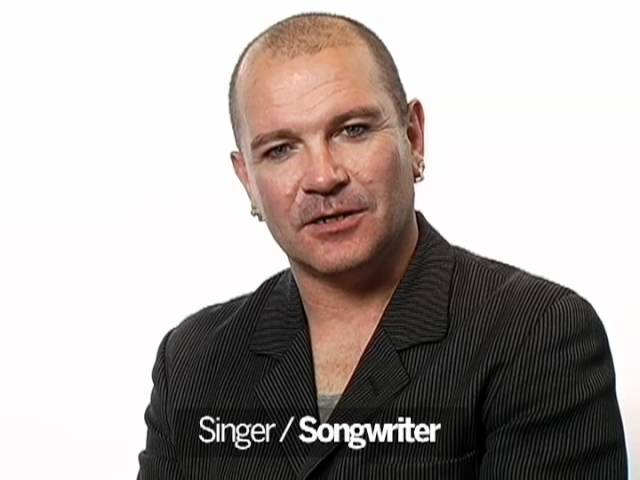
The Rise and Fall of the Irish Muse Gavin Friday | Big Think
Posted
April 24, 2012
Views
220
Likes
3
Comments
1
Engagement
1.82%
April 24, 2012
220
3
1
1.82%
Every word spoken in this episode is indexed. Type any phrase to jump straight to the moment it was said.
Type any word or phrase that may have been spoken. Click a result to seek the player to that exact moment.
Try a name, a topic, or a quoted line
Episode Timeline
Every episode in order around the one you’re watching — click any card and the page flips straight to it.
 6:07Now Playing
The Rise and Fall of the Irish Muse
New videos DAILY
Join Big Think Edge for exclusive videos
----------------------------------------------------------------------------------
Sure, the Celtic Tiger has been great for Ireland’s economy–but what has it done for Irish culture? Musician Gavin Friday is not optimistic.
----------------------------------------------------------------------------------
Gavin Friday:
Gavin Friday was born in Dublin on October 8, 1959 and founded the band Virgin Prunes in 1977. In 1986 Gavin briefly abandoned music to paint, which culminated in the 1988 exhibition entitled ‘I didn’t come up the Liffey in a bubble’ at Dublin’s Hendriks Gallery. From 1987 to 2005 Friday composed and performed with pianist Maurice Roycroft (The Man Seezer). ‘Each Man Kills the Thing He Loves’ (1989), their compelling moody debut produced by Hal Willner, explored the world of Brel (whose song ‘Next’ is covered on the album), Piaf, Brecht and Weill. The follow up was 1992’s ‘Adam ‘N’ Eve.’
In Summer 1999, Gavin travelled to Kosovo on behalf of the charity Concern, to film a documentary highlighting to plight of Kosovan refugees. ‘Artists for Kosovo’, a slide-show of work by renowned Irish artists set to Friday/Seezer music opened in Dublin’s Temple Bar. Later that year the video documentary ‘Three Wishes For Kosovo’ was completed and Gavin’s children’s charity project for Kosovo, ‘Muc the flying piggy bank’ was launched. The project encouraged kids in schools around Ireland to set up their own collections for the charity.
Gavin Friday's film work includes the songs written with Bono for the popular 1993 film ‘In the Name of the Father’. They recorded the title track as well as the Sinead O’Connor sung hit ‘You Made Me the Thief of Your Heart’. In 1996 Friday and Seezer contributed the song ‘Angel’ to the ‘Romeo + Juliet’ soundtrack and wrote their first piece of score for the Australian film ‘Angel Baby’. His subsequent film scores have included ‘The Boxer’ (1998), ‘Disco Pigs’ (2001) and ‘In America’ (2002). In late 2005, Friday and Seezer teamed up with legendary producer Quincy Jones to score the Jim Sheridan directed 50 Cent biopic ‘Get Rich or Die Trying.’ Gavin also performed the surreal and personal one man show ‘I Didn’t Come up the Liffey in a Bubble’ at the Dublin Fringe Festival.
Gavin Friday is currently working on his fourth solo album with writing partner Herb Macken
----------------------------------------------------------------------------------
TRANSCRIPT:
Question: Why do so many successful artists come from Ireland?
Gavin Friday: That's a tough question. We don't have a long of natural resources as a country; we have a very beautiful country. Visually, I mean, everyone goes on about it's green, it's the mountains and the rivers and it's clean and it's not that populated. It is stunningly beautiful, but we've no oil. We've no coal. We've no money. We just have Ireland. But a weird theory I have is we come from a suppressed culture. We're one of the most invaded countries ever. I think the British started it very early, it could be like 800 that decided to come and show us out; and the Danes in the north. We've had a tough time and pretty much a similar culture would be the Jewish culture; they had a pretty hard time. They were being kicked around for a long, long time.
So when that happens, and when people try to take your culture away from you, your essence of your culture becomes stronger. It's like even in Africa. When you see African-Americans, they're stronger because of what they've gone through. It's even subliminal; I think it becomes in their genes. But our language was even taken from us. The Irish Gaelic language was outlawed and the religion was outlawed. Hence the religion later being stronger; stronger to a negative point of view. But our venge was -- I mean if you listen to Irish language, it's very complicated but it's very poetic. To say hello in Ireland is ****, which translated means "Sunshine of God on you." That's a lot nicer than "Hello". Do you know what I mean? And goodbye is ****, which means "It's a wave and may the road rise with you," which is a very well-known phrase. That's a really nice way to say goodbye.
So there was engrained poetry and then when you look back at our history and in the 20th century, the last century, probably the greatest writers of the 20th century were Irish. You go from Beckett to Joyce to **** to Shaw to Oscar Wild; you just go "Jesus, what's going on here?" All these guys and the most famous book in the world could be Ulysses, after the Bible. But that was almost like our revenge on how dare you take our culture from us. So it became our only weapon, was our poetry, our music. And if you listen to Irish music, I think we've --
Read the full transcript at
Sentinel Indexing in Progress
Metadata and chapters are available. Claim extraction for this episode is pending.
All video content is delivered via YouTube embedded players in accordance with the YouTube Terms of Service. Sentinel provides research tools that promote discovery and accountability across political media.