Big Think
@bigthink·8.8M subscribers·10.1K videos
Big Think Interview with Joseph Zuckerman | Big Think
Posted
April 24, 2012
Views
3,491
Likes
48
Comments
4
Engagement
1.49%
April 24, 2012
3,491
48
4
1.49%
Every word spoken in this episode is indexed. Type any phrase to jump straight to the moment it was said.
Type any word or phrase that may have been spoken. Click a result to seek the player to that exact moment.
Try a name, a topic, or a quoted line
 36:28Now Playing
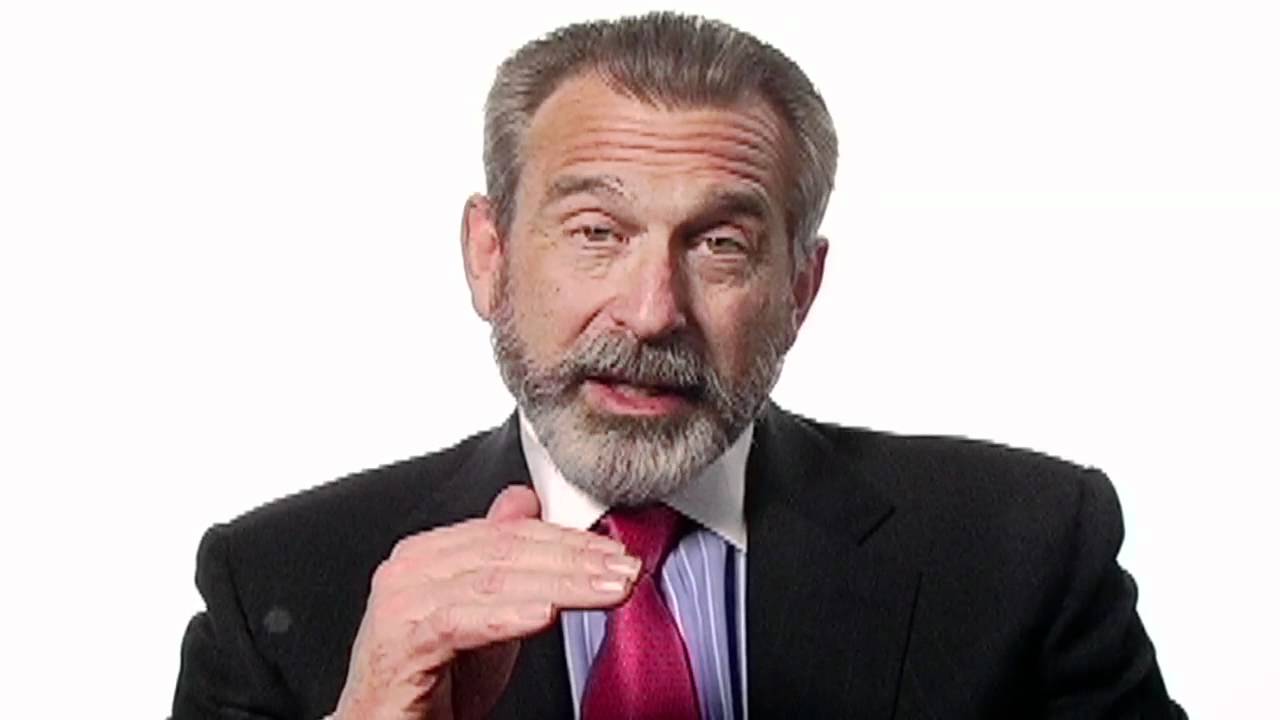
Big Think Interview with Joseph Zuckerman
New videos DAILY
Join Big Think Edge for exclusive videos
----------------------------------------------------------------------------------
A conversation with Professor and Chair of the Department of Orthopaedic Surgery at NYU’s Hospital for Joint Diseases and 2009 President of the American Academy of Orthopaedic Surgeons.
----------------------------------------------------------------------------------
Joseph Zuckerman:
Dr. Zuckerman is chairman of the Department of Orthopaedic Surgery at NYU Hospital for Joint Diseases and the Walter A.L. Thompson professor of orthopaedic surgery at the NYU School of Medicine. He was also elected the 2009 President of the American Academy of Orthopaedic Surgeons.
A graduate of Cornell University in New York and the Medical College of Wisconsin, Dr. Zuckerman completed his internship and residency at the University of Washington and a fellowship at Harvard’s Brigham and Women’s Hospital, in addition to duties as a visiting clinician in shoulder surgery at the Mayo Clinic.
Dr. Zuckerman is recognized internationally as an expert in shoulder surgery and hip and knee replacement. Dr. Zuckerman has served as President of the American Shoulder and Elbow Surgeons and has published over 250 scientific articles. The Orthopaedic Research and Education Foundation (OREF) presented Dr. Zuckerman with its Clinical Research Award in 2002 and he has also received the “Teacher of the Year” Award on five separate occasions from the residents at the NYU Hospital for Joint Diseases.
----------------------------------------------------------------------------------
TRANSCRIPT:
Question: Why did you become a doctor?
Joseph Zuckerman: I remember the specific reasons I wanted to become a doctor. This is going to sound a little foolish maybe, and I've said this numerous times before, but it was the TV show, "Ben Casey." When I was a kid, I guess I as maybe eight, nine, ten, 11, or 12 in that range. I used to watch "Ben Casey." And I thought that he was the absolutely coolest person I ever saw. Right? And he did things for people and he was able to accomplish things, made people better, and sometimes not make people better, but it was a very powerful experience for me as a kid, and it stayed with me. Now, you may recall, at that time, back in the early '60's, there was another doctor show, Dr. Kildaire. So, you had Ben Casey and Dr. Kildaire. I didn't like Dr. Kildaire that much, but I liked Ben Casey. But that's what really kind of turned me on to it.
Now, I'm going to fast-forward 40 years later. My long-time assistant, for my birthday two years ago, got me all of the Ben Casey episodes on DVD. I have to tell you, I watched a number of them and it brought back fond memories. But Ben Casey is not the doctor that I wanted to be. That's for sure. It's a whole different model of being a physician. First of all, he's a Chief Resident of Neurosurgery at a County Hospital, but he seems like he's running the whole hospital. Chief Residents don't run hospitals. In addition, he is the most out of touch, in terms of human emotions and what you have to do to talk to people and recognize their feelings and emotions, that you can imagine. Occasionally, there is this flash of light that you see some empathy or humanity in him, but for the most part, he's just kind of a brooding, stereotypical surgeon. No tolerance for anybody. Yelling at the nurses, it was really not, ultimately not the physician I or anybody else should really be.
Question: What have been the key breakthroughs in your field?
Joseph Zuckerman: Well, I think they come in two areas. First of all, over the last 20 or 30 years, the innovations in treating arthritic joints have been astounding. I mean, basically we now can take arthritic, worn out joints, replace them with artificial joints, and provide patients with 95% or more certainty that they will have a successful result, be relatively pain-free, improve their activity, improve their quality of life. I mean, that's a very powerful thing to do.
Now, keep in mind that orthopedic surgery is a specialty that, for the most part, doesn't deal in life and death situations. We deal with quality of life situations. So, we focus on improving people's quality of life. And whether it be hip replacement or knee replacement, shoulder replacement, or even elbow replacement. These types of procedures take patients who are terribly disabled and allow them to become more mobile, walk, play athletics, do the things that they want to do when they really didn't think it was possible before. So, to me, that's a very powerful thing.
Read the full transcript at
Sentinel Indexing in Progress
Metadata and chapters are available. Claim extraction for this episode is pending.
All video content is delivered via YouTube embedded players in accordance with the YouTube Terms of Service. Sentinel provides research tools that promote discovery and accountability across political media.