Big Think
@bigthink·8.8M subscribers·10.1K videos
Big Think Interview With Marvin Zuckerman | Big Think
Posted
April 24, 2012
Views
5,642
Likes
66
Comments
3
Engagement
1.22%
April 24, 2012
5,642
66
3
1.22%
Every word spoken in this episode is indexed. Type any phrase to jump straight to the moment it was said.
Type any word or phrase that may have been spoken. Click a result to seek the player to that exact moment.
Try a name, a topic, or a quoted line
 23:48Now Playing
Big Think Interview With Marvin Zuckerman
New videos DAILY
Join Big Think Edge for exclusive videos
----------------------------------------------------------------------------------
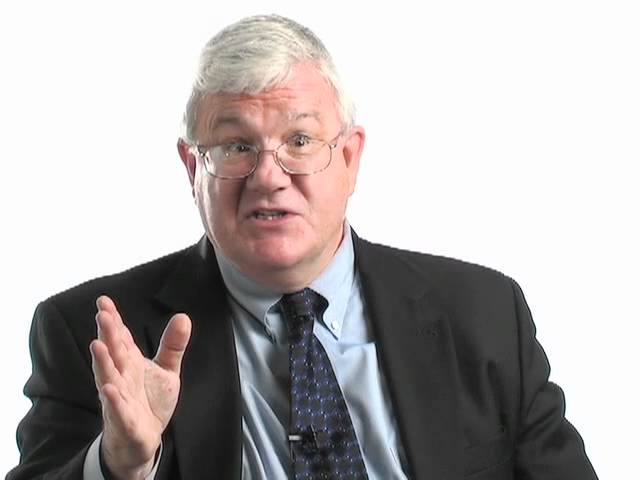
Big Think sits down with the Professor Emeritus at the University of Delaware.
----------------------------------------------------------------------------------
Marvin Zuckerman:
Dr. Marvin Zuckerman is Professor Emeritus at the University of Delaware. His research involves the sensation-seeking trait, affect assessment, and its role in risk-taking behaviors and its biological bases. A fellow of the American Psychological Society, a fellow of its Division of Personality and Social Psychology and a diplomate of the American Board of Examiners in Professional Psychology-Clinical Psychology, Zuckerman has served as president of the International Society for the Study of Individual Differences. He also is a board member of the Delaware Council on Gambling Problems and the Delaware Addictions Coalition.
He is the author of more than 200 articles and book chapters and several books, including Vulnerability to Psychopathology: A Biosocial Model, Psychobiology of Personality and Behavioral Expression and Biosocial Bases of Personality. He also serves on the editorial board of Personality and Individual Differences.
Zuckerman received his bachelor's and doctoral degrees from New York University.
----------------------------------------------------------------------------------
TRANSCRIPT:
Marvin Zuckerman: Marvin Zuckerman, Professor Emeritus, from the University of Delaware.
rn
Question: What is sensory deprivation?
rn
Marvin Zuckerman: Sensory deprivation is where you put people in dark, sound-proof rooms, or water tanks. People were becoming aware that we needed sensation stimulation, variation stimulation almost as much as we need food and water and so forth. It’s a basic need. Deprivation of this kind of stimulation led to some very uncomfortable states.
rn
So we asked, is there a personality trait that some people need more stimulation or more variety or intensity of stimulation than others? That’s when we developed our first sensation-seeking scale. Subsequently that expanded and became the main focus of my research. We were surprised by how many things were affected by this trait, sensation-seeking. Then we got interested in the biological basis, the genetic biological basis and here again, we had some very interesting findings pointing to the fact that this is a very fundamental trait with biological roots.
rn
Question: How much of the sensation-seeking trait is determined genetically?
rn
Marvin Zuckerman: Well this is determined from twin studies called Biometrics of Behavior Genetics actually. Using these twin studies we initially found that roughly 60% inheritability. In heritability is the proportion of the variance in a trait that is determined by genetics. We discovered there was 60% -- which is very high for a personality trait which generally runs between 30% and 50%. So, 60% is high for a personality trait. Well, it’s higher for intelligence and some other traits. This was established not only using twins raised together but twins raised apart showing that it wasn’t due to the fact of sharing a stimulating environment let’s say. There’s an environmental aspect of the remaining 40%, **** error of measurement, but some of it is due to environment. But it’s not the shared; what we called the shared environment, shared in the family. It’s due to the non-shared environment which means your friends, peers or your unique life experiences that you don’t share with other people in your family.
rn
Question: Was sensation-seeking a factor in human evolution?
Read the full transcript at
Sentinel Indexing in Progress
Metadata and chapters are available. Claim extraction for this episode is pending.
All video content is delivered via YouTube embedded players in accordance with the YouTube Terms of Service. Sentinel provides research tools that promote discovery and accountability across political media.