Big Think
@bigthink·8.8M subscribers·10.1K videos
Big Think Interview With Josh Ruxin | Big Think
Posted
April 24, 2012
Views
297
Likes
5
Engagement
1.68%
April 24, 2012
297
5
1.68%
Every word spoken in this episode is indexed. Type any phrase to jump straight to the moment it was said.
Type any word or phrase that may have been spoken. Click a result to seek the player to that exact moment.
Try a name, a topic, or a quoted line
See what was published immediately before and after this episode.
 20:41Now Playing
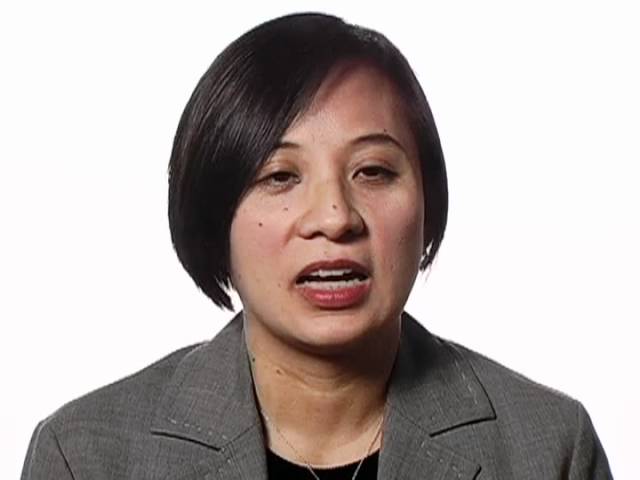
Big Think Interview With Josh Ruxin
New videos DAILY
Join Big Think Edge for exclusive videos
----------------------------------------------------------------------------------
A conversation with the Assistant Clinical Professor of Public Health, Columbia University.
----------------------------------------------------------------------------------
Dr. Josh Ruxin:
Dr. Josh Ruxin is an Assistant Clinical Professor of Public Health at the Mailman School of Public Health at Columbia University and Founder of Rwanda Works.
Dr. Ruxin's work focuses on comprehensive approaches to fighting poverty with emphasis on scaling up national health programs and investing in Rwanda’s private sector. He is based in Rwanda where he directs several initiatives including Rwanda Works and the Millennium Village Project.
----------------------------------------------------------------------------------
TRANSCRIPT:
Card: How has Rwanda improved health care outcomes?
Josh Ruxin: There are still enormous challenges for public health. There are many health centers in the country which lack running water, which lack electricity, and perhaps most importantly which lack the management that’s required to deliver good quality health care.
Let me just give you one quick example of that. There are health centers which I frequently visit where there might only be three or four staff with a little bit more than high school education who are expected to provide health care for a population of 25,000 people. That would be hard for any three or four professional staff anywhere in the world to do. But in Rwanda where the training has been relatively light and where the resources are also less than ideal this is an enormous challenge, and pretty much unbearable and impossible to really improve the overall quality of health.
What can you possibly do in order to change that situation? There are different diagnoses of it. A lot of people who will say, “Let’s bring in more nurses. Let’s bring in more doctors.” Others will say, “Let’s bring in new drugs. Let’s help to make sure that there’s a good drug pipeline.”
In my work in Rwanda, we’ve actually made a related but slightly different differential diagnosis of the situation. Our diagnosis is it’s really about the management. If you’ve got a couple of people who are running a health center, the first thing that they need is access to private sector-type strategies for implementation.
Do they know QuickBooks? Do they know basic accounting? Do they know how to get the job done, how to schedule their human resources, how to stay on top of the physical infrastructure? Do they have all of those skills first? Because everything else ends up following.
Our experience so far is that we can actually go into a health center which is in disrepair working with the staff to improve those skills over the period of six months to a year, really get the health center on its feet, move up from seeing perhaps 15 or 20 patients per day, to a hundred patients per day, increase the income, increase the quality of services, and ultimately increase the outcomes, improve the outcomes for the poorest people perhaps in the world, certainly some of the poorest people in Rwanda.
The big challenge today isn’t so much on the drug procurement side, but rather on the management side. Are there good systems in place for anticipating what type of drugs are going to be required and in what quantities? Do the health centers and the hospitals have good systems? Do they have good checks and balances? Are they able to ensure that they’re procuring the right drugs and they’re not getting counterfeit drugs? These are the types of questions which can be handled best by good health management leadership, and that’s an area that terribly demands new investment today.
Question: How is technology improving health care?
Josh Ruxin: I think the most important technologies that we have are those that we’ve had for decades. One small example of that would be Oral Rehydration Therapy which is a simple solution of sugar, salt and water which can save the lives of severely dehydrated people, people dehydrated by cholera or intestinal worms which has resulted in severe diarrhea.
I’ve actually seen kids who actually come back from death. They’re literally hours from dying, you give them the simple solution, in the right quantity, of Oral Rehydration Therapy, and they’re up running around playing soccer.
Why isn’t that being used everywhere in the world? The answer is that the management, the wherewithal and the overall unity of focus on public health does not currently exist in so many countries. Instead, they might be trying more complex solutions, sophisticated antibiotics, and other interventions such as intravenous drips which can’t be administered in all resource-poor settings.
Read the full transcript at
Sentinel Indexing in Progress
Metadata and chapters are available. Claim extraction for this episode is pending.
All video content is delivered via YouTube embedded players in accordance with the YouTube Terms of Service. Sentinel provides research tools that promote discovery and accountability across political media.