Big Think
@bigthink·8.8M subscribers·10.1K videos
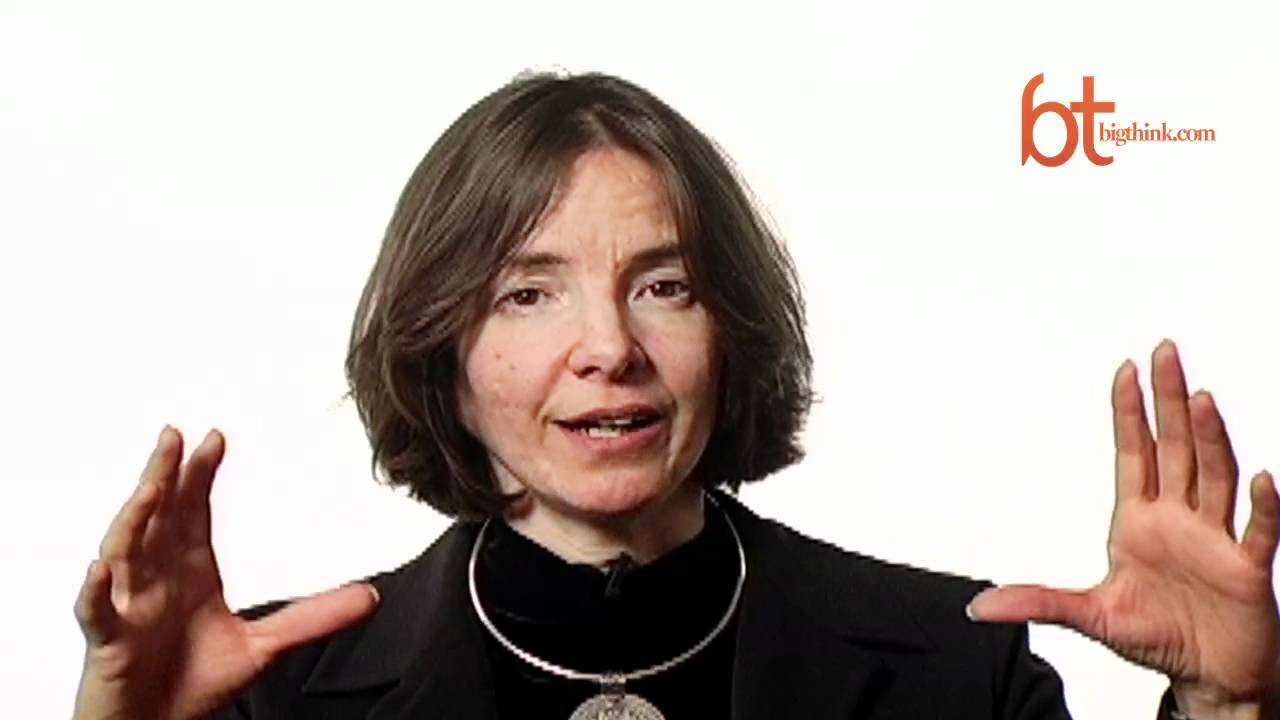
Big Think Interview With Ted Fischer | Big Think
Posted
April 24, 2012
Views
706
Likes
10
Comments
1
Engagement
1.56%
April 24, 2012
706
10
1
1.56%
Every word spoken in this episode is indexed. Type any phrase to jump straight to the moment it was said.
Type any word or phrase that may have been spoken. Click a result to seek the player to that exact moment.
Try a name, a topic, or a quoted line
 29:21Now Playing
Big Think Interview With Ted Fischer
New videos DAILY
Join Big Think Edge for exclusive videos
----------------------------------------------------------------------------------
A conversation with the anthropology professor at Vanderbilt University.
----------------------------------------------------------------------------------
Ted Fischer:
Edward (Ted) Fischer is the Director of Latin American Studies at Vanderbilt University.
Fischer studies cultural anthropology, specializing in matters of economics and moralities. Most of his fieldwork has been in Guatemala (with the Maya) but he has also worked in and written on Germany and the United States. His books include “Cultural Logics and Global Economies,” “Maya Cultural Activism,” and “Broccoli and Desire.” With Peter Benson he is now working on a project titled “Markets and Moralities.” He also has a video series out from The Teaching Co. titled “Peoples and Cultures of the World.”
He received his PhD, in anthropology at Tulane University and his undergraduate degree from University of Alabama at Birmingham after studying at Birmingham-Southern College.
----------------------------------------------------------------------------------
TRANSCRIPT:
Ted Fischer: My name’s Ted Fischer and I’m a professor of Anthropology at Vanderbilt University.
Question: What is romantic love?
Ted Fischer: We define romantic love as an intense for another with the expectation that it’s going to persist into the future. And that distinguishes it from lust, which is generally fleeting, and also from more companionship love, which doesn’t the intensity of desire that you want to possess the other in some way.
Often it’s characterized by some sort of irrationality. Not doing what a rational person would do in those circumstances. Buying a large gift when you really don’t have the money, or going out to a really nice restaurant, or making that that extra sign of one’s love that you hope will attract the other. And so, really it’s a bit of craziness, romantic love. We’re a little bit off kilter when we’re in love. And that’s the way we talk about it. It’s like we’re under water in some way, or we’re overwhelmed by love. Crazy in love.
Question: What’s the evolutionary advantage of romantic love?
Ted Fischer: Well there’s some clear evolutionary advantage to falling in love, and especially for pair-bonding, a male/female bond, and let’s think back, you know, 20 - 30,0000 years ago when our ancestors were living on the Savannahs in Africa. Human infants are incredibly helpless, and it’s very hard for one person to take care of an infant and also gather food, and hunt food, and run from predators. And so, having some sort of core or familial group makes lots of sense. And so, there are evolutionary psychologists and biologists who would say, “we evolved a propensity for romantic love to create families. So that it’s not just the mother taking care of the child, but a father as well.” Mothers have this natural need to take care of children. The child comes from the mother, has to breastfeed with the mother. Fathers are less inherently attached to the child. And so, there is a theory that males evolved this propensity to fall in love so that they would stick with their partners.
Question: Are there drawbacks to romantic love?
Ted Fischer: An evolutionary biologist would say, “Yeah, we have this propensity that’s evolved that creates all of these positive side effects for us socially,” creating for example. But sometimes those propensities can go out of control. We seem to have a propensity to eat fatty foods, for example, and yet in the society in which we live that’s not so adaptive as it was 10,000 years ago, we should have eaten fat every chance we got. And now we have to sort of fight against ourselves and resist all of that fat. And so it doesn’t necessarily -- it’s not necessarily a contradiction that we could have evolved -- I keep saying propensity, we could have evolved a propensity for romantic love, and yet it’s counter-adaptive some times, too.
But you do find suicides, for example, and that’s as about as dramatic as it gets. A number of cases in India, for example, of young men and young women in arranged marriages or going into arranged marriages and committing suicide rather than spend their life without their truly beloved.
Question: Is romantic heterosexual love the norm?
Ted Fischer: I can and actually let me go back a little bit first and say that romantic love doesn’t have to be between a man and a woman. The evolutionary theory predicts that’s what makes sense. It just sort of fits neatly.
Read the full transcript at
Sentinel Indexing in Progress
Metadata and chapters are available. Claim extraction for this episode is pending.
All video content is delivered via YouTube embedded players in accordance with the YouTube Terms of Service. Sentinel provides research tools that promote discovery and accountability across political media.