Big Think
@bigthink·8.8M subscribers·10.1K videos
Big Think Interview With Tim McCarthy | Big Think
Posted
April 24, 2012
Views
354
Likes
3
Engagement
0.85%
April 24, 2012
354
3
0.85%
Every word spoken in this episode is indexed. Type any phrase to jump straight to the moment it was said.
Type any word or phrase that may have been spoken. Click a result to seek the player to that exact moment.
Try a name, a topic, or a quoted line
Episode Timeline
Every episode in order around the one you’re watching — click any card and the page flips straight to it.
 33:04Now Playing
Big Think Interview With Tim McCarthy
New videos DAILY
Join Big Think Edge for exclusive videos
----------------------------------------------------------------------------------
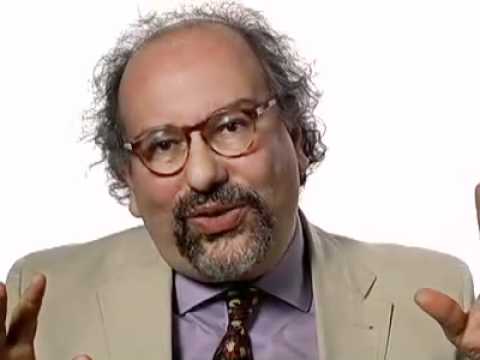
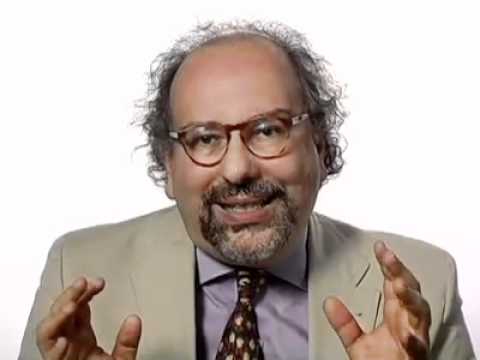
A conversation with the director of Harvard’s Human Rights and Social Movements Program.
----------------------------------------------------------------------------------
Timothy Patrick McCarthy:
Timothy Patrick McCarthy is a Lecturer on History and Literature, Adjunct Lecturer on Public Policy, and Director of the Human Rights and Social Movements Program at the Carr Center for Human Rights Policy at the Harvard Kennedy School. He also teaches in the Committee on Degrees in Studies of Women, Gender, and Sexuality in the Faculty of Arts and Sciences.
A historian of social movements, Dr. McCarthy graduated with honors from Harvard College and received his Ph.D. in History from Columbia University, where he completed his dissertation under the direction of Eric Foner. Dr. McCarthy's research agenda focuses on the relationship between human rights and social movements in three main areas: race relations and civil rights; LGBT politics, policy, and advocacy; and modern-day slavery and human trafficking.
McCarthy has published two books, The Radical Reader: A Documentary History of the American Radical Tradition (New Press, 2003) and Prophets of Protest: Reconsidering the History of American Abolitionism (New Press, 2006), and his third book, Protest Nation: The Radical Roots of Modern America, is forthcoming from the New Press in 2010.
An outspoken and respected leader in the lesbian, gay, bisexual, and transgender community, Dr. McCarthy was a founding member of Barack Obama's National LGBT Leadership Council, serves on the Board of the Harvard Gay and Lesbian Caucus, and, in 2009, delivered Harvard's prestigious Nicholas Papadopoulos Lecture, entitled "Stonewall's Children: Life, Loss, and Love after Liberation." He lectures widely on topics ranging from history and literature to politics and human rights.
----------------------------------------------------------------------------------
TRANSCRIPT:
Topic: After the rebellion
Tim McCarthy: The most important thing about the Stonewall riots or rebellion depending on which terminology you use is that it creates an origin myth. It gives gay people, LGBT people, an origin myth and all social movements need to understand and to acknowledge and identify their point of origin and so for us it’s Stonewall.
One of the things that I think this does is it gives us a kind of collective sense of identity that we all come from where the spirit of rebellion emerged in this place that we can identify. It’s tangible. We can see it. We visited it. We visited it over the weekend here on the 40th anniversary and so it’s a place that we all know even if we weren’t all there. But the other flip side of that - the problem with that- is that it then makes it seem as if history is divided into everything that happened before Stonewall and everything that happened afterwards as if history is kind of neatly divided according to this sort of point of origin. I think that one of the things that that’s done frankly in the public imagination and in the LGBT community as it understands its history is that it diminishes the efforts, often quiet, often invisible, often full of real struggle of what really did happen before this explosive origin of the modern gay rights movement or gay liberation.
There were decades, if not centuries, of struggles that LGBT people even if they weren’t called lesbian, gay, bisexual or transgender at that time but they went through to establish and live lives of dignity against forces of great oppression and discrimination. In particular the couple of decades before the late ‘60s, the ‘40s and ‘50s and early 60’s was a period of great mobilization, a great organizing of the establishment of our first newspapers and our print culture, the establishment of founding offers as far as our political organizations, the first even public protest, the republic protest against discrimination in federal employment and in federal agencies and in the military long before the folks rose up at Stonewall in June of 1969.
So one of the things that I seek to do as a historian, and there are many historians who had written about this - ohn D'Amelio and George Chauncey, Estelle Freedman, many, many historians and scholars who have written about this history but it has not taken hold yet I don’t think in the broad public imagination not even within the LGBT community and certainly beyond it.
Read the full transcript at
Sentinel Indexing in Progress
Metadata and chapters are available. Claim extraction for this episode is pending.
All video content is delivered via YouTube embedded players in accordance with the YouTube Terms of Service. Sentinel provides research tools that promote discovery and accountability across political media.