Big Think
@bigthink·8.8M subscribers·10.1K videos
Big Think Interview With Zeke Vanderhoek | Big Think
Posted
April 24, 2012
Views
1,354
Likes
18
Comments
4
Engagement
1.62%
April 24, 2012
1,354
18
4
1.62%
Every word spoken in this episode is indexed. Type any phrase to jump straight to the moment it was said.
Type any word or phrase that may have been spoken. Click a result to seek the player to that exact moment.
Try a name, a topic, or a quoted line
Episode Timeline
Every episode in order around the one you’re watching — click any card and the page flips straight to it.
 25:09Now Playing
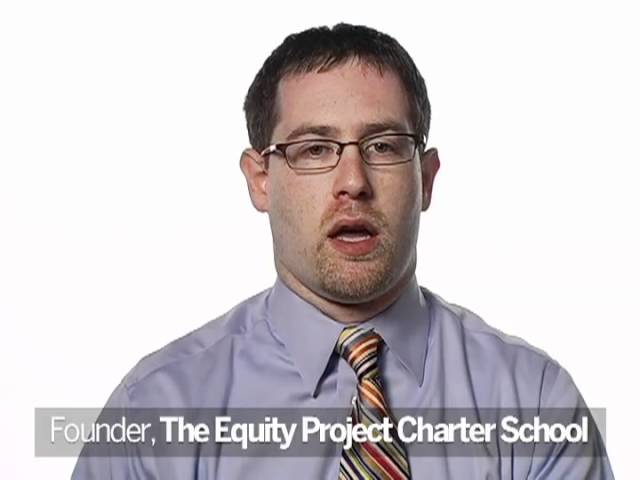
Big Think Interview With Zeke Vanderhoek
New videos DAILY
Join Big Think Edge for exclusive videos
----------------------------------------------------------------------------------
A conversation with the founder and first principal of the Equity Project Charter School in New York City.
----------------------------------------------------------------------------------
Zeke Vanderhoek:
Zeke is the founder and chairman of Manhattan GMAT, a national GMAT test-preparation company. The company employs over 100 administrative and instructional staff, has classroom centers in 7 major US cities, while serving over 6000 students in 2008. Zeke began his educational career as a 6th and 8th grade teacher at I.S. 90, a public middle school in Washington Heights, New York City. Zeke has a B.A. from Yale University and a Masters in Philosophy & Education from Teachers College at Columbia University.
In January 2007, Zeke stepped down as CEO of Manhattan GMAT and began the process of founding The Equity Project (TEP) Charter School, a 480-seat public middle school which will serve at-risk student in the Washington Heights neighborhood of New York City. TEP was granted a 5-year charter by New York State in January 2008. In his spare time, Zeke plays piano and guitar and eats almond croissants at his local bakery. He currently lives in Harlem with his wife Stephanie and daughter Ella.
----------------------------------------------------------------------------------
TRANSCRIPT:
Topic: Teach For America
Zeke Vanderhoek: It was a phenomenal experience. I think that during the first year the learning curve was, like most first year teachers, tremendous. And I got what I wanted, which was to be thrown in and to sort of thrive or not thrive based on my own abilities. So, I got the challenge that I was looking for. Teach for America itself has evolved a great deal since I was a core member and I think they are a phenomenal organization. But my experience was really an experience of just a first year teacher in New York City hired by the city, essentially. Teach for America placed me and offered some support but ultimately it was me and 32 sixth graders.
I was a teacher in a school that was pretty chaotic, so for me it was actually great because I got to close my classroom door, nobody knew what I was doing, and I got to be creative and experiment and also find what worked for me. I had a phenomenal mentor who would sit at the back of the room once a week and then debrief with me and he must have saved me from reinventing the wheel. So that was a really positive takeaway. In terms of the school environment itself what I took away was that there are pockets of greatness in a lot of schools. There were colleagues of mine who were phenomenal but to a large extent they are the exception not the rule in an under-resourced urban school.
My own experience at the middle school, the public middle school that I taught in, was that there were core members like myself who were placed in the school and there were other teachers who had nothing to do with Teach for America and we got along very well. There was little, “Oh, you were placed to this program or you weren’t.” There are a lot of veteran teachers. I mentioned the mentor who was a retired veteran teacher who was just a phenomenal influence on me and my teaching style. So, I think in general Teach for America is a wonderful organization because it gets people into teaching who might not otherwise consider it. And if you look at a lot of Teach for America alumni a lot of us remain in education, many in the classroom, many starting schools and many at as more senior level in administration or in, at the district level.
Question: What makes an effective teacher?
Zeke Vanderhoek: I think a teacher that responded to me as an individual, took an interest in me and my own sort of ideas or my own personality and went beyond just sort of what was in the book. That’s one element and the other element was really I remember my history teacher in ninth grade and 11th grade. She really made you see the world in a different way. So, a great teacher in that sense was somebody who really challenged his or her students to get out from their own world, from their own perspective and see things that they never thought of before, ways of seeing the world.
Topic: The idea
Read the full transcript at
Sentinel Indexing in Progress
Metadata and chapters are available. Claim extraction for this episode is pending.
All video content is delivered via YouTube embedded players in accordance with the YouTube Terms of Service. Sentinel provides research tools that promote discovery and accountability across political media.