Big Think
@bigthink·8.8M subscribers·10.1K videos
Brandon Adams on Learning From a Zero-Sum Game | Big Think
Posted
April 24, 2012
Views
1,579
Likes
12
Engagement
0.76%
April 24, 2012
1,579
12
0.76%
Every word spoken in this episode is indexed. Type any phrase to jump straight to the moment it was said.
Type any word or phrase that may have been spoken. Click a result to seek the player to that exact moment.
Try a name, a topic, or a quoted line
See what was published immediately before and after this episode.
 3:13Now Playing
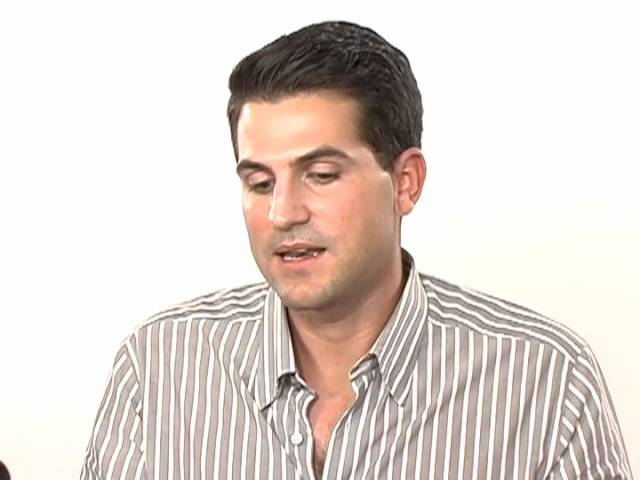
Brandon Adams on Learning From a Zero-Sum Game
New videos DAILY
Join Big Think Edge for exclusive videos
----------------------------------------------------------------------------------
In poker, there’s a winner and a loser. On Wall Street, it’s often the same. Unlike traditional economic activities where both the purchaser and the seller gain something in the transaction, many finance markets are just as risky as sitting at a poker table.
----------------------------------------------------------------------------------
Brandon Adams:
A college graduate at the age of 19, Brandon Adams holds Master’s degrees in Finance and Real Estate, and is scheduled to earn his PhD in business from Harvard University later this year.
Adams is a high-stakes poker player who has been on multiple television programs, including the 2005 Tournament of Champions and the 2007 World Series of Poker, where he finished sixth in the $1,500 Pot-Limit Omaha event, earning more than $75,000. Recently, Brandon earned a lot of notoriety – and cold hard cash - by beating Sammy Farha out of almost a $1 million while playing heads up Pot-Limit Omaha.
Brandon is also the author of Broke: A Poker Novel, a fictional account of poker players and the lives they lead. Brandon Adams plays online at Full Tilt Poker.
----------------------------------------------------------------------------------
TRANSCRIPT:
Adams: Well, poker is clearly zero-sum. It’s a negative-sum after we consider [rakes] and maybe living expenses, if you expand it, and so forth. Business, it is clearly positive-sum in the classic sort of economic textbook definition where we each specialize in what we are good in and we trade. If you’re talking about certain types of trading activities, like Wall Street type activities, there, I mean, some of the markets are plainly zero-sum. I mean, option markets are zero-sum by construction, and most of the, well, all of the various derivative contracts and [CDS] and all these stuff is zero-sum. Now, you can get gains for both parties based on risk transfer, whereas at the poker table you can’t get this. The poker table is clearly zero-sum in terms of wealth and in terms of risk transfers. The derivatives markets are zero-sum by construction, also strongly negative-sum after you consider commissions and so forth. But, even though derivatives markets are slightly negative-sum, you can get gains for both parties if you’re getting risk transfer. Now, sometimes in derivative markets, you have people who just like to gamble, and so they’re not, you’re not getting [risk sharing], and sometimes you have derivatives used for [nefarious] purposes, like Howard points out, that sometimes the incentives between the shareholders and the agents are not properly aligned, so derivatives are just another way for the agent to gamble higher at the shareholder expense, right? If life works out, then they get a big bonus, and if it doesn’t work out, then they get fired and the shareholder takes the loss. So, I think that Wall Street activities get much closer to poker in terms of being zero-sum, and obviously Main Street activities are more like economic textbook where you have clearer gains to specialization and gains to trade. And, I mean, clearly, right now there’s a push for more regulation so that some of the more extreme forms of zero-sum betting that happen on Wall Street maybe get contained a bit.
Sentinel Indexing in Progress
Metadata and chapters are available. Claim extraction for this episode is pending.
All video content is delivered via YouTube embedded players in accordance with the YouTube Terms of Service. Sentinel provides research tools that promote discovery and accountability across political media.