Big Think
@bigthink·8.8M subscribers·10.1K videos
Brandon Adams on the Importance of Research | Big Think
Posted
April 24, 2012
Views
707
Likes
6
Engagement
0.85%
April 24, 2012
707
6
0.85%
Every word spoken in this episode is indexed. Type any phrase to jump straight to the moment it was said.
Type any word or phrase that may have been spoken. Click a result to seek the player to that exact moment.
Try a name, a topic, or a quoted line
See what was published immediately before and after this episode.
 2:22Now Playing
Brandon Adams on the Importance of Research
New videos DAILY
Join Big Think Edge for exclusive videos
----------------------------------------------------------------------------------
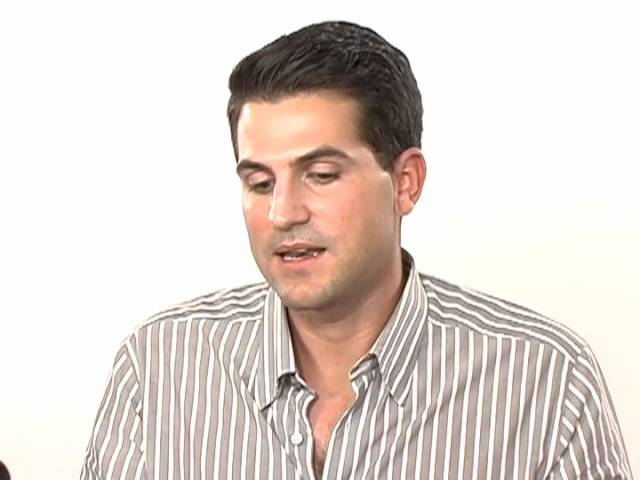
Take it from a 19-year-old college graduate. Brandon Adams says that most poker players, like financial traders, have sharply analytical minds. But even the most rigorous attention will turn soft over time unless you find ways to stay hungry for success.
----------------------------------------------------------------------------------
Brandon Adams:
A college graduate at the age of 19, Brandon Adams holds Master’s degrees in Finance and Real Estate, and is scheduled to earn his PhD in business from Harvard University later this year.
Adams is a high-stakes poker player who has been on multiple television programs, including the 2005 Tournament of Champions and the 2007 World Series of Poker, where he finished sixth in the $1,500 Pot-Limit Omaha event, earning more than $75,000. Recently, Brandon earned a lot of notoriety – and cold hard cash - by beating Sammy Farha out of almost a $1 million while playing heads up Pot-Limit Omaha.
Brandon is also the author of Broke: A Poker Novel, a fictional account of poker players and the lives they lead. Brandon Adams plays online at Full Tilt Poker.
----------------------------------------------------------------------------------
TRANSCRIPT:
Adams:
Adams: Well, online poker is a bit more quantitative than live poker. Live poker is more intuition, really. It’s relying on your past experience base and sort of pattern recognition. One of the challenges of being a poker player is that a lot of poker players are of an analytical mind. Many poker players tend towards the quantitative and they had very analytical studies in college and so forth. However, once you become a poker player, you spend a lot of time in places like Vegas and Los Angeles, you’re in casino environments, go out to eat a lot, go to clubs, like it’s… It’s a fairly fast paced lifestyle. There’s a lot of travel, not as much time as we’d like to read books and do stuff like this, so your attention span takes a little bit of a hit, and people who are of an analytical mind get a little bit lazy in analyzing the situations that would be profitable to analyze. So, one of the challenges for a poker player is to maintain that sharpness, that readiness to analyze a situation when you know it pays to analyze it. And this is an infinite number of scenarios, right, where you’ll be at a poker table and you’ll see a situation and you’ll think to yourself, you know, I don't know exactly what the right thing to do here is, but if I gave myself a couple hours with an Excel spreadsheet, I could figure it out, and one of the challenges is to maintain the hunger to get yourself to spend that two hours with the Excel spreadsheet, or whatever it will take to figure out what the right thing to do in that scenario is. Very difficult to maintain that hunger. I imagine it’s very difficult to maintain that hunger in financial markets. When you’re trading, there are, of course, infinite opportunities for researching things further, like making sure you have things right, and you have to maintain the hunger to do that work.
Sentinel Indexing in Progress
Metadata and chapters are available. Claim extraction for this episode is pending.
All video content is delivered via YouTube embedded players in accordance with the YouTube Terms of Service. Sentinel provides research tools that promote discovery and accountability across political media.