Big Think
@bigthink·8.8M subscribers·10.1K videos
Bring Back the Gold Standard | John A. Allison | Big Think
Posted
April 24, 2012
Views
2,287
Likes
62
Comments
11
Engagement
3.19%
April 24, 2012
2,287
62
11
3.19%
Every word spoken in this episode is indexed. Type any phrase to jump straight to the moment it was said.
Type any word or phrase that may have been spoken. Click a result to seek the player to that exact moment.
Try a name, a topic, or a quoted line
You’re on April 24, 2012. Earlier episodes are to the left, later ones to the right — the row keeps loading as you go. Click any card to open it.
 Apr 24, 20124:26Now Playing
Bring Back the Gold Standard
New videos DAILY
Join Big Think Edge for exclusive videos
----------------------------------------------------------------------------------
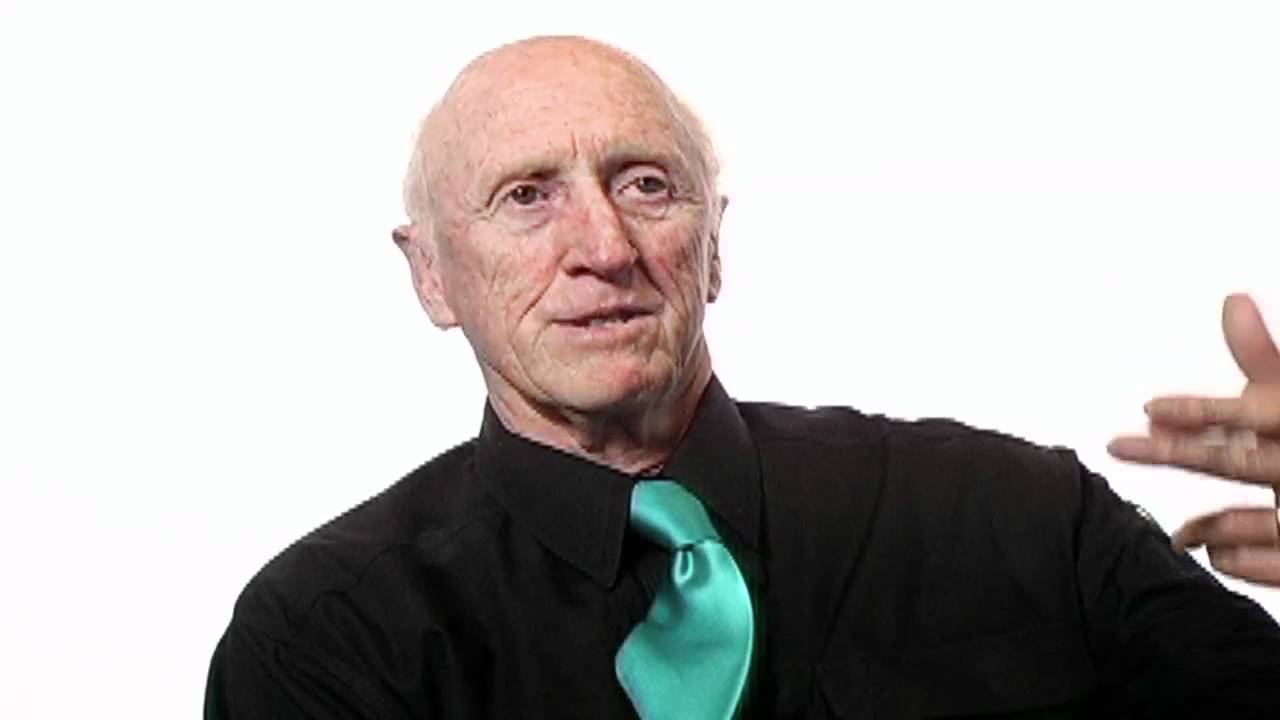
There’s a reason why economies have based their currencies on something tangible since at least the Roman Empire. As John Allison explains, if we don’t do the same, high government debt and the threat of stagflation will never go away.
----------------------------------------------------------------------------------
John A. Allison:
John A. Allison IV is the former CEO of and acting Chairman of BB&T, one of the largest banks in America. Allison was recently named one of the best CEOs of 2008 by MorningStar as his banking principles are largely seen as the reason behind his bank's relative success during the financial crisis. A graduate of the University of North Carolina with an MBA from the Fuqua School of Business at Duke University, he has a wife and three children.
----------------------------------------------------------------------------------
TRANSCRIPT:
Question: What measures should we take to help prevent crises in the future?
John Allison: Well, if I were in charge, I would go to a private banking system in a monetary standard based on market criteria, which would probably be a gold standard. Not because there’s anything magical about gold, but because gold is limited, it’s hard to find, it’s expensive, and it provides discipline. As long as we have a Federal Reserve, we’re going to have a high level of government debt until we get into serious financial trouble—it’s almost inevitable. If you look, governments have been basing the currency since at least the Roman Empire, and even before that, and we have been debasing our currency and we will get in trouble. If we don’t go to a gold standard and a private banking system, then I think the Federal Reserve ought to have less power, not more. We ought to go with what Milton Freedman said and grow the money supply at a fixed rate, like 3 percent. Because every time they over correct, you don’t know that the over correction has happened until two, three years down the road and we’re looking at that same kind of risk right now with stagflation in the future.
And then the other option would be the one I described before with more capital and less regulation, which is a very practical option and almost the opposite of the direction we’re going now with just plain more regulation, we’re going to make the system more vulnerable, not less vulnerable.
Question: Can you elaborate on your criticisms of government policies and explain what you see as the most promising alternatives to these policies?
John Allison: Yes. I think that the primary cause of the financial crises was government policy. We don’t live in a free market in the U.S. we live in a mixed economy. The mixture depends a lot on the industry. Technology is probably 80 percent free, 20 percent government, financial services is 70 percent government, 30 percent free. Not surprising, the most regulated industry is the one that had the biggest problems. What happened is government policy created a bubble in the residential real estate markets, that bubble burst, which bubbles always do, and that got transmitted into the capital markets and into the economy in general. It is true that individual financial institutions made some really big mistakes, but it was in context of government policy errors. And the three big causes were first, the Federal Reserve. In a certain sense, people don’t, they know this, but they don’t get it. The government owns the monetary system in the US. In 1913, the monetary system was nationalized. If you’re having trouble in the monetary system, by definition, it’s a problem of government policy. If interstate highway bridges were falling down, people would say, “Well, what’s wrong with the government? They own the highways, they own the monetary system.” The Fed was created to take out volatility in the economy, what they’ve done is take out the short-term volatility and push problems into the future. Because in a free market, as human beings, we’re not…we’re always, it’s always in a correction process, good businesses are growing, bad businesses are going out of businesses. If you take out the bottom side, you push the problems into the future.
And then specifically, Alan Greenspan had negative real interest rates for several years, Bernanke created inverted yield curve.
Read the full transcript at
Sentinel Indexing in Progress
Metadata and chapters are available. Claim extraction for this episode is pending.
All video content is delivered via YouTube embedded players in accordance with the YouTube Terms of Service. Sentinel provides research tools that promote discovery and accountability across political media.