Big Think
@bigthink·8.8M subscribers·10.1K videos
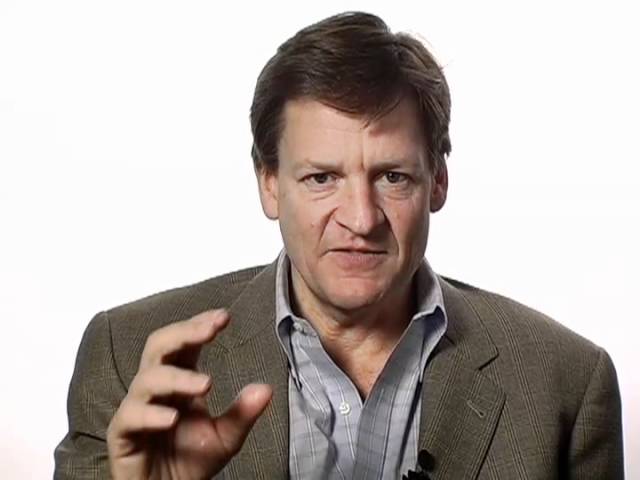
Carol Gilligan on 'Kyra' | Big Think
Posted
April 24, 2012
Views
654
Likes
9
Comments
1
Engagement
1.53%
April 24, 2012
654
9
1
1.53%
Every word spoken in this episode is indexed. Type any phrase to jump straight to the moment it was said.
Type any word or phrase that may have been spoken. Click a result to seek the player to that exact moment.
Try a name, a topic, or a quoted line
See what was published immediately before and after this episode.
 3:43Now Playing
Carol Gilligan on 'Kyra'
New videos DAILY
Join Big Think Edge for exclusive videos
----------------------------------------------------------------------------------
Carol Gilligan says the inspiration for her novel goes back to one Sunday with the New York Times Book Review.
----------------------------------------------------------------------------------
Carol Gilligan:
In 2002, Carol Gilligan became University Professor at New York University, with affiliations in the School of Law, the Steinhardt School of Culture, Education, and Human Development, and the Graduate School of Arts and Sciences. She is currently teaching a seminar at the Law School on Resisting Injustice and an advanced research seminar on The Listening Guide Method of Psychological Inquiry. She is a visiting professor at the University of Cambridge affiliated with the Centre for Gender Studies and with Jesus College.
She received an A.B. in English literature from Swarthmore College, a masters degree in clinical psychology from Radcliffe College and a Ph.D. in social psychology from Harvard University. Her landmark book In A Different Voice (1982) is described by Harvard University Press as "the little book that started a revolution." Following In A Different Voice, she initiated the Harvard Project on Women's Psychology and Girls' Development and co-authored or edited 5 books with her students.
She received a Senior Research Scholar award from the Spencer Foundation, a Grawemeyer Award for her contributions to education, a Heinz Award for her contributions to understanding the human condition and was named by Time Magazine as one of the 25 most influential Americans.
She was a member of the Harvard faculty for over 30 years and in 1997 became Harvard's first professor of Gender Studies, occupying the Patricia Albjerg Graham chair.
----------------------------------------------------------------------------------
TRANSCRIPT:
Question: What inspired you to write Kyra?
Carol Gilligan: I was reading the New York Times book review one Sunday and there was a review of a new translation of the need virtual epic about a man whose mission is to found Rome, he leaves troy which is a disaster, this whole city is destroyed and then he found Rome, which is going to be an empire and destroy a lot more cities. So, that is an interesting like why would you leave troy and found Rome and it is always an interesting question. In the middle he goes to cartage and he falls in love with a woman who is a queen and who is building a new city and there is this idea of Oh! A different city that is not involved in war and destruction and empire that is involved in the arts and commerce and a man and woman would rule as equals, but no, no, no he has to leave her to fulfills hostage, that’s the old, old, old ethic from so long ago it should be out of date, but it’s of course. Anyway, I was reading this book review which was praising this new translation by Fits Jolder [phonetic] who is an exquisite and it’s zeroed in on the place where and he goes to the under world to look for his father and he meets Dida, who he startled to see, to realize that after he abruptly left her to fulfill his mission, she had killed herself and he says to her I couldn’t believe I would hurt you so terribly by going and I do not understand it was Sunday morning and I thought, how could a sensitive, intelligent man not no the effects of his action on someone who he really loved. He was deeply in love with, and then I thought how crazy for a women in that situation where you feel somebody is deeply connected with you and loves you and act as if there was no connection and I thought virtual was however many 100 years ago, I thought, but this is very in temper this story goes on and on. So, out of that came the characters Kyra and Andreas, she is in architect building sitting, he is carrying the household Gods, he is carrying from Europe of the 20th century and he is directing operas, he is a musician and theater director. So they need and they each had huge loses that are part of that history of, that is still going on. If people whose life’s have been shattered by political conflict in war, it goes on all the time. So, they are not planning to fall in love and the two of them fall in love with each other, because you can just see these two are going to be obviously attracted to each other.
Read the full transcript at
Sentinel Indexing in Progress
Metadata and chapters are available. Claim extraction for this episode is pending.
All video content is delivered via YouTube embedded players in accordance with the YouTube Terms of Service. Sentinel provides research tools that promote discovery and accountability across political media.