Big Think
@bigthink·8.8M subscribers·10.1K videos
Dacher Keltner Ponders Goodness Among Varying Cultures | Big Think
Posted
April 24, 2012
Views
478
Likes
3
Engagement
0.63%
April 24, 2012
478
3
0.63%
Every word spoken in this episode is indexed. Type any phrase to jump straight to the moment it was said.
Type any word or phrase that may have been spoken. Click a result to seek the player to that exact moment.
Try a name, a topic, or a quoted line
See what was published immediately before and after this episode.
 5:27Now Playing
Dacher Keltner Ponders Goodness Among Varying Cultures
New videos DAILY
Join Big Think Edge for exclusive video lessons from top thinkers and doers
----------------------------------------------------------------------------------
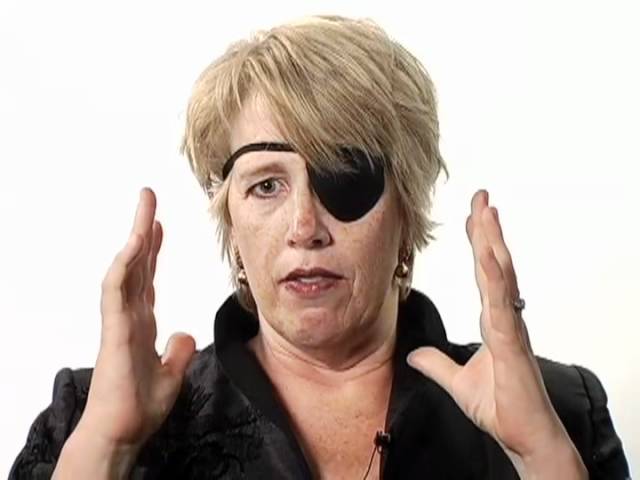
The arts reflect what a country is, says Jane Rosenthal — so what kind of country is the US if it cuts funding to its arts communities? The NEA and PBS are two organizations on the chopping block under the Trump administration's proposed budget. Rosenthal — a film producer and co-founder of the Tribeca Film Festival — reminds us of how crucial story telling is for individuals and nations. The inaugural Tribeca Film Festival opened in 2002, just after the 9/11 terror attacks. The Tribeca Film Festival's purpose was to bring people back to the downtown neighborhood, to create a new memory for the city that wasn't based in fear. They invited Nelson Mandela to speak, and he recalled that the one thing he looked forward to when he was imprisoned on Robben Island was movie night. It created a community between the prisoners and their guards, and provided common ground for their humanity. Beyond the individual, art is also a valuable export from one nation to another, keeping lines of communication and curiosity open between cultures.
----------------------------------------------------------------------------------
JANE ROSENTHAL:
Since co-founding Tribeca Productions with Robert De Niro in 1988, Jane Rosenthal has distinguished herself as a leading film producer with a roster of both critically and commercially acclaimed work. Rosenthal produced one of the highest grossing comedy franchises of all times—Meet the Parents (2000), Meet the Fockers (2004), and Little Fockers (2010), for Universal Pictures, and has produced and executive produced several other box office sensations.
In 2001, in an effort to spur the economic and cultural revitalization of lower Manhattan, Rosenthal co-founded the Tribeca Film Festival. Since its inception, the Festival has attracted more than 4.9 million visitors and generated over $750 million dollars in economic activity. Rosenthal also co-founded the Tribeca Film Institute, where she has served as co-chairman of the board since its inception. The Institute has become an instrumental resource for filmmakers and arts education, and reaches over 19,000 New York City students. In 2003, Rosenthal, De Niro, and Craig Hatkoff formed Tribeca Enterprises, a diversified media company with a mission to provide artists with unique platforms to expand the audience for their works and to broaden the access point for consumers to experience independent film and media.
Rosenthal is CEO of Tribeca Enterprises. She has been featured in Variety’s “Women in Showbiz” and The Hollywood Reporter’s “Women in Entertainment” issues. She is a member of the Academy of Motion Pictures Arts and Sciences, and has been honored by NYU’s Tisch School of the Arts, the Museum of the Moving Image, The Matrix Awards, and the National September 11 Memorial & Museum. In 2011, she was presented with the Jane Jacobs Medal for Lifetime Leadership from the Rockefeller Foundation. Prior to founding Tribeca Productions, Rosenthal was an executive at CBS-TV and The Walt Disney Company. She is an active leader on the NYU Tisch School of the Arts Dean’s Council, and on the boards of the Tribeca Film Institute, the National September 11 Memorial & Museum, the Child Mind Institute, and the Museum of the Moving Image. Most recently, she was appointed by Governor Cuomo to the boards of the Empire State Relief Fund and the New York Racing Association.
----------------------------------------------------------------------------------
TRANSCRIPT:
Jane Rosenthal: When we started the Tribeca Film Festival, which we announced in 2001 right after 9/11 to really bring people back to our neighborhood, our goal was to just bring as many people back downtown as possible.
When we announced the first film festival we asked Nelson Mandela to come and speak. Our city had been devastated. Our country had been devastated by 9/11. And as filmmakers we didn’t know what to do other than literally to put on a show and to try to give our neighborhood a new memory, to try to give New York a new memory. And you just couldn’t go like start running movies. So Mandela came and he talked about when he was in Robben Island, when he was in prison; That the one night that he and his jailers all looked forward to was movie night.
It’s when they could come together and they could laugh about the same thing, they could cry about the same thing and they were one. It was finding their similarities, finding what was human about each of them, no matter what side of the door either one was going to end up at at the end of the night....
For the full transcript, check out
Sentinel Indexing in Progress
Metadata and chapters are available. Claim extraction for this episode is pending.
All video content is delivered via YouTube embedded players in accordance with the YouTube Terms of Service. Sentinel provides research tools that promote discovery and accountability across political media.