Big Think
@bigthink·8.8M subscribers·10.1K videos
Carol Gilligan on the 1960's | Big Think
Posted
April 24, 2012
Views
611
Likes
7
Engagement
1.15%
April 24, 2012
611
7
1.15%
Every word spoken in this episode is indexed. Type any phrase to jump straight to the moment it was said.
Type any word or phrase that may have been spoken. Click a result to seek the player to that exact moment.
Try a name, a topic, or a quoted line
See what was published immediately before and after this episode.
 2:22Now Playing
Carol Gilligan on the 1960's
New videos DAILY
Join Big Think Edge for exclusive videos
----------------------------------------------------------------------------------
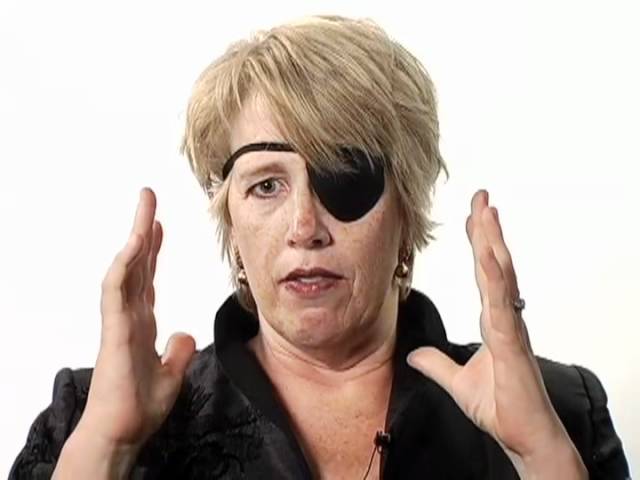
Carol Gilligan reflects on civil rights.
----------------------------------------------------------------------------------
Carol Gilligan:
In 2002, Carol Gilligan became University Professor at New York University, with affiliations in the School of Law, the Steinhardt School of Culture, Education, and Human Development, and the Graduate School of Arts and Sciences. She is currently teaching a seminar at the Law School on Resisting Injustice and an advanced research seminar on The Listening Guide Method of Psychological Inquiry. She is a visiting professor at the University of Cambridge affiliated with the Centre for Gender Studies and with Jesus College.
She received an A.B. in English literature from Swarthmore College, a masters degree in clinical psychology from Radcliffe College and a Ph.D. in social psychology from Harvard University. Her landmark book In A Different Voice (1982) is described by Harvard University Press as "the little book that started a revolution." Following In A Different Voice, she initiated the Harvard Project on Women's Psychology and Girls' Development and co-authored or edited 5 books with her students.
She received a Senior Research Scholar award from the Spencer Foundation, a Grawemeyer Award for her contributions to education, a Heinz Award for her contributions to understanding the human condition and was named by Time Magazine as one of the 25 most influential Americans.
She was a member of the Harvard faculty for over 30 years and in 1997 became Harvard's first professor of Gender Studies, occupying the Patricia Albjerg Graham chair.
----------------------------------------------------------------------------------
TRANSCRIPT:
Carol Gilligan: What was the revolution, in the 1960s there was a sense of, there was really a questioning of how had this country, with its commitment to democratic values justified, a series of prejudices and tolerances including treatments of a women as less than fully human, women couldn’t have a bank account, women couldn’t have a credit card, you don’t remember that and I remember teaching at Harvard, there where no women on the faculty and that all changed that changed relationships between men and women and the issue I was talking about before which was for a women to feel that what I know or what I believe or what I think or what I feel or what I want is the legitimate and it is not the only thing, but it has legitimacy of its own was huge, rather than seeing it as selfish. Now, that of course if you mean that you are introduced want [Inaudible] introduce sexuality and in the old sort of frame work, women where seen as not wanting sex, as not sexual beings, as not having desires of parts of there own. I quote a funny authority on this, which is [Inaudible] who said that the so called intellectual and theory already with women was due to their needing to suppress their sexuality, because if you couldn’t think about all aspects of yourself, you had to start restricting how that you could think it all and it also I would say having to distance yourself from your body, because your body would seen it some how bad or wrong. You will all start with your experience and then it was very for easy for women to not know what they new to experience and to be open to all kinds of abuse including relationships.
Sentinel Indexing in Progress
Metadata and chapters are available. Claim extraction for this episode is pending.
All video content is delivered via YouTube embedded players in accordance with the YouTube Terms of Service. Sentinel provides research tools that promote discovery and accountability across political media.