Big Think
@bigthink·8.8M subscribers·10.1K videos
Mary Lou Jepsen On One Laptop Per Child | Big Think
Posted
April 24, 2012
Views
264
Likes
3
Engagement
1.14%
April 24, 2012
264
3
1.14%
Every word spoken in this episode is indexed. Type any phrase to jump straight to the moment it was said.
Type any word or phrase that may have been spoken. Click a result to seek the player to that exact moment.
Try a name, a topic, or a quoted line
See what was published immediately before and after this episode.
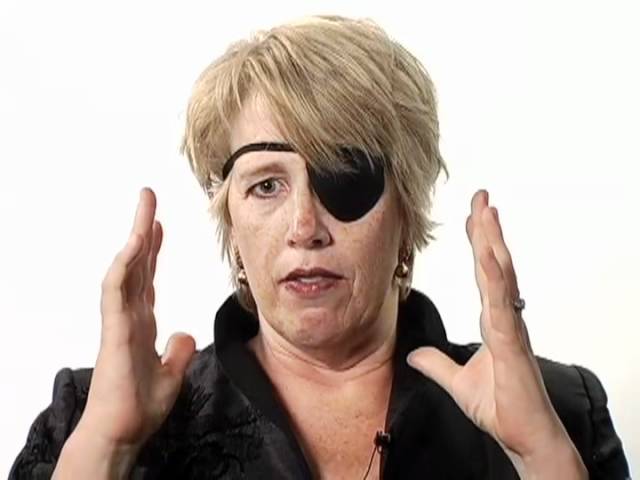 4:01Now Playing
Mary Lou Jepsen On One Laptop Per Child
New videos DAILY
Join Big Think Edge for exclusive videos
----------------------------------------------------------------------------------
Mary Lou Jepsen explains the genesis, progress, and embodiment of this radical idea.
----------------------------------------------------------------------------------
Mary Lou Jepsen:
Mary Lou Jepsen was recently named one of the hundred most influential people in the world by Time Magazine in May 2008 for her work in creating Pixel Qi, and her previous work in creating One Laptop per Child where she was the founding chief technology officer and its first employee. Notably Mary Lou invented the laptop's sunlight-readable display technology and co-invented its ultra-low-power management system. Critically, she architected the XO laptop and transformed it into mass production. Mary Lou's earlier contributions have had world-wide adoptioin in successful HDTV, projector and head-mounted display products. In 1995 she co-founded the Microdisplay Corporation and served as its chief technology officer through 2003. Until the end of 2004, she was a group executive and the chief technology officer of the display division at Intel Corporation. Mary Lou holds a Ph.D. in Optical Sciences, a B.S. in Electrical Engineering (with honors) and a B.A. (req.) in Studio Art all from Brown University as well as a Master of Science in Holography from the MIT Media Lab.
----------------------------------------------------------------------------------
TRANSCRIPT:
Question: How did the idea for the XO laptop begin?
Jepsen: How did we begin? What attracted me to the project was that it was very clear what was happening in the developing world. Hundreds of millions of people in Africa and the developing world were getting cell phones. This was the only growth area in telephony in 2003-2004, the only segment that was making money and it was changing the GDP of these countries because every percent penetration of cell phones you’d get a certain amount of GDP growth. But there were studies showing that if you could get data to these people, not just voice but data, the impact could be three, four, or five times greater for every percent penetration you could get. But how do you make something for the developing world and get them to them? Now that’s when I ran into Nicholas Negroponte who said, “Hey, let’s make $100 laptop and let’s get the governments to buy the laptops en masse and give them one-to-one, one laptop per child.” And I thought, “Oh, my gosh, Nicholas figured out the business model.” Of course we became non-profit to do this business but then it became my job to make the $100 laptop cost $100, which it is a little bit more expensive. We could have hit $150. It’s at $188 and there’s reasons for that and I can defend them, but still it’s the lowest cost laptop ever made, the lowest power laptop ever made and the greenest laptop ever made and all of that comes from looking at it from the screen backwards. The screen is what people see when they see the laptop. There could be little green men inside electronics. It wouldn’t make any impact to somebody looking at the laptop. The screen and the housing are what we see and so if you can lower the cost of the screen and the electronics behind it and lower the power consumption you can deliver amazing results.
Question: What was your primary focus?
Jepsen: The whole architecture, the display, most displays have motherboards so the question was how do you make a display that costs less than $100 because that’s a real barrier to a $100 laptop? And what do you do with the motherboard? It was very clear we had to get rid of the hard disc, right, and move to what we call flash and use a smaller processor, skinny down the operating system, and also massively lower the power consumption, but that really came from choosing, really noticing, working with the chip manufacturer. I asked them a question. I asked them every month for about six months and they finally answered this question. How much power does it take to just keep the screen on even if the pixels aren’t changing? Well the answer was two to three watts and by that point I had reinvented a screen that was one watt instead of a usual screen is like seven watt power consumption. And so I just thought that was stupid to sort of keep a CPU on to consume two to three watts, plus the whole motherboard, just to drive a screen with the same pixels on all the time. Say you’re reading something and just the pixels aren’t moving around. There’s no video on the screen. Everything is sort of the same. Well, it turns out that I know a lot about display but maybe the people-- I didn’t know this was going to be so technical. I’m just wondering how to do a technical talk to a non-technical audience.
Sentinel Indexing in Progress
Metadata and chapters are available. Claim extraction for this episode is pending.
All video content is delivered via YouTube embedded players in accordance with the YouTube Terms of Service. Sentinel provides research tools that promote discovery and accountability across political media.