Big Think
@bigthink·8.8M subscribers·10.1K videos
Christopher Wheeldon: Dancing with the Stars | Big Think
Posted
April 24, 2012
Views
2,095
Likes
10
Engagement
0.48%
April 24, 2012
2,095
10
0.48%
Every word spoken in this episode is indexed. Type any phrase to jump straight to the moment it was said.
Type any word or phrase that may have been spoken. Click a result to seek the player to that exact moment.
Try a name, a topic, or a quoted line
 4:06Now Playing
Christopher Wheeldon: Dancing with the Stars
New videos DAILY
Join Big Think Edge for exclusive videos
----------------------------------------------------------------------------------
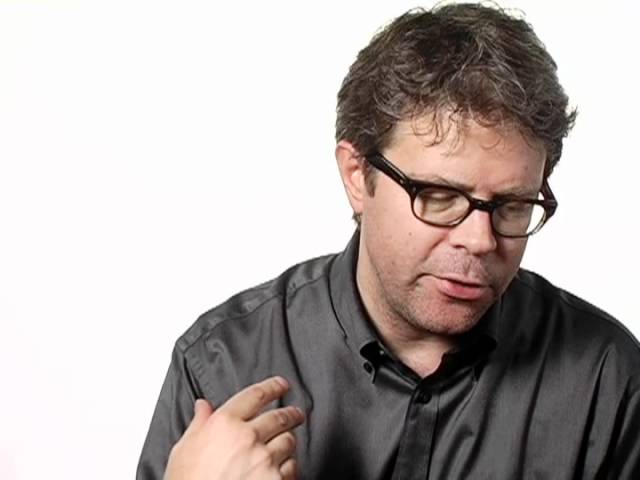
Christopher Wheeldon describes his favorite moments onstage and backstage.
----------------------------------------------------------------------------------
Christopher Wheeldon:
Internationally acclaimed choreographer Christopher Wheeldon is Artistic Director and Co-Founder of Morphoses/The Wheeldon Company. A former dancer with The Royal Ballet and soloist with New York City Ballet (where he served as Resident Choreographer from 2001 to 2008), Wheeldon founded Morphoses in 2007 with the goal of introducing a new spirit of innovation to classical ballet by fostering collaboration among choreographers, dancers, visual artists, designers, composers, and others who can bring new life and perspective to ballet.
Born in Yeovil, Somerset, England, Wheeldon began his ballet training at eight years old and began studying at The Royal Ballet School at eleven. Wheeldon joined The Royal Ballet in 1991 and won the Gold Medal at the Prix de Lausanne competition that year. In 1993, Wheeldon was invited to become a member of New York City Ballet, where he was promoted to soloist in 1998. Wheeldon choreographed his first work for NYCB, Slavonic Dances, for the 1997 Diamond Project and, in collaboration with artist Ian Falconer, created Scènes de Ballet for the School of American Ballet's 1999 Workshop Performances and NYCB's 50th anniversary season.
Wheeldon was the recipient of the Dance Magazine Award and the London Critics' Circle Award for Best New Ballet for Polyphonia in 2005; a performance of the work by NYCB dancers received the Olivier Award. In 2006, DGV (Danse à Grande Vitesse) was nominated for an Olivier Award. Additional honors include the Martin E. Segal Award from Lincoln Center and the American Choreography Award.
----------------------------------------------------------------------------------
TRANSCRIPT:
Question: Of your pieces, which are your favorites?
Wheeldon: Favorite pieces I’ve performed. Well, I was lucky enough to dance with the New York City Ballet after the Royal Ballet for about seven years, so I’ve performed in a lot of work. I worked with a great choreographer, Jerome Robins, in the last four or five years of his life, and he gave me some great opportunities. He created new ballet on me and some of the other younger dancers in the company, and we got to work on a revival of Westside Story, which was all of the choreography from the movie, from the stage show, kind of condensed together in one suite of dances, which is now I think performed regularly all over the world. So that was a great experience. I left London partly because I got a free ticket after buying a vacuum cleaner, and also because the great choreographer, English choreographer, Sir Kenneth MacMillan, who was creating at that time, was coming to the end of his life. He passed away, so the lure of coming to New York was partly to work with Jerome Robins, who was kind of the last great choreographer of that generation, and I got to do that the last four or five years of his life. So dancing his ballets were kind of the highlight for me. Fancy Free is another one, which is a great piece which he choreographed quite early on in his career for American Ballet Theater. It went on to become On the Town, which is a great musical that he did with Leonard Bernstein, and it’s a story of three sailors that come on shore, and I was just reminded of it today, because it’s fleet week in New York, and I keep seeing the sailors walking around. So, yeah, so that was a highlight for me as a dancer. And then, I don’t know, there’s something that I love and hate in every piece that I make. There are pieces that I feel are more successful than others, but it’s very hard for me to know how I feel about a work, because I often finish one, and then it’s done, and it’s kind of out there. It comes out of me, and I don’t know where it comes from. I can’t explain that. It comes out, and then it’s done, and I move on to the next, and sometimes I take elements of what I’ve done in the work before into the next one. Sometimes just start over with a clean slate. But it’s very hard to talk about my work. I don’t really ever know what to say.
Read the full transcript at
Sentinel Indexing in Progress
Metadata and chapters are available. Claim extraction for this episode is pending.
All video content is delivered via YouTube embedded players in accordance with the YouTube Terms of Service. Sentinel provides research tools that promote discovery and accountability across political media.