Big Think
@bigthink·8.8M subscribers·10.1K videos
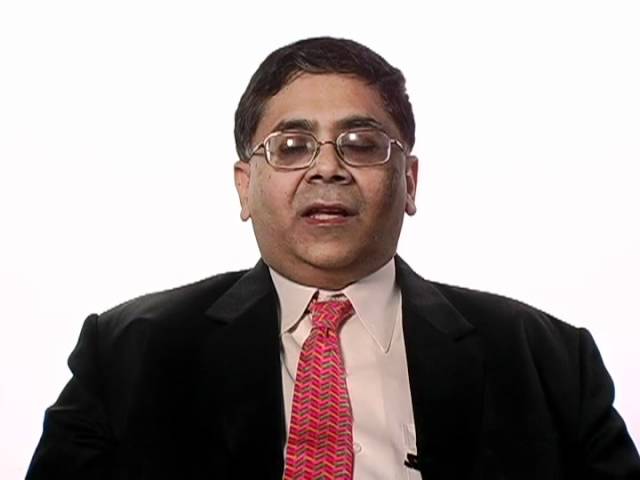
Cyril Shroff on the Mumbai Attacks | Big Think
Posted
April 24, 2012
Views
414
Likes
1
Engagement
0.24%
April 24, 2012
414
1
0.24%
Every word spoken in this episode is indexed. Type any phrase to jump straight to the moment it was said.
Type any word or phrase that may have been spoken. Click a result to seek the player to that exact moment.
Try a name, a topic, or a quoted line
See what was published immediately before and after this episode.
 5:15Now Playing
Cyril Shroff on the Mumbai Attacks
New videos DAILY
Join Big Think Edge for exclusive videos
----------------------------------------------------------------------------------
The lawyer considers terrorism’s impact on Indian society, business and police powers.
----------------------------------------------------------------------------------
Cyril Shroff:
Mr Cyril Shroff is a managing partner of Amarchand & Mangaldas & Suresh A Shroff & Co - India's largest and foremost law firm, with approximately 450 lawyers. Amarchand Mangaldas has offices at Mumbai, New Delhi, Bangalore, Kolkata and Hyderabad. With over 25 years of experience in a range of areas, including corporate laws, securities markets, banking, infrastructure and others, Mr Shroff is regarded and has been consistently rated as India's top corporate, banking and project finance lawyer by several international surveys including those conducted by International Financial Law Review (IFLR), Euromoney, Chambers Global, Asia Legal 500, Asia Law and others.
Mr Shroff has authored several publications on legal topics. He is a visiting lecturer of securities law at the Government Law College. He is a member of the advisory board of the Centre on Lawyers and the Professional Services Industry, established by the Harvard Law School, and a member of the advisory board of the National Institute of Securities Markets (NISM).
Mr Shroff is a member of the executive council of the legal practice division (LPD) of the International Bar Association (IBA) and the advisory board of the Asia-Pacific forum of the IBA. He is a member of the Media Legal Defence Initiative (MLDI) international advisory board. He is also a member of the primary markets advisory committee of the Securities and Exchange Board of India. Mr Shroff is also part of various committees of the Confederation of Indian Industry (CII) - the national council on corporate governance, the national committee on commodities markets, the subcommittee on financial investors, the national committee on regulatory affairs and the national committee on capital markets. He has also been a member of several governmental and other regulatory committees on law reform concerning the corporate and securities market, bankruptcy laws, commercialisation of infrastructure, etc.
Mr Shroff was admitted to the Bar in 1982 after receiving his BA and LLB degrees from the Government Law College in Mumbai. He has been a solicitor at the Bombay High Court since 1983.
----------------------------------------------------------------------------------
TRANSCRIPT:
Question: How did the Mumbai attacks change India’s attitude toward terrorism?
Cyril Shroff: It’s a landmark event in our psyche. We were always worried about terrorism which was mainly cross-border. In the initial years we thought of it essentially as a problem that was effectively centered around Kashmir and there were sporadic incidence across the country.
But I think 26/11 changed a lot of that because it made us all realize how vulnerable we are and how soft the target we are. Mumbai which is such a prominent commercial city and how easy it was for a bunch of 10 to 15 young boys effectively to come and hold a city to ransom for nearly four days and occupy the attention of the whole world just showed how weak we are. And I’m sure Mumbai is not the only city which can if they decided to do it, in any other European city as well, I’m sure they will find a way because they are determined and have belief that really have nothing to loose.
How do I view the security situation? I say with a lot of trepidation because everyday we open the newspapers and we see the situation on our western border deteriorating and our heart sink lower and lower everyday. We don’t know where that is going to end but we are really relying upon Washington to help us resolve this.
Look at the way India reacted. Did it post-26/11 take a bunch of fighter aircraft and bombed these camps out of existence. They could have done that I’m sure but I think the outcome of that would have been far worse. This is probably what those behind the attacks were looking for, and I’m glad that our government was mature enough not to fall into that trap.
Question: What action are you taking to reform security?
Cyril Shroff: So a bunch of like-minded citizens like myself be filed a public interest litigation in our high court in Mumbai seeking mandatory judicial reliefs for police reform, because we thought one of the factors that would be essential for preventing in recurrence of this in the future would be a stronger security set up, a more empowered police and this case is pending in our high court. Our judiciary has got quite interested.
Read the full transcript at
Sentinel Indexing in Progress
Metadata and chapters are available. Claim extraction for this episode is pending.
All video content is delivered via YouTube embedded players in accordance with the YouTube Terms of Service. Sentinel provides research tools that promote discovery and accountability across political media.