Big Think
@bigthink·8.8M subscribers·10.1K videos
Robert Dolan Teaches Business Ethics | Big Think
Posted
April 24, 2012
Views
341
Likes
1
Engagement
0.29%
April 24, 2012
341
1
0.29%
Every word spoken in this episode is indexed. Type any phrase to jump straight to the moment it was said.
Type any word or phrase that may have been spoken. Click a result to seek the player to that exact moment.
Try a name, a topic, or a quoted line
See what was published immediately before and after this episode.
 8:22Now Playing
Robert Dolan Teaches Business Ethics
New videos DAILY
Join Big Think Edge for exclusive videos
----------------------------------------------------------------------------------
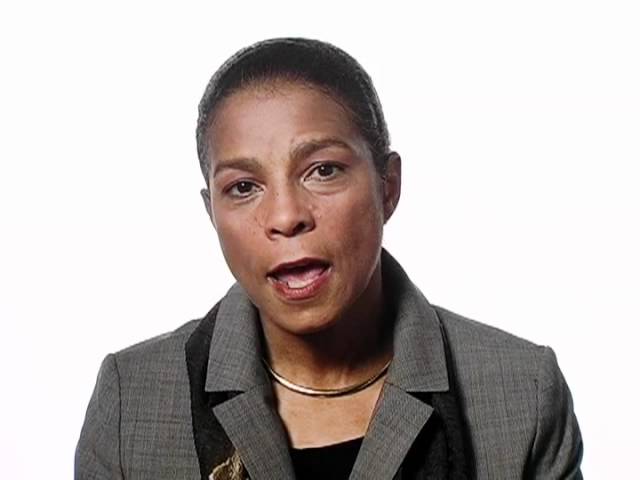
The dean describes the role of ethics in a complicated business world.
----------------------------------------------------------------------------------
Robert J. Dolan:
Robert J. Dolan is the dean of the Ross School of Business at the University of Michigan.
A professor of marketing, he was a chaired faculty member and administrator at Harvard Business School for 21 years. His major research interests are product policy and pricing. He has published widely on these topics in such journals as the Bell Journal of Economics, European Management Journal, Harvard Business Review, Industrial Marketing Management, Journal of Business, Journal of Marketing, Marketing Science, and Sales and Marketing Management
Dean Dolan earned a Ph.D. and an M.S. in management at the University of Rochester and a B.A. magna cum laude in mathematics from Boston College.
Dolan is author or co-author of eight books and numerous case studies. His Managing the New Product Development Process (Addison-Wesley), based on research to develop the New Product Development course in the MBA Program at Harvard, has been adopted at a number of leading business schools. A recent book, Power Pricing: How Managing Price Transforms the Bottom Line (Free Press), was developed for practitioners. Drawing on research and consulting experiences with firms worldwide, the book sets out a program for proactive management of prices for superior profitability. His case studies and notes, published by Harvard Business School, address a wide range of companies and issues, including Black and Decker, BMW, Henkel Corporation, L’Oreal, and Eastman Kodak. More than one million copies of these materials have been sold to date.
A frequent lecturer and consultant, he assists a wide variety of clients on issues of product policy and pricing. He has testified on marketing issues in a number of major litigations and has served on the boards of directors of several publicly traded companies including Knoll Inc., a leading office furniture manufacturer and Precise Software Inc.
----------------------------------------------------------------------------------
TRANSCRIPT:
Question: Are fewer MBA graduates going directly into the financial sector?
Robert Dolan: In the near term, absolutely. I mean, what we have seen just this year, you know, certainly has been a significant decrease in terms of recruiting activity on campus from the financial community. We were reasonably diversified going into this. About 20, between 20 percent and 25 percent of our students, our MBA students, were going into finance. So we had less repositioning to do than some of those 50 plus schools that you’d be mentioning a moment ago. But definitely, we have seen a repositioning. And, you know, many more of our students are interested in, now, going into, really quite varied set of positions. Consumer package goods are pretty strong, healthcare is obviously growing, technology-orientated things. So we’re a general management school and our orientation to a general management and action- based learning has meant that we, historically, have been less orientated toward finance. But I suspect even for us, being a general management school, the placement of our students in the finance world, we fully anticipate that that will be a smaller percentage this year than it has been in the recent past.
Question: Will business students need incentives to choose less lucrative career paths?
Robert Dolan: Well, I don’t know that we have to incent them so much as that the market will incent them to it. I, you know, I never worry too much about us incenting students one direction or another. I think our responsibility was to educate students, make them be thoughtful about their career choice. And then, while some schools would look at their 50 percent of students going into finance and be horrified at that number or so many going into industries in which you don’t “make things,” I always felt our job was to really provide a great general experience for our students. And then, if they chose to go into one industry or another,
Read the full transcript at
Sentinel Indexing in Progress
Metadata and chapters are available. Claim extraction for this episode is pending.
All video content is delivered via YouTube embedded players in accordance with the YouTube Terms of Service. Sentinel provides research tools that promote discovery and accountability across political media.