Big Think
@bigthink·8.8M subscribers·10.1K videos
David Frum, Norman Podhoretz, and World War IV? | Big Think
Posted
April 24, 2012
Views
342
Likes
2
Comments
1
Engagement
0.88%
April 24, 2012
342
2
1
0.88%
Every word spoken in this episode is indexed. Type any phrase to jump straight to the moment it was said.
Type any word or phrase that may have been spoken. Click a result to seek the player to that exact moment.
Try a name, a topic, or a quoted line
Episode Timeline
Every episode in order around the one you’re watching — click any card and the page flips straight to it.
 4:10Now Playing
David Frum, Norman Podhoretz, and World War IV?
New videos DAILY
Join Big Think Edge for exclusive videos
----------------------------------------------------------------------------------
That formulation is too dramatic.
----------------------------------------------------------------------------------
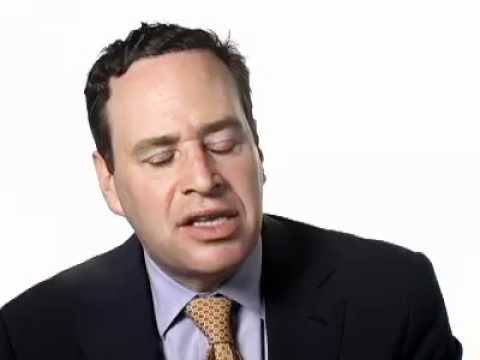
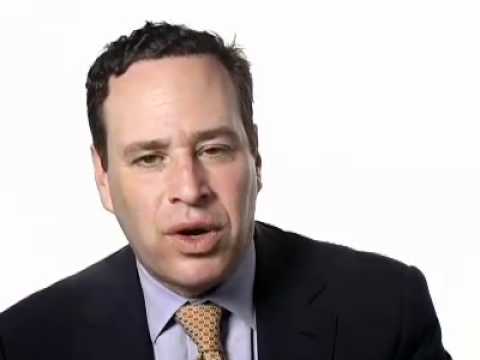
David Frum:
David Frum is the author of five books, including two New York Times bestsellers: THE RIGHT MAN: The Surprise Presidency of George W. Bush (2003), and co-author with Richard Perle of AN END TO EVIL: What's Next in the War on Terror (2004).
Frum is a resident fellow at the American Enterprise Institute and writes a daily column for National Review Online. He contributes frequently to the editorial pages of The New York Times and The Wall Street Journal, as well as the Great Britain's Daily Telegraph and Canada's National Post. He appears regularly on CNN, Fox News, and the BBC. In 2001-2002, David Frum served as a speechwriter and special assistant to President George W. Bush.
----------------------------------------------------------------------------------
TRANSCRIPT:
David Frum: Whenever I hear that formula I think of a story my father-in-law tells. When my brother-in-law was a young boy, my father-in-law was summoned to the elementary school, and the teacher said, "Mr. Worthington, we're very worried about your son, Casey. We want to show you some of his art work."
And the first picture is planes and tanks and fighter bombers and explosions everywhere and it's labeled War World I. And then underneath that there's a second one, and it's the same kind of scene and it's labeled World War II.
And my father-in-law says, "Well, he's drawing World War I and World War II."
And the teacher says, "Mr. Worthington, just a moment," and flips it over and there's World War III, World War IV, World War V, World War VI, all the way, I think, through World War XI. And the teacher said, "What do you make of this?" and my father-in-law said, "Casey's an optimist?"
I don't like the World War IV formulation [in the book World War IV: The Long Struggle Against Islamofascism by Norman Podhoretz], I think it's too dramatic, and I think it both overstates and understates. It offers you a vision of a much more explosive level of violence than we face with this threat from Islamic extremism where the most remarkable thing over the past half dozen years [i.e. 2002 to 2008] is how this threat has really been contained.
With every passing year the terrorists plots we discover are less sophisticated, less capable, how the terrorists are being forced in upon themselves, prevented from communicating.
And we are never going to be immune to the lone nut Virginia Tech person who glorifies himself by imposing suffering on others. But you can prevent him from finding associates. And we're getting better and better at that.
At the same time, I don't like it because it also understates what is expected of people, just how chronic and difficult this problem is going to be. We have, what is it, usually estimated a billion, or a little more than a billion, in the Islamic world, probably about a fifth of them are to some degree sympathetic to these radical ideas, are open to this kind of violence, maybe only a tiny fraction would actually do it themselves, but they're open to it.
That is a big chronic problem that is going to really shape the policies of the 21st century and there's not going to be some parade day where that problem goes away.
And holding out that hope and making it seem like this is a three-year problem or a four-year problem or something within the scope of war, I think is not a healthy or helpful way to talk.
Question: How do we engage the 1/5 you say is open to violent ideas?
David Frum: Well, in the end the solutions really aren't up to us. The Islamic world is in the midst of attempting to make the transition to a more modern way of life, depending on whether they're successful or not; and this trend towards extremism and violence is a product of that transition.
In some ways, terrorism is one way that some people in the Islamic world try to become modern. They develop this new ideology that goes as much to Franz Phenault as it does to the Koran.
So we have to take protective measures. We certainly want to promote economic development; we want to keep deadly weapons out of the hands of states and groups; we want to promote the spread of democratic ideas because you want to give people better instruments for expressing their grievances. But in the end, this is going to be their decision.
Read the full transcript at
Sentinel Indexing in Progress
Metadata and chapters are available. Claim extraction for this episode is pending.
All video content is delivered via YouTube embedded players in accordance with the YouTube Terms of Service. Sentinel provides research tools that promote discovery and accountability across political media.