Big Think
@bigthink·8.8M subscribers·10.1K videos
Say Goodbye to Business as Usual | Big Think
Posted
April 24, 2012
Views
269
Likes
1
Engagement
0.37%
April 24, 2012
269
1
0.37%
Every word spoken in this episode is indexed. Type any phrase to jump straight to the moment it was said.
Type any word or phrase that may have been spoken. Click a result to seek the player to that exact moment.
Try a name, a topic, or a quoted line
Episode Timeline
Every episode in order around the one you’re watching — click any card and the page flips straight to it.
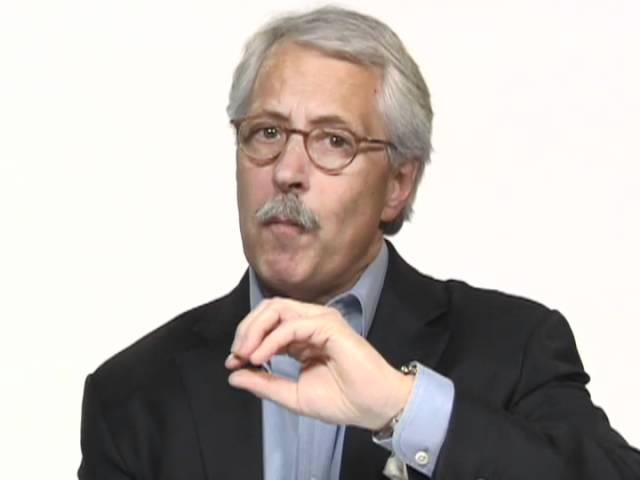 4:40Now Playing
Say Goodbye to Business as Usual
New videos DAILY
Join Big Think Edge for exclusive videos
----------------------------------------------------------------------------------
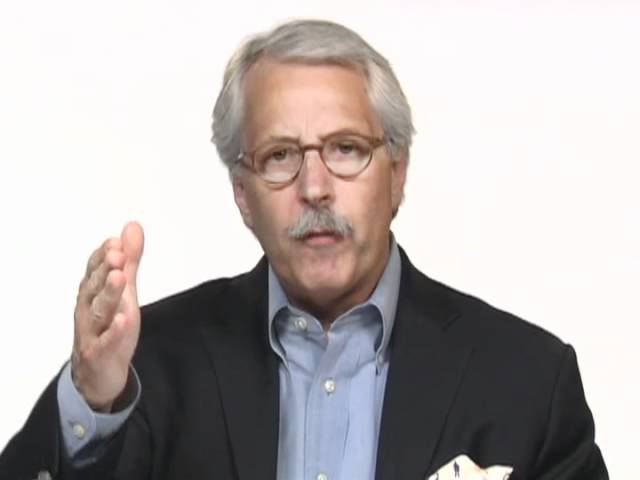
Companies that ultimately win evolve their management models and experiment with the status quo, says bestselling author Gary Hamel.
----------------------------------------------------------------------------------
Gary Hamel:
Over the past twenty years, Hamel has authored 15 articles for the Harvard Business Review. He has also written for the Wall Street Journal, Fortune, The Financial Times and many other leading publications around the world.
Hamel's books, Leading the Revolution and Competing for the Future, have appeared on every management bestseller list and have been translated into more than 20 languages. His latest book, The Future of Management, was published by the Harvard Business School Press in October 2007 and was selected by Amazon.com as the best business book of the year.
Since 1983, Hamel has been on the faculty of the London Business School where he is currently Visiting Professor of Strategic and International Management.
As a consultant and management educator, Hamel has worked for companies as diverse as General Electric, Time Warner, Nokia, Nestle, Shell, Best Buy, Procter & Gamble, 3M, IBM, and Microsoft. His pioneering concepts such as "strategic intent," "core competence," "industry revolution," and "management innovation" have changed the practice of management in companies around the world.
Hamel speaks frequently at the world's most prestigious management conferences, and is a regular contributor to CNBC, CNN, and other major media outlets. He has also advised government leaders on matters of innovation policy, entrepreneurship and industrial competitiveness.
At present, Hamel is leading an effort to build the world's first "Management Lab." The MLab is a pioneering attempt to create a setting in which progressive companies and world renowned management scholars work together to co-create "tomorrow's best practices" today. The goal: to radically accelerate the evolution of management knowledge and practice.
----------------------------------------------------------------------------------
TRANSCRIPT:
Topic: Companies that win
Gary Hamel: I believe the companies that win over the next few years are going to be the companies that evolve their management models faster than their competitors. And there are a lot of reasons to believe that there are, you know, good alternatives to the status quo. One of the most successful companies over the last few years in India has been HCL Technologies, an Indian IT services company. Their entire management model is built on the principle of reverse accountability. In this company, an employee can fill out a ticket on their boss or an internal service provider, like HR, internal IT.
Say I don't agree with this decision or I don't believe I've been treated fairly, and only the employee can close that ticket when their concerns have been addressed. Managers are measured and kind of tracked on the basis of how many tickets have been filled against them, how quickly are they closed. And I could give you a half dozen other things that HCL is doing in that same spirit. Radically different management model than you find, you know, in the average company today.
So clearly, it is possible. There are alternatives to the status quo. It's hard to imagine them, because management itself has not changed much during our working lifetimes. Mostly we fiddled at the margins, but now we have to go beyond that. I think the question is though, how do you innovate radically in management, without blowing up your organization? And I would argue, like in any other area of human endeavor, we have to be able to experiment, right. That's the way you do something radical and safe at the same time.
If you're a drug company, you don't start out by putting a new pharmaceutical in the water supply. You start out by testing it in a simulation with rats, or whatever it may be. I think we have to think about management in the same way. Typically, when we think about changing an HR system or a budgeting system, we give that project to a big team. We give them six months, we ask them to kind of tear it all apart and put it back together again. That's a very risky proposition. So risky that normally you only want to do something that's a small tweak, fairly incremental versus what you already have.
Read the full transcript at
Sentinel Indexing in Progress
Metadata and chapters are available. Claim extraction for this episode is pending.
All video content is delivered via YouTube embedded players in accordance with the YouTube Terms of Service. Sentinel provides research tools that promote discovery and accountability across political media.