Big Think
@bigthink·8.8M subscribers·10.1K videos
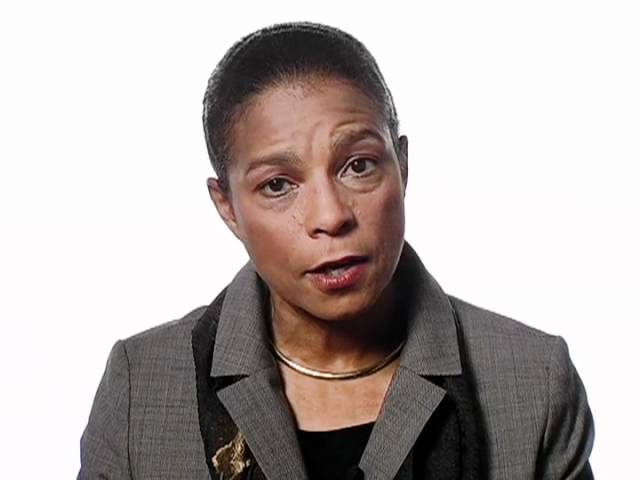
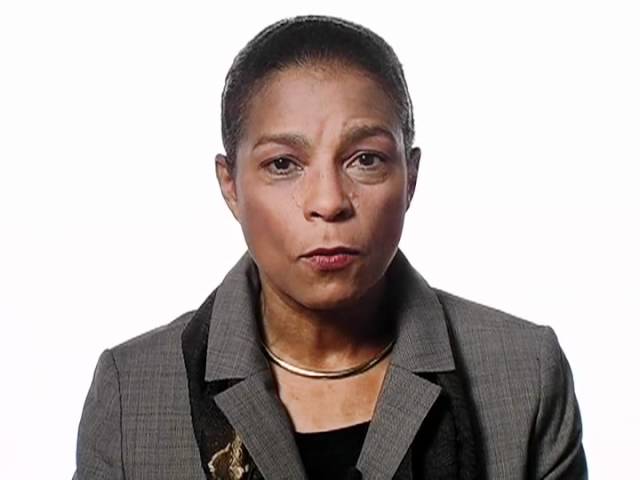
Dean Baker: The U.S. Government Is a Bit of a Nanny | Big Think
Posted
April 24, 2012
Views
336
Likes
2
Comments
1
Engagement
0.89%
April 24, 2012
336
2
1
0.89%
Every word spoken in this episode is indexed. Type any phrase to jump straight to the moment it was said.
Type any word or phrase that may have been spoken. Click a result to seek the player to that exact moment.
Try a name, a topic, or a quoted line
See what was published immediately before and after this episode.
 6:29Now Playing
Dean Baker: The U.S. Government Is a Bit of a Nanny
New videos DAILY
Join Big Think Edge for exclusive videos
----------------------------------------------------------------------------------
The economist looks at the run-up and reaction to the financial crisis.
----------------------------------------------------------------------------------
Dean Baker:
Dean Baker is co-director of the Center for Economic and Policy Research in Washington, DC. He is frequently cited in economics reporting in major media outlets, including the New York Times, Washington Post, CNN, CNBC, and National Public Radio. He is author of several books, including "False Profits: Recovering from the Bubble Economy" and "The United States Since 1980." His popular blog Beat the Press is a weekly commentary on the state of financial reporting.
----------------------------------------------------------------------------------
TRANSCRIPT:
Question: Should we have let insolvent banks fold?
Dean Baker: In an orderly way. I mean, we did have a problem. If you go back to September of 2008 when Lehman went under and the financial markets froze, that was a problem. I wouldn’t say that was a good thing. We don’t want to see that happen again. I’ll say 2 things about that.
One, that was not the end of the world—I don’t want to be there again, I’ll be real clear about that, I don’t want to be there again—but it was not as though the world was about to end. We would’ve been in an unpleasant circumstance where if things kept going down that path, the Fed basically would have had to step in and take over the banks. They actually had a plan to do that in the ‘80s when Latin-American debt had left many of the big money center banks on the edge of insolvency. And as I heard from the former head of the FDIC, the Fed at that time had a contingency plan that, had Mexico or one of the other big debtors outright defaulted, it would simply step in and take over the banks. Presumably, we have looked at that sort of situation. That would have been good but the idea that the economy just would have come to a screaming halt and that we would all be sitting here without being able to use our credit cards, not get access to our money in our bank account—that might’ve been 24 hours, something like that, a scary period but the economy would not have ground to a halt. So the worst case scenario, just to be clear, it was not that we would all be sitting here with a 21st century economy but no means of payments. That would not have happened.
The second point is we have a lot of mechanisms, a lot of safeguards that were put in place post-Lehman. So we now guarantee deposits up to 250,000 dollars. We guarantee all money on interest bearing deposits. We guarantee money market mutual funds. So there are a lot of safeguards in place today that were not in place back in September of 2008. So if we have a controlled bankruptcy of a Citigroup, of a Bank of America, I’m fairly confident that we can get through it. I can’t say for certain that we won’t have the sort of panic that we had back in September but I think there are good reasons to believe that we won’t have that. And again, even in that very worst case scenario, which I don’t think would happen, but even in that very worst case scenario, we are prepared to deal with that with extreme measures, which, again, none of us want to see. But I think the risk of that might be better than just giving as much as a trillion dollars to the banks.
Question: Why didn’t economists predict the housing bubble?
Dean Baker: I think what you have is a situation where there is enormous pressure for conformity and certainly among economists. So when you had top economists, certainly Federal Reserve Board Chair Greenspan and Bernanke, his successor, saying there was no bubble and many other prominent economists agreeing with that view, most economists didn’t want to step out of line and contradict them. Or for the most part [economists] probably never even looked at it closely. I was out there talking about this since 2002. There are a few others, not a lot, but we are easy enough to ignore. So I think most economists are relatively narrowly focused on their careers and picking a fight with the Federal Reserve Board Chair generally isn’t the best way to advance your career.
To take the flipside of this, if you ask who has suffered a price, who has lost their job, or let’s put it more narrowly: who’s missed a promotion because they didn’t see the housing bubble? You will probably be hard pressed to find anyone. So looking at economists the way economists would look at other people, you would ask: what is the structure of incentives? Well, the structure of incentives that go around talking about a housing bubble just doesn’t pay because, one,
Read the full transcript at
Sentinel Indexing in Progress
Metadata and chapters are available. Claim extraction for this episode is pending.
All video content is delivered via YouTube embedded players in accordance with the YouTube Terms of Service. Sentinel provides research tools that promote discovery and accountability across political media.