
Big Think
@bigthink·8.8M subscribers·10.1K videos
Environment and the Developing World Vinod Khosla | Big Think
Posted
April 24, 2012
Views
298
Likes
1
Engagement
0.34%
April 24, 2012
298
1
0.34%
Every word spoken in this episode is indexed. Type any phrase to jump straight to the moment it was said.
Type any word or phrase that may have been spoken. Click a result to seek the player to that exact moment.
Try a name, a topic, or a quoted line
Episode Timeline
Every episode in order around the one you’re watching — click any card and the page flips straight to it.
 1:37Now Playing
Environment and the Developing World
New videos DAILY
Join Big Think Edge for exclusive videos
----------------------------------------------------------------------------------
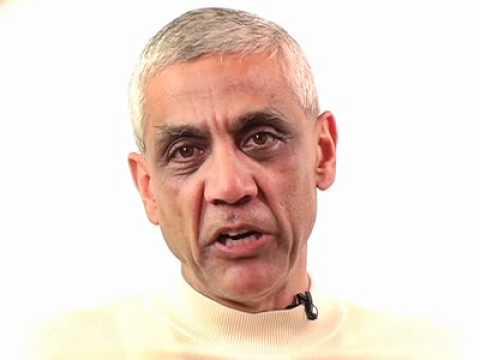
Khosla talks about the importance of bringing people out of poverty while giving them an equal right to grow economically.
----------------------------------------------------------------------------------
Vinod Khosla:
A leading venture capitalist, Vinod Khosla is the co-founder of Daisy Systems and founding Chief Executive Officer of Sun Microsystems. Khosla pioneered open systems and commercial RISC processors. He became a general partner of the venture capital firm Kleiner, Perkins, Caufield & Byers in 1986 and has mentored many entrepreneurs in building technology-based businesses. In 2004, he started his own firm, Khosla Ventures. He is an advocate of clean energy and supported the campaign to pass California's Proposition 87. Born in 1955 in India, Khosla was determined to pursue technology as a career since his early teens. Khosla was educated at the IIT Delhi, Carnegie Mellon University and the Stanford Graduate School of Business.
----------------------------------------------------------------------------------
TRANSCRIPT:
Question: Are environmentalism and development in the third world at odds?
Vinod Khosla:I don’t believe so. And whether it is or isn’t almost is irrelevant. We don’t have a choice. We can’t ask billions of people to live in poverty. The issue is more a moral issue. First we need to do something about carbon emissions. But the people I’ve talked to have a valid moral basis. In fact many senior members of the Indian government tell me they would love to participate in a cap and trade system if the basis for that cap and trade is decided and fair. And their basis is every human being should have the same right to pollute our atmosphere. On that basis you’ll get participation in a minute. The problem is that doesn’t work from a climate change perspective. And so we have to then find some other tradeoff that works both for the developing world. Let them use the energy they need to use to develop, and yet restrict the total amount of carbon on this planet. I believe that is doable. It will require compromises on all sides; but we will have to stick with this moral principle of people having somewhat equal rights to produce . . . to pollute the atmosphere.
Sentinel Indexing in Progress
Metadata and chapters are available. Claim extraction for this episode is pending.
All video content is delivered via YouTube embedded players in accordance with the YouTube Terms of Service. Sentinel provides research tools that promote discovery and accountability across political media.


