Big Think
@bigthink·8.8M subscribers·10.1K videos
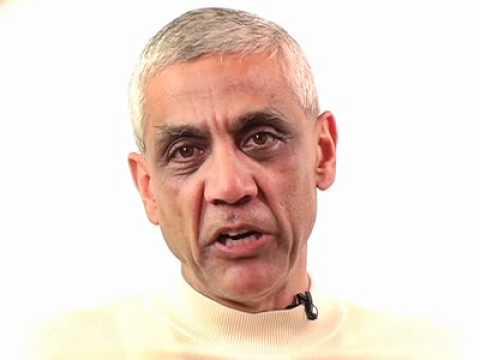
The U.S. Government's Role in the Economy Robert Hormats | Big Think
Posted
April 24, 2012
Views
1,002
Likes
5
Engagement
0.50%
April 24, 2012
1,002
5
0.50%
Every word spoken in this episode is indexed. Type any phrase to jump straight to the moment it was said.
Type any word or phrase that may have been spoken. Click a result to seek the player to that exact moment.
Try a name, a topic, or a quoted line
Episode Timeline
Every episode in order around the one you’re watching — click any card and the page flips straight to it.
 3:19Now Playing
The U.S. Government's Role in the Economy
New videos DAILY
Join Big Think Edge for exclusive videos
----------------------------------------------------------------------------------
The American people need more candor, Hormats says.
----------------------------------------------------------------------------------
Robert D. Hormats:
Robert D. Hormats is the U.S. Under Secretary of State for Economic, Business, and Agricultural Affairs. He was formerly vice chairman of Goldman Sachs (International) and managing director of Goldman, Sachs & Co.
Hormats has also served as ambassador and deputy US Trade Representative, and senior deputy assistant secretary for Economic and Business Affairs at the US Department of State. He was a senior staff member on the National Security Council and senior economic advisor to National Security Advisors Henry Kissinger, Brent Scowcroft, and Zbigniew Brzezinski. Hormats has received the French Legion of Honor and Arthur Fleming Award.
Mr. Hormats has been a visiting lecturer at Princeton University and is a member of the Board of Visitors of the Fletcher School of Law and Diplomacy and the Dean's Council of the John F. Kennedy School of Government at Harvard University.
Mr. Hormats' publications include Abraham Lincoln and the Global Economy; American Albatross: The Foreign Debt Dilemma; and Reforming the International Monetary System. Mr. Hormats earned a B.A. from Tufts University with a concentration in economics and political science; an M.A. and a Ph.D. in international economics from the Fletcher School of Law and Diplomacy.
----------------------------------------------------------------------------------
TRANSCRIPT:
Topic: The U.S. Government's Role in the Economy
Robert Hormats: There are several things. First candor. A very candid, very direct dialogue with the American people about the fundamental issues and the fundamental choices we face as a country.
What are the options for reforming Social Security? What are the options for reforming Medicare? What are the options for strengthening our educational system – dramatically strengthening it, which it needs. What are the options for reducing our dependence on imported oil? What are the options for ensuring that there’s sufficient funds available to protect us and fight the war on terror?
The problem is that this administration [i.e. the George W. Bush administration] and many members of Congress have not been willing to take on these tough issues. They’ve created the impression that you can do these things on the cheap. For instance, you can’t finance the military through backdoor spending or supplementals; that you really don’t need to make tough choices among national priorities; that you can promise things for the future and let someone else deal with them five, ten years down the road.
And therefore candor is, I think, the most important thing for the president; the new president to exhibit.
And the second is that we have to understand what it takes to compete in this new world economy, and also what it takes to ensure that a sizeable number of Americans do not feel left behind by new technologies, by new productivity enhancing devices, by globalization.
Too many people feel that new technology is a threat to them; that new changes in the global system – globalization of trade and investment – are harmful to them or disruptive of their lives; that they can’t compete in that environment, then we’re going to have a fractured economy.
Then we’re going to have a very corrosive political and social system where one group of people sees itself as benefiting enormously from technical progress, from globalization; and another group sees these things as enormous threats.
And that leads to the question of a widening income gap. That also in this country can be very corrosive of our system.
And third, if people don’t have the sense that there’s upward mobility, many of them will feel that the system is blocked for them; that they simply can’t adjust to these changes and they will become very, very unhappy. But more than unhappy, they’ll be working against the kinds of technical change which the overall economy needs to maintain its edge.
So people have to be brought into the process. They have to see the process of change as beneficial to them, and not see it as antithetical to their interests.
Sentinel Indexing in Progress
Metadata and chapters are available. Claim extraction for this episode is pending.
All video content is delivered via YouTube embedded players in accordance with the YouTube Terms of Service. Sentinel provides research tools that promote discovery and accountability across political media.