Big Think
@bigthink·8.8M subscribers·10.1K videos
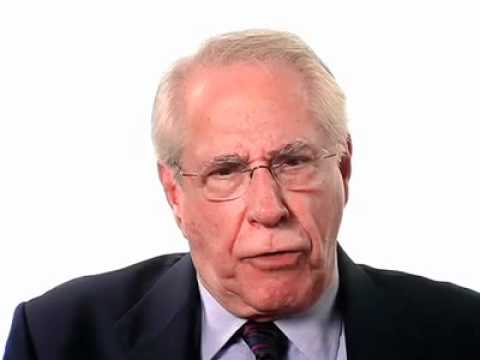
Glenn Loury Won't Drink Anybody's Kool-Aid | Big Think
Posted
April 24, 2012
Views
1,006
Likes
20
Engagement
1.99%
April 24, 2012
1,006
20
1.99%
Every word spoken in this episode is indexed. Type any phrase to jump straight to the moment it was said.
Type any word or phrase that may have been spoken. Click a result to seek the player to that exact moment.
Try a name, a topic, or a quoted line
Episode Timeline
Every episode in order around the one you’re watching — click any card and the page flips straight to it.
 7:02Now Playing
Glenn Loury Won't Drink Anybody's Kool-Aid
New videos DAILY
Join Big Think Edge for exclusive videos
----------------------------------------------------------------------------------
The man once shunned by the black liberal community is shocked by how radical his opinions have become.
----------------------------------------------------------------------------------
Glenn Loury:
Glenn Loury is the Merton P. Stoltz Professor of the Social Sciences and Professor of Economics at Brown University. He is one of the nation's foremost black intellectuals, having held positions at Northwestern University, the University of Michigan, Harvard University, and Boston University.
Loury's sometimes controversial dissection of racial disparities, systemic racism, and economic justice have often landed his views at the center of attention. Early in his professorial career, Loury made his mark as a distinguished academic economist with specific focus on the fields of welfare economics, industrial organization, natural resource economics, and the economics of income distribution. Once earmarked as the leading candidate for the position of under secretary of education in the Reagan administration before withdrawing his name from consideration, Loury also gained notoriety as a controversial social critic with right-wing perspectives that led to his designation as "one of the black darlings of the neoconservative intelligentsia" by Africana.com.
In the 1980s and 1990s, Loury became known for his abrasive critique of affirmative action and his propensity to blame racial inequality on the dysfunction and corruption within the black community, as opposed to the racist attitudes that some argued gave rise to this scenario.
In the late 1990s, however, Loury divulged a much-publicized split with the right, revising former viewpoints and attacking former colleagues. This break was formally ushered in with the release of his new book, The Anatomy of Racial Inequality, in February of 2002.
----------------------------------------------------------------------------------
TRANSCRIPT:
Question: What are you?
Glenn Loury: I'm left. Okay. And sometimes radically, and sometimes I even shock myself with the degree of radicalness in my own--that I'm allowing to come out in my old age. On the other hand, there's some of my--I got the reputation of being a conservative because I was one of these personal responsibility guys. Before Bill Cosby made it popular, talking about how black people needed to pull up our socks, how we needed to take better care of our children, and get our acts together, and how that was an internal difficulty that we needed to actually address within ourselves.
I even flirted a little bit with sort of Black Nationalism. I mean, I had more than a kind word to say about the minister, Louis Farrakhan. I once wrote a piece about the Million Man March, 1995 Million Man March, Washington D.C., Louis Farrakhan, which is remembered, I think nowadays, mostly because Farrakhan gave a very odd and rambling, and in places incoherent and in other places kind of weird, speech. It went on for 90 minutes, or something like that, at this Million Man March. But the thing that I remember was one million, more or less, African-American men, assembled in one place, emphasizing communal uplift, responsibility, and a positive agenda. And I was very much taken by that. And I guess that still lingers in me to some degree.
I also have this anti-political correctness thing that's a part of my persona. I mean, I just haven't drunk anybody's kool-aid, you know what I mean. I mean, I just can't go with, with the flow. I mean, when Chris Matthews thinks Obama is great, that's when I start saying, okay, let me take another look at this Obama. You know what I mean. 'Cause this is so I just can't -- and therefore, I may be hard to pigeon-hole, because I'm going to be on the contrary of side, or whatever the thing might be.
I think the War on Terror is horrible. I hated what the Bush administration was doing. On the other hand, I didn't think that we should criminalize those policy differences by going after these people after the fact. And I thought that all that band-wagging stuff about how Eric Holder ought to -- let's prosecute him and let's edict Bush and Chaney, and how I thought it was crazy and irresponsible. I'm I'm likely to say something like that. I don't know. Enough about me, right?
Question: Is Obama being treated fairly in the press?
Glenn Loury: The progressive forces in our country including those in the press, I don’t think do the cause any good by not reporting with brutal, critical candor, and scrutiny, on this administration, every bit as much as they would do on any other administration.
Read the full transcript at
Sentinel Indexing in Progress
Metadata and chapters are available. Claim extraction for this episode is pending.
All video content is delivered via YouTube embedded players in accordance with the YouTube Terms of Service. Sentinel provides research tools that promote discovery and accountability across political media.