Big Think
@bigthink·8.8M subscribers·10.1K videos
What Keeps Glenn Loury Up At Night | Big Think
Posted
April 24, 2012
Views
538
Likes
11
Comments
1
Engagement
2.23%
April 24, 2012
538
11
1
2.23%
Every word spoken in this episode is indexed. Type any phrase to jump straight to the moment it was said.
Type any word or phrase that may have been spoken. Click a result to seek the player to that exact moment.
Try a name, a topic, or a quoted line
Episode Timeline
Every episode in order around the one you’re watching — click any card and the page flips straight to it.
 3:27Now Playing
What Keeps Glenn Loury Up At Night
New videos DAILY
Join Big Think Edge for exclusive videos
----------------------------------------------------------------------------------
More than anything, he’s terrified the U.S. is becoming a nation permanently at war.
----------------------------------------------------------------------------------
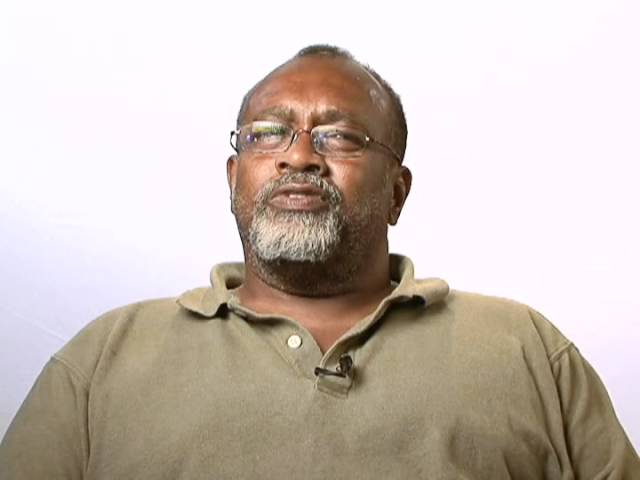
Glenn Loury:
Glenn Loury is the Merton P. Stoltz Professor of the Social Sciences and Professor of Economics at Brown University. He is one of the nation's foremost black intellectuals, having held positions at Northwestern University, the University of Michigan, Harvard University, and Boston University.
Loury's sometimes controversial dissection of racial disparities, systemic racism, and economic justice have often landed his views at the center of attention. Early in his professorial career, Loury made his mark as a distinguished academic economist with specific focus on the fields of welfare economics, industrial organization, natural resource economics, and the economics of income distribution. Once earmarked as the leading candidate for the position of under secretary of education in the Reagan administration before withdrawing his name from consideration, Loury also gained notoriety as a controversial social critic with right-wing perspectives that led to his designation as "one of the black darlings of the neoconservative intelligentsia" by Africana.com.
In the 1980s and 1990s, Loury became known for his abrasive critique of affirmative action and his propensity to blame racial inequality on the dysfunction and corruption within the black community, as opposed to the racist attitudes that some argued gave rise to this scenario.
In the late 1990s, however, Loury divulged a much-publicized split with the right, revising former viewpoints and attacking former colleagues. This break was formally ushered in with the release of his new book, The Anatomy of Racial Inequality, in February of 2002.
----------------------------------------------------------------------------------
TRANSCRIPT:
Question: What keeps you up at night?
Glen Loury: Well, I think the War on Terror is something that I'm most terrified of. Now that may seem to be coming out of, I don't know, left field or the stratosphere. I'm not sure where that comes from, 'cause we've been talking about race and domestic American policy, and drugs, and whatnot. And I'm not a foreign policy expert by any means. I'm not. I'm not. And yet Iraq, Afghanistan, not just that, but the whole kind of taking over of our defense and security establishment by this mentality, this kind of Orwellian war against a shape-shifting and faceless, and almost indefinable enemy.
The war that never ends. I mean, when is it going to be over? The war that someone even dare not say we're not fighting it any more. I mean it's kind of -- I'm not only talking about the threats to our civil liberties from surveillance. I'm not only talking about the damage to our national reputation, from the actions that we've taken with enemy combatants and others; detaining these people, kidnapping these people, torturing these people. I'm not only talking about that; I'm talking about getting used to being at war. The country's been at war for ten years, for a decade. We're settling in to being at war. That's terrifying in the extreme to me.
We've defined this problem like we were little Israel, sitting there surrounded by great Arab armies in the myth, in the storyline. Like we're, we're, we've got to engage in the drone-operated assassinations of potential enemies. We've got to accept as standard operating procedure, the collateral damage in which whole families are wiped out, sometimes by accident, sometimes because they were in the wrong place at the wrong time. And the best we have to say for it is that it wasn't our intention to kill them.
We've got this volunteer army where nine-tenths of the populations sits back on our haunches, hoping that the price of gasoline doesn't go too high, while we've got a professionalized fighting class. And what do you think those people are going to do when we're finished with them in Afghanistan and Iraq? They're coming home. They're coming home with all of the scars of battle, with all of the habituated attitudes of violence; with everything that's serving in a theater of combat, sometimes two and three times over, will effect, in the life of a human being.
Read the full transcript at
Sentinel Indexing in Progress
Metadata and chapters are available. Claim extraction for this episode is pending.
All video content is delivered via YouTube embedded players in accordance with the YouTube Terms of Service. Sentinel provides research tools that promote discovery and accountability across political media.