Big Think
@bigthink·8.8M subscribers·10.1K videos
Growing up in New York Richard Meier | Big Think
Posted
April 24, 2012
Views
174
April 24, 2012
174
Every word spoken in this episode is indexed. Type any phrase to jump straight to the moment it was said.
Type any word or phrase that may have been spoken. Click a result to seek the player to that exact moment.
Try a name, a topic, or a quoted line
Episode Timeline
Every episode in order around the one you’re watching — click any card and the page flips straight to it.
 2:12Now Playing
Growing up in New York
New videos DAILY
Join Big Think Edge for exclusive videos
----------------------------------------------------------------------------------
Meier decided on his profession at 14.
----------------------------------------------------------------------------------
Richard Meier:
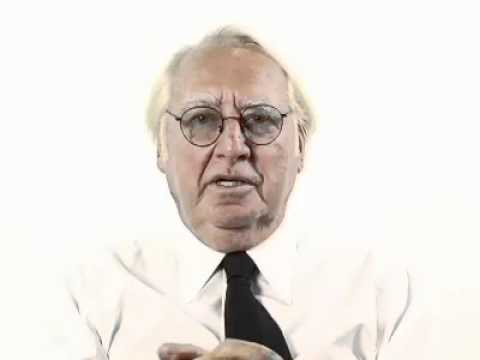
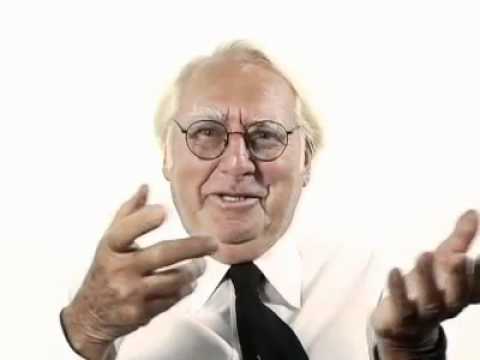
Richard Meier is one of the foremost contemporary American architects. In 1984 at the age of 49, Meier was awarded the Pritzker Architecture Prize, often referred to as the Nobel of architecture. He was the youngest architect to receive the profession's highest accolade. Meier is known for resisting trend-based designs, instead developing his own design philosophy rooted in rationalism and noted for its use of the color white. His designs can be seen as Neo-Corbusian, referencing the famous French architect's early phase in particular. Meier has also named Frank Lloyd Wright as another major influence. Perhaps his most famous design is The Getty Center, a Los Angeles art museum funded by the J. Paul Getty trust. Meier was born in Newark, New Jersey, and educated at Cornell University.
----------------------------------------------------------------------------------
TRANSCRIPT:
Richard Meier: Well I was born in Newark, but I never lived in Newark. My parents lived in Maplewood, New Jersey which is a suburb. I think the population is somewhere . . . or it was at that time . . . somewhere around 12,000 people, maybe 8,000 . . . somewhere around 8,000 and 12,000. The houses were close together. All the neighborhoods were very nice, and it was a lot of open space. There was a lot of park space. There was a great ease of going inside and outside. Outside activities were very much a part of one’s life growing up there, something I always felt that my children growing up in New York didn’t have – that ease of going out to play, coming back inside, going out, meeting friends, freedom of movement. Just a sort of idyllic environment as far as I was concerned. At the age of 14, I remember friends of my parents coming for dinner, and they would say, “What do you want to do when you grow up?” – the typical thing you’d say to a young teenager. And I said, “I wanna be an architect.” I’m not sure I knew exactly what that meant at that time, but I decided that’s what I wanted to do. And later I worked in the summer as a carpenter’s assistant on construction jobs during the summer with a friend of mine. And then the following summer I worked in an architect’s office where I just swept the floors, and went out and got coffee, and did important things like that.
Sentinel Indexing in Progress
Metadata and chapters are available. Claim extraction for this episode is pending.
All video content is delivered via YouTube embedded players in accordance with the YouTube Terms of Service. Sentinel provides research tools that promote discovery and accountability across political media.