Big Think
@bigthink·8.8M subscribers·10.1K videos
The Pioneering Spirit Richard Meier | Big Think
Posted
April 24, 2012
Views
222
Likes
3
Engagement
1.35%
April 24, 2012
222
3
1.35%
Every word spoken in this episode is indexed. Type any phrase to jump straight to the moment it was said.
Type any word or phrase that may have been spoken. Click a result to seek the player to that exact moment.
Try a name, a topic, or a quoted line
Episode Timeline
Every episode in order around the one you’re watching — click any card and the page flips straight to it.
 2:03Now Playing
The Pioneering Spirit
New videos DAILY
Join Big Think Edge for exclusive videos
----------------------------------------------------------------------------------
Meier recalls his grandmother’s example.
----------------------------------------------------------------------------------
Richard Meier:
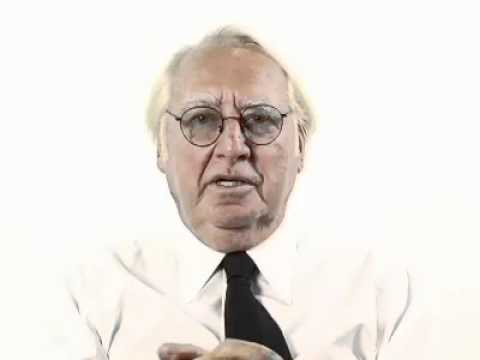
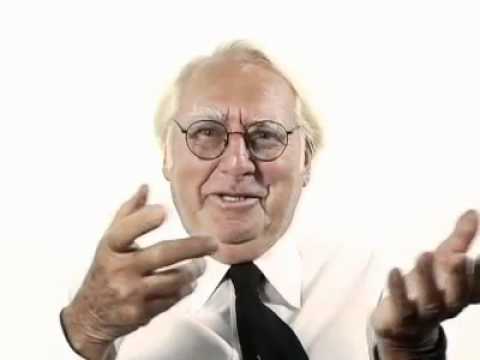
Richard Meier is one of the foremost contemporary American architects. In 1984 at the age of 49, Meier was awarded the Pritzker Architecture Prize, often referred to as the Nobel of architecture. He was the youngest architect to receive the profession's highest accolade. Meier is known for resisting trend-based designs, instead developing his own design philosophy rooted in rationalism and noted for its use of the color white. His designs can be seen as Neo-Corbusian, referencing the famous French architect's early phase in particular. Meier has also named Frank Lloyd Wright as another major influence. Perhaps his most famous design is The Getty Center, a Los Angeles art museum funded by the J. Paul Getty trust. Meier was born in Newark, New Jersey, and educated at Cornell University.
----------------------------------------------------------------------------------
TRANSCRIPT:
Question: What forces have shaped America?
Richard Meier: My mother’s mother, who lived in Newark, had a boyfriend who she was deeply in love with. And he decided in 1865, I believe it was, to go to California to seek his fortune by finding gold. He left and went to California, and some months later she got on a covered wagon and went to California to meet up with him. Well it didn’t work out for reasons that I don’t know. She got back on a covered wagon and came back across the country to Newark. That’s always been an inspiration to me – to be able to go across the country, through the wild, at that time being shot at or God knows what, and yet have that sense of adventure. Not adventure, but a sense of purpose that no matter what happens, it’s worth seeking that which you wish to have.I think that that feeling of going after something, doing something; the possibility that you can do it is very much an American ideal.
Sentinel Indexing in Progress
Metadata and chapters are available. Claim extraction for this episode is pending.
All video content is delivered via YouTube embedded players in accordance with the YouTube Terms of Service. Sentinel provides research tools that promote discovery and accountability across political media.