Big Think
@bigthink·8.8M subscribers·10.1K videos
Harriet Mays Powell on the Business of Fashion | Big Think
Posted
April 24, 2012
Views
261
Likes
3
Engagement
1.15%
April 24, 2012
261
3
1.15%
Every word spoken in this episode is indexed. Type any phrase to jump straight to the moment it was said.
Type any word or phrase that may have been spoken. Click a result to seek the player to that exact moment.
Try a name, a topic, or a quoted line
 7:33Now Playing
Harriet Mays Powell on the Business of Fashion
New videos DAILY
Join Big Think Edge for exclusive videos
----------------------------------------------------------------------------------
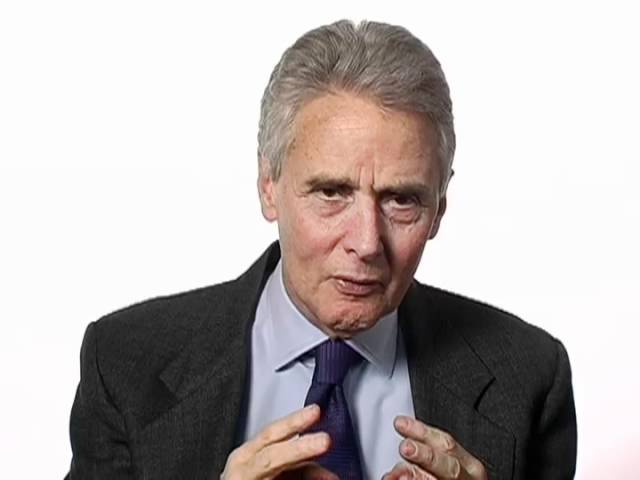
Harriet Mays Powell discusses the advent of accessories, new careers in fashion and the lasting relevance of couture.
----------------------------------------------------------------------------------
Harriet Mays Powell:
Harriet Mays Powell is fashion director at New York Magazine and a former editor at Tatler. Her work has also appeared in Glamour and Elle magazines.
----------------------------------------------------------------------------------
TRANSCRIPT:
Question: How does the business of fashion work?
Mays Powell: Well, I think there’s no secret why there’ve been a lot of handbags. It’s… I acquit it to the idea of a lipstick, you know, it’s been a bad day, it’s a little rainy, broke up with the boyfriend, go into the main store of [IB] Avenue, fantastic. New Chanel lipstick, gorgeous little Giorgio Armani perfume [IB] a little investment for a feel good purchase. I think the handbag is the kind of an extension of that as your shoes. You can be short. You can be tall. You can be fat. You can be skinny. You can be young. You can be old. [IB] blonde. You can have long hair, short hair. You can buy a handbag. You can buy a new pair of shoes. Those are ways of generating feel good factor for you and without breaking the bike and it’s less expensive, usually, than buying an entire outfit or wardrobe. So, I think, the accessories market has allowed designers to get an influx of cash that they’ve needed to help support the rest of their business at times. Surely, it’s a business model that has been successful so they’re all trying to jump on it. I remember with a kind of humor, one of the last shows in Paris is the Louis Vuitton, it’s also a Marc Jacobs collection, he designs that as well. And Mr. Arnault, the chairman of Louis Vuitton Moët Hennessy, the largest luxury goods company in the world was sitting in the front row, a little annoyed that Mr. Jacobs had to start the show but was relieved to see when the show finally had started. I think, this is two seasons ago, that Marc decided that the first 15 outfits were going to be… take some [IB] but they’re all carrying Louis Vuitton handbags. And as they all went by, Mr. Arnault at eye level, sitting down in his seat were, you know, a plethora of these fantastic new Louis Vuitton handbags. And I think he just thought ka-ching, ka-ching, ka-ching, ka-ching into the coffers of Louis Vuitton gets more money and women wanting more fantastic handbags, and how smart of you Marc Jacobs. So I think accessories is been a real way for designers to make a lot of money. I think a lot of them do diffusion lines which helps to permeate into other levels. I think some designers do deals and they, you know, do private label. For some of the designers I know that are less well-known but they do private labels for some of the other stores so they can make money other ways. So there are several ways that they can do that. And the other thing is being small, staying small and staying… keeping your business little to really try and concentrate on the bottom line. I look at Nicolas Ghesquiere’s business for Balenciaga, he is clearly, I think, for about… over a year now in the red and, which was his goal as a business plan. And you’ll see, what he does in the runway is not necessarily everything that’s in the store. He’sgot a lot of other things that are in the store, that are a little bit more accessible, little bit easier to wear, clearly his design anesthetic, clearly designed by him but a little more user friendly. So I think there’s been a real intelligence about what they put in the stores, what they put on the runway. And those things are tampered and altered ever so slightly to their customer. So they’re getting to be smart businessmen designers.
Question: Should young people consider a career in fashion?
Mays Powell: Yeah, I think so. I mean, I’ve got an enormous pleasure and continue out of my job because every 6 months, it’s a new set of ingredients. You know, I’ve a whole new set of vegetables and things to start cooking in my kitchen, so to speak, with which to play with and which to alter and change and do what I want. So I find it funny ‘cause it’s just a cycle that fits my temperament and my personality, which is… it’s ever evolving, it’s ever changing under certain constants but within those, it’s… it’s a whole new group. So I think it’s exciting, it’s fun. I love clothes. I’m really happy that I love clothes.
Read the full transcript at
Sentinel Indexing in Progress
Metadata and chapters are available. Claim extraction for this episode is pending.
All video content is delivered via YouTube embedded players in accordance with the YouTube Terms of Service. Sentinel provides research tools that promote discovery and accountability across political media.