Big Think
@bigthink·8.8M subscribers·10.1K videos
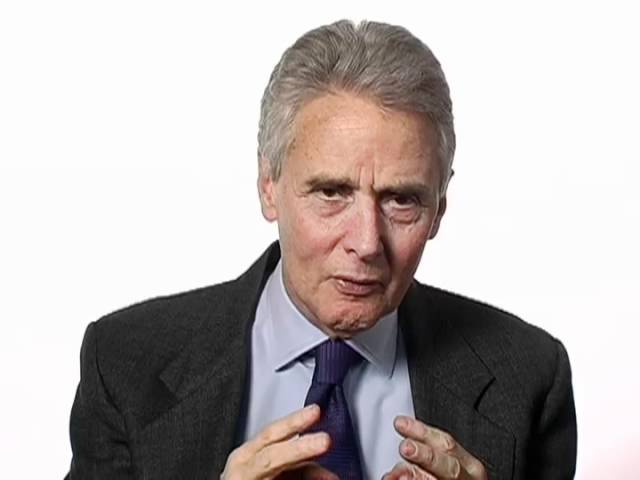
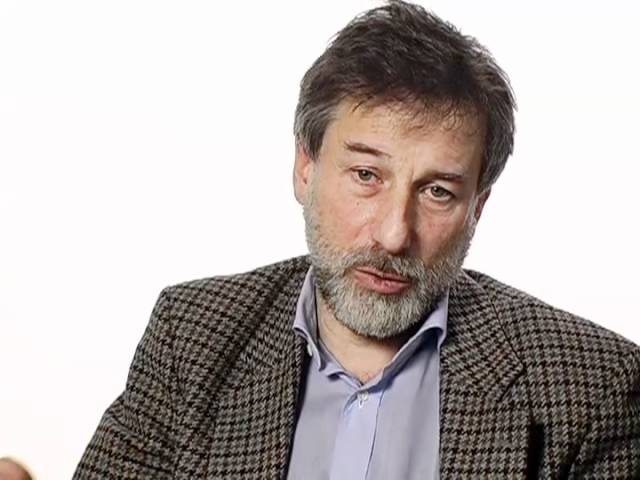
Simon Critchley on Religion and Death | Big Think
Posted
April 24, 2012
Views
11,153
Likes
121
Comments
24
Engagement
1.30%
April 24, 2012
11,153
121
24
1.30%
Every word spoken in this episode is indexed. Type any phrase to jump straight to the moment it was said.
Type any word or phrase that may have been spoken. Click a result to seek the player to that exact moment.
Try a name, a topic, or a quoted line
 9:31Now Playing
Simon Critchley on Religion and Death
New videos DAILY
Join Big Think Edge for exclusive videos
----------------------------------------------------------------------------------
The philosopher talks about how suicide has become a taboo and how death could be regarded differently.
----------------------------------------------------------------------------------
Simon Critchly:
Simon Critchly is Professor and Chair of Philosophy at the New School for Social Research in New York. He is the author of many books,including On Heidegger's Being and Time and Infinitely Demanding: Ethics of Commitment, Politics of Resistance. The Book of Dead Philosophers was written on a hill overlooking Los Angeles, where he was a scholar at the Getty Research Institute. He lives in Brooklyn.
----------------------------------------------------------------------------------
TRANSCRIPT:
Qusetion: Does religion or philosophy best prepare us for death
Critchley: There’s an aspect of religious thinking which I think is superior to philosophical thinking and this appears historically with the person of St. Augustine and Augustine’s Confessions. The center of Augustine’s Confessions are 3 deaths, death of his friend, death of his mother and the death of his son. This death of mother is the key, this key death and what you’re getting in Augustine and elsewhere in the Christian tradition is this extraordinary meditation on grief or mourning, and the way in which grief, if you like, defines what it means to be human. You know, a human life can be punctuated in terms of a series of acts of grief, death of a parent, a mother or a father or a child, or whatever and these things structure what it means to be a self but they do it by tearing us apart, by really sundering us and the religious tradition has got a much, I think the Christian tradition has got a much, is much better on that than the philosophical tradition. What I don’t like about the idea of the philosophical death, although I defended it in the book, is there’s a certain selfishness and, if you like stoicism, at the heart of it. You know, it’s about me, Socrates or Epicurus dying, my dying well, my death surrounded by my disciples. What this overlooks is the fact that death comes into the world, comes into the world to us through the death of others and so this question of grief I think is the key. They have something to work on more on the future because that’s the question of love, the relation between death and love. The death that really, you know in the sense you could say perhaps finally my death isn’t so important. It’s the death supposed that we love that are truly important and how do we think about that?
Question: How has secularization in the West affected view of death?
Critchley: A very revealing issue in this regard are our attitudes towards suicide and our attitude towards suicide are already still completely colored by Christianity, and in the ancient world, it was no ignominy to kill oneself. Certain people, it was a noble death if it was done in a noble way. Often one was, it was required of one, Seneca was asked to kill himself by his employer, Nero, sort of employee one, but there we are. Suicide was no shame and the idea that begins with Christianity is the idea that death is something, that life is something given, all right, over which one has no dominion. It’s something given over which not one has no dominion. Therefore to take one’s life is to as it were assume the role of God. So, therefore suicide is illegitimate. It is blasphemous, and we’re still very much stuck with it, with those of the debates. Think back to its own, the Terri Shaivo debate, the issue, a few years ago. We, it seems to me that one thing that the [emaciation] [09:01] of the history of philosophy can allow one to think about is the fact that suicide should be something that was, is within everybody’s power. I think it’s, you know, a minimum of human dignity, consisting of the fact that one’s got the right to take one’s life, not willing really but you know, in the right circumstances. So, I still think we’re very much in the grip of religious frameworks of a [fool] [09:31] so, I don’t, you know, so secularization, yeah, but really how far? The other thing I’d say about secularization is that the only metaphysics in which we believe these days are really, is the metaphysics of medical science, and medical science which really means technology, and medical science and technology being used as an instrument which furthers our longevity. Longevity is seen as an unquestioned good in life, unquestioned good and this is a very strange thought. When you look the history of humanity and the history of philosopher as I’ve done, the brevity of human life was often something to be celebrated.
Read the full transcript at
Sentinel Indexing in Progress
Metadata and chapters are available. Claim extraction for this episode is pending.
All video content is delivered via YouTube embedded players in accordance with the YouTube Terms of Service. Sentinel provides research tools that promote discovery and accountability across political media.