Big Think
@bigthink·8.8M subscribers·10.1K videos
How should the U.S. have dealt with Pakistan post 9/11? | Big Think
Posted
April 24, 2012
Views
597
Likes
10
Engagement
1.68%
April 24, 2012
597
10
1.68%
Every word spoken in this episode is indexed. Type any phrase to jump straight to the moment it was said.
Type any word or phrase that may have been spoken. Click a result to seek the player to that exact moment.
Try a name, a topic, or a quoted line
See what was published immediately before and after this episode.
 3:22Now Playing
How should the U.S. have dealt with Pakistan post 9/11?
New videos DAILY
Join Big Think Edge for exclusive videos
----------------------------------------------------------------------------------
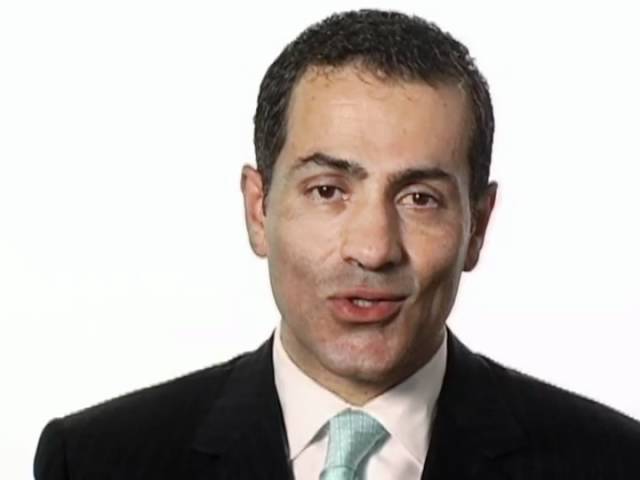
Vali Nasr: “The Pakistan military has helped with the fight against terrorism, but not wholeheartedly.”
----------------------------------------------------------------------------------
Vali Nasr:
Vali Nasr is an Iranian-American political commentator and scholar of contemporary Islam. Born in Iran, Nasr and his family immigrated to the United States following the 1979 Islamic Revolution. Nasr received a BA from Tufts University in 1981 and a masters from the Fletcher School of Law and Diplomacy in 1984. He earned his PhD from MIT in political science in 1991.
Known for his view that wars within Islam will shape the future, Nasr has testified before Congress and has advised the President and Vice-President regarding sectarian violence in Iraq. Nasr is the author The Shia Revival, Democracy in Iran, and The Islamic Leviathan.
He has taught at the University of San Diego and the Naval Postgraduate School, and is currently a Senior Fellow at the Belfer Center at Harvard and Professor of International Politics at Tufts. A Life Member of the Council on Foreign Relations, Nasr has been published in Foreign Affairs, The New Republic, Foreign Policy, Time, the New York Times, and the Washington Post, among others. He is an editor of the Oxford Dictionary of Islam and has appeared on CNN, the BBC, National Public Radio, and not least of all The Daily Show with Jon Stewart and The Colbert Report.
----------------------------------------------------------------------------------
TRANSCRIPT:
Vali Nasr: We made a bargain with [General Pervez] Musharraf way back in 2001. We were holding all the chips and he was a lot weaker. Well we made a very bad bargain. We basically gave away everything to him and we got very little in return.
The Pakistan military has helped with the fight against terrorism, but not wholeheartedly. And it’s actually quite uncooperative when it comes to Afghanistan. In fact, the Taliban surge would not have been possible without very explicit Pakistani support. For very strategic reasons, Pakistan has its own interests in Afghanistan which are not the same as ours.
We try to constantly focus on the security relationship, arguing that we need the Pakistan military. And we cannot get the Pakistan military to 100 percent support us; but we can get them to support us 40 percent, 50 percent, and that’s better than zero percent.
And we gave Pakistan $150 million a year for the level of support we got. We got a military hardware. We elevated them to status of a close ally in the war on terror. And the result is not necessarily satisfactory.
Parts of northwest frontier Pakistan are ruled by militants. The Pakistan military is not doing much in terms of gaining offensive against them.
The big mistake we made is that politically we should have not given away the house to Musharraf. We’re giving him money for the security fight, but politically we should have said that we will not tolerate that you destroy political institutions in Pakistan; that you take the leading politicians and send them to exile, and then rip their parties apart. We will not tolerate you changing the Constitution. We will not tolerate you gerrymandering the political process.
It is only when he took the ultimate step and the Pakistanis stood up to him that we finally said well, you know, he’s breaking the law. We could have very easily from the beginning been much more resistant to calling him a moderate pro-democracy voice, and giving him a green light to essentially destroy the very institutions that we want to create in the Palestinian territories or in Egypt.
We’re giving millions of dollars to the Arab world to try to create minimal political structures, secular political structures that existed in Pakistan, and he has been destroying them.
And I think we could have had a more balanced relationship. The fact that we didn’t structure our relationship with Pakistan very clearly got us to where we are.
And the second mistake we made is that we personalized--and we always do this--our relationship. Our relationship should be with the military in Pakistan, not with General Musharraf.
Sentinel Indexing in Progress
Metadata and chapters are available. Claim extraction for this episode is pending.
All video content is delivered via YouTube embedded players in accordance with the YouTube Terms of Service. Sentinel provides research tools that promote discovery and accountability across political media.