Big Think
@bigthink·8.8M subscribers·10.1K videos
If you had $100 billion, how would you spend it? | Big Think
Posted
April 24, 2012
Views
948
Likes
11
Comments
3
Engagement
1.48%
April 24, 2012
948
11
3
1.48%
Every word spoken in this episode is indexed. Type any phrase to jump straight to the moment it was said.
Type any word or phrase that may have been spoken. Click a result to seek the player to that exact moment.
Try a name, a topic, or a quoted line
See what was published immediately before and after this episode.
 1:25
1:25 1:17Now Playing
If you had $100 billion, how would you spend it?
New videos DAILY
Join Big Think Edge for exclusive videos
----------------------------------------------------------------------------------
$100 billion may not be enough money.
----------------------------------------------------------------------------------
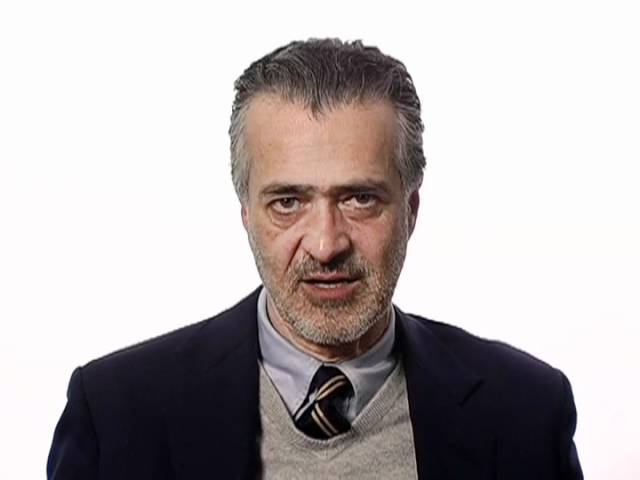
Ezekiel Emanuel:
Ezekiel Emanuel is the Chair of the Department of Bioethics at the Warren G. Magnuson Clinical Center at the National Institutes of Health. Dr. Emanuel is a well-known authority on the ethics of clinical research, end of life care issues, euthanasia and the ethics of managed care.
He has published in the New England Journal of Medicine, The Lancent, JAMA, and many other medical journals. His book The Ends of Human Life: Medical Ethics in a Liberal Polity received an honorable mention for the Rosenhaupt Memorial Book Award by the Woodrow Wilson Foundation. Dr. Emanuel was educated at Amherst College, Oxford University and Harvard University, from which he holds both an MD and PhD in political philosophy. He also served on the ethics section of President Clinton's Health Care Task Force, on the National Bioethics Advisory Committee, and on the bioethics panel of the Pan American Health Organization.
----------------------------------------------------------------------------------
TRANSCRIPT:
Emanuel: A hundred billion dollars? That’s a lot of money; but maybe not enough money. I mean it’s a sort of . . . It’s a funny, intermediate number. So one thing I might do is heavily invest in school and early childhood education . . . try to get some widespread . . . more widespread development in the United States. And the other thing I might do is go to some developing African country and try to see if there’s a way to get them to actually develop properly. A hundred billion dollars . . . If you spend 50 foreign and 50 domestic to . . . Fifty billion in a foreign, developing country is probably . . . A place like Uganda, I don’t know exactly what its GEP is, but that might be more than 10 years of its GEP. So you can have a huge impact in terms of building universities, building schools, trying to build an infrastructure that would be very important for their development, and for the robustness of their educational system, and their long term future.
Sentinel Indexing in Progress
Metadata and chapters are available. Claim extraction for this episode is pending.
All video content is delivered via YouTube embedded players in accordance with the YouTube Terms of Service. Sentinel provides research tools that promote discovery and accountability across political media.