Big Think
@bigthink·8.8M subscribers·10.1K videos
Leif Pagrotsky on the Swedish Banking Crisis | Big Think
Posted
April 24, 2012
Views
1,298
Likes
7
Comments
2
Engagement
0.69%
April 24, 2012
1,298
7
2
0.69%
Every word spoken in this episode is indexed. Type any phrase to jump straight to the moment it was said.
Type any word or phrase that may have been spoken. Click a result to seek the player to that exact moment.
Try a name, a topic, or a quoted line
See what was published immediately before and after this episode.
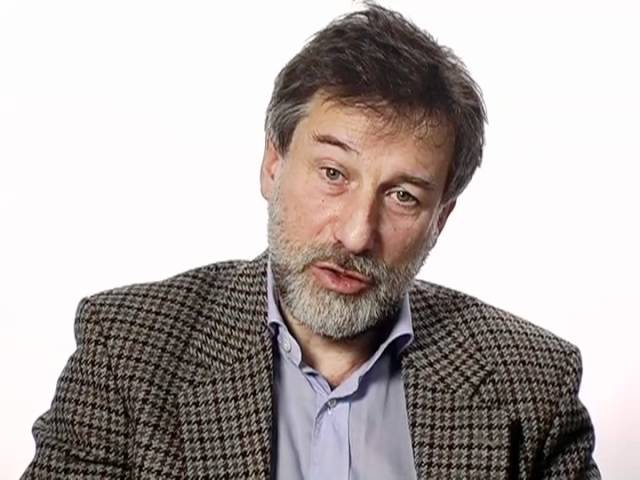 1:52Now Playing
Leif Pagrotsky on the Swedish Banking Crisis
New videos DAILY
Join Big Think Edge for exclusive videos
----------------------------------------------------------------------------------
Leif Pagrotsky on the Swedish banking crisis of the early 1990s.
----------------------------------------------------------------------------------
Leif Pagrotsky:
Leif Pagrotsky is a Swedish Social Democratic politician, who had various posts in the government of Göran Persson between 1996 and 2006. In 1997 Prime Minister Göran Persson made Pagrotsky Minister of Trade and in 2002 Minister for Industry and Trade. One of his most publicly known activities during this period was his efforts to promote Swedish popular music export. In 2004, he switched posts with former Minister of Education Thomas Östros. At the same time, the responsibility for cultural matters, previously belonging to a separate ministry, was added to Pagrotsky’s portfolio. Pagrotsky has a Bachelor of Arts and a Master of Science in economics from Gothenburg University. Before joining the Cabinet, Pagrotsky worked at the Central Bank of Sweden and in the Ministry of Finance.
----------------------------------------------------------------------------------
TRANSCRIPT:
Question: What provoked the banking crisis of 1992?
Pagrotsky: It had very, very little to do with the construction of the welfare state economic model. That was one element of the economic model that was fundamentally flawed. We had to fix the exchange rate policy, and that was [unattainable]. We tried to defend the existing exchange rate with interest rates up to 500%. That was ridiculous. It was a failure, but we were so indoctrinated, we have lived with a fixed exchange rate regime all our lives, since the early ‘30s, and we could not imagine that there’s something wrong with a fundamental element of our economic policy. When that was abolished, the economy took off and we have had much more flexible situations since then. And today it is one of the fundamental assets of our economy, that we are flexible enough to set interest rates according to our own needs, high interest rates if we have [overheating] and inflation and we can stimulate by low interest rates when a recession is threatening, and I think that was one of the main elements of the shocks that we experienced in the late ‘80s. We had a shock from the financial market, and, as you know, financial markets destabilize. They don’t stabilize. They destabilize economies. They destabilized our economy. We could not do anything about it because we did not have in our possession the interest rate weapon because we had a fixed exchange rate regime, and I think that was a much more important explanation.
Sentinel Indexing in Progress
Metadata and chapters are available. Claim extraction for this episode is pending.
All video content is delivered via YouTube embedded players in accordance with the YouTube Terms of Service. Sentinel provides research tools that promote discovery and accountability across political media.