Big Think
@bigthink·8.8M subscribers·10.1K videos
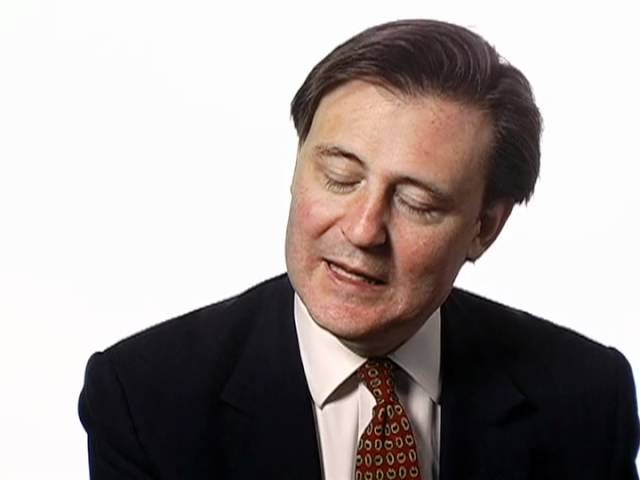
John Micklethwait Describes How Barack Obama Could Reawaken Religion in Europe | Big Think
Posted
April 24, 2012
Views
652
Likes
6
Comments
2
Engagement
April 24, 2012
652
6
2
1.23%
Every word spoken in this episode is indexed. Type any phrase to jump straight to the moment it was said.
Type any word or phrase that may have been spoken. Click a result to seek the player to that exact moment.
Try a name, a topic, or a quoted line
See what was published immediately before and after this episode.
 8:11Now Playing
John Micklethwait Describes How Barack Obama Could Reawaken Religion in Europe
New videos DAILY
Join Big Think Edge for exclusive videos
----------------------------------------------------------------------------------
Religion is back in the political life of Europe but not in people’s hearts.
----------------------------------------------------------------------------------
John Micklethwait:
John Micklethwait is Editor-in-Chief of The Economist. Before that he edited the US section of the newspaper (1999 - 2006) and ran the New York Bureau for two years, having edited the Business Section of the newspaper for the previous four years. His other roles have included setting up The Economist's office in Los Angeles, where he worked from 1990 - 1993 and being Media Correspondent. He has covered business and politics from the United States, Latin America, Continental Europe, Southern Africa and most of Asia. He is a frequent broadcaster and has appeared on CNN, ABC News, BBC and NPR. He is the co-author of "The Witch Doctors", "A Future Perfect: the Challenge and Hidden Promise of Globalisation" and "The Company: A Short History of a Revolutionary Idea" and "The Right Nation", a study of conservatism in America, with Adrian Wooldridge, also an Economist journalist.
----------------------------------------------------------------------------------
TRANSCRIPT:
Question: Do you align modernity with religion?
Micklethwait: We actually align modernity with pluralism. I think that that’s the big category mistake. Peter Berger, who’s the great sociologist of religion, you know, who one time was a big supporter of the secularization thesis, I’ll give you the most, sort of… the biggest proponent of it, when he switched and suddenly said that pluralism is the modern thing, I think that’s it and that’s the core of why we think an American model, loosely termed, is sweeping the world. People are choosing which religion to have and doing the same thing as Thomas Jefferson did, you know, they’re looking at the Bible and cutting out the bits they don’t like. It’s like I want this and I want this and I’m going to change this, it’s a much more individual thing and the reason why that is relevant to politics and public life is if people are choosing their religion rather than just inheriting it then that means when they go into the voting booth, they go into work, they’re not going to leave it at home in the same way that they may have done before.
Question: What is the relationship between religion and globalization?
Micklethwait: Well, what’s happening is not so much being caught by progressives, it’s the forces of progress that are driving it. You look at globalization, you look at technology, you look at… lots of democracy, you know, you’re giving these… when you’re give people a vote… strangely, a lot of religious people go and vote for religious parties, when you give people technology, strangely, it’s the people who actually use it best were often people like the mega-churches that are very, very quick onto these. If you look at the way that globalization spreads. I think globalization actually encourages the demand for religion in 2 ways. As one group of people who think we want religion to be a sort of storm shelter and you see a qualm of that particularly in the Islamic world but you can [focus it, what is it,] rural Arkansas or rural India, you could see these people who think, the world is out there, it’s a frightening, difficult place and religion is a form of protection against it. By contrast, what we also identified which is sort of an unappreciated bit is for lots of people, lots of up and coming people, visit the mega-churches in America, you don’t see poor downtrodden people there, you see smart, young, suburbanites, they see this as a way to get ahead, to get ahead of other people, very, very true in China, very, very true in Korea, very true in Latin America where we see Pentecostalism spreading very quickly and the one exception is Europe which we can sort of come back to, which is the harder case to make this argument. But all other areas of the world, for better or worse, you know those things are being aligned and actually it’s going with a… if that’s a sort of demand side that you… a deeper demand side is actually, whether we like it or not, man seems to be a Theotrophic beast in a given…
Read the full transcript at
Sentinel Indexing in Progress
Metadata and chapters are available. Claim extraction for this episode is pending.
All video content is delivered via YouTube embedded players in accordance with the YouTube Terms of Service. Sentinel provides research tools that promote discovery and accountability across political media.