Big Think
@bigthink·8.8M subscribers·10.1K videos
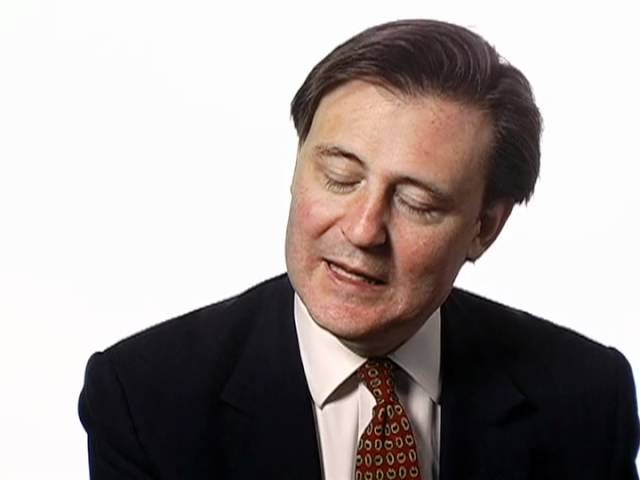
Nancy Koehn Discusses The Evolution of Capitalism | Big Think
Posted
April 24, 2012
Views
961
Likes
10
Comments
1
Engagement
1.14%
April 24, 2012
961
10
1
1.14%
Every word spoken in this episode is indexed. Type any phrase to jump straight to the moment it was said.
Type any word or phrase that may have been spoken. Click a result to seek the player to that exact moment.
Try a name, a topic, or a quoted line
See what was published immediately before and after this episode.
 6:20Now Playing
Nancy Koehn Discusses The Evolution of Capitalism
New videos DAILY
Join Big Think Edge for exclusive videos
----------------------------------------------------------------------------------
Nancy Koehn discusses the next stage of economic progress.
----------------------------------------------------------------------------------
Nancy Koehn:
Nancy Koehn is a historian at the Harvard Business School where she holds the James E. Robison chair of Business Administration. Koehn's research focuses on how leaders, past and present, craft lives of purpose, worth, and impact.
Her new book, Forged in Crisis: The Power of Courageous Leadership in Turbulent Times is an enthralling historical narrative filled with critical leadership insights that will be of interest to a wide range of readers—including those in government, business, education, and the arts—Forged in Crisis spotlights five masters of crisis: polar explorer Ernest Shackleton; President Abraham Lincoln; legendary abolitionist Frederick Douglass; Nazi-resisting clergyman Dietrich Bonhoeffer; and environmental crusader Rachel Carson.
Koehn is the author of numerous books, articles, and Harvard Business School cases. She writes frequently for the New York Times, the Washington Post, and the Harvard Business Review Online. She is also a weekly commentator on National Public Radio and has appeared on many national television programs. She has spoken at the World Economic Forum in Davos, the Aspen Ideas Festival, and in many other venues.
A Phi Beta Kappa graduate of Stanford University, Koehn earned a Master of Public Policy from Harvard's Kennedy School of Government before taking her MA and PhD in History from Harvard. She lives outside Boston and is a dedicated equestrian.
----------------------------------------------------------------------------------
TRANSCRIPT:
Question: What forces have shaped humanity most?
Nancy Koehn: A number of forces have shaped our moment. Joseph Schumpeter, a very articulate student of capitalism who taught at Harvard in the mid 20th century once said that stabilized capitalism is a contradiction in terms. Change is ever present with us. And even within that … in that postulate if you will, or that truism, we are living in a moment of mega change. And as a historian of capitalism and of entrepreneurship, I think of at least … there are at least three enormous … There are at least three moments of great change in the last 300 or 400 years of industrial … 300 years of industrialization. One at the middle of the 18th century in Britain, which really created the possibility of industrialization through technological improvements like the spinning Jenny and the steam engine. A second one in the late 19th century, built on innovations like the railroad and the telegraph that built big business, that created the 20th century that created consumer societies not just in this country, but all around the world. And then our moment which dwarfs both of those moments. Now citizens, and managers, and politicians living through those past epics thought they were living in times of dizzying change. You know in times when people had no attention spans, and when people were “toing and froing”, and getting and spending to quote Wordsworth. And you can say that same thing about our age, but our age is bigger. It’s bigger. The change is deeper, it’s broader, and the drivers are wider in scope.
Question: What has changed?
Nancy Koehn: What are those drivers? They are first, let’s start with the basics of any kind of change – demographic change. We have enormous demographic change now unfolding around the world both in terms of the places where the population growth is increasing rapidly, the places where it’s not growing, and what that means for the aid distribution; and what that means to live a quality and length of life for billions of people. So demographic change and its environmental … and its marital companion, its bedfellow, environmental change. No other generation, no other epic in history has witnessed the kind of environmental change on the scale that we are now witnessing it. No set of people has ever come close to what might be the production, possibility, frontier of mother earth, and we are close. Huge technological change. You know it began with the PC. Or perhaps it began with the mainframe back in the 1940s, or the PC in the 1980s, and now the Internet. And corresponding breakthroughs in digital technology, in biopharmaceutical technology, biology. These kind of … these kind of forces have now unleashed and accelerating in terms of their power are unprecedented.
Question: How have we changed as a society?
Read the full transcript at
Sentinel Indexing in Progress
Metadata and chapters are available. Claim extraction for this episode is pending.
All video content is delivered via YouTube embedded players in accordance with the YouTube Terms of Service. Sentinel provides research tools that promote discovery and accountability across political media.