Big Think
@bigthink·8.8M subscribers·10.1K videos
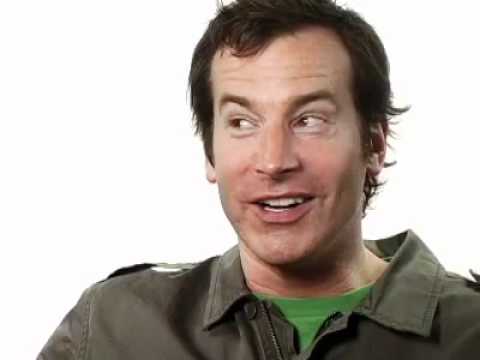
Josh Lieb On Comedy | Big Think
Posted
April 24, 2012
Views
647
Likes
6
Comments
1
Engagement
1.08%
April 24, 2012
647
6
1
1.08%
Every word spoken in this episode is indexed. Type any phrase to jump straight to the moment it was said.
Type any word or phrase that may have been spoken. Click a result to seek the player to that exact moment.
Try a name, a topic, or a quoted line
Episode Timeline
Every episode in order around the one you’re watching — click any card and the page flips straight to it.
 10:52Now Playing
Josh Lieb On Comedy
New videos DAILY
Join Big Think Edge for exclusive videos
----------------------------------------------------------------------------------
Boredom and humor are intricately connected.
----------------------------------------------------------------------------------
Josh Lieb:
Josh Lieb is the former Producer and Show Runner of The Tonight Show Starring Jimmy Fallon. His credits include stints as Executive Producer of NewsRadio and The Daily Show with Jon Stewart. He won 7 Prime Time Emmys as a producer and writer for The Daily Show. In 2009, he published a young adult novel, I Am A Genius of Unspeakable Evil and I Want to Be Your Class President, which was a New York Times Bestseller.
Lieb was raised in Columbia, South Carolina, and graduated from Harvard, where he was an editor of The Lampoon, the college humor magazine. After graduation, he found work writing for Twisted Puppet Theater, The Jon Stewart Show, and NewsRadio. He subsequently worked as a producer or consultant on shows including The Simpsons, Drawn Together, Sirens, Nikki, I Hate My Teenage Daughter, and Late Night with Jimmy Fallon.
Lieb's tenure at The Daily Show lasted from 2006 to 2010, during which he also served as Executive Producer of “The Rally to Restore Sanity And/Or Fear” and as co-editor and co-author of Earth: The Book.
In 2013, he wrote and directed a series of comedic shorts to raise money and awareness for the charity Water.Org. Stars featured in the shorts included Matt Damon, Jessica Biel, Sir Richard Branson, and Bono.
Penguin/ Random House released Lieb's second novel, Ratscalibur, in 2015.
In October 2016, NBCUniversal announced an exclusive writing deal with Lieb.
----------------------------------------------------------------------------------
TRANSCRIPT:
Question: Are people fundamentally funny?
Josh Lieb: You know religiously I wanna believe people are fundamentally good. Yeah I think people . . . (a) I think people are fundamentally good; and (b) I think people are fundamentally humorous. And . . . and people fundamentally want to laugh. And you know if someone is not laughing, that’s the exception. That’s perversion, because I think you can’t be turned from someone who likes to laugh to someone who doesn’t; but I think it’s almost impossible to go the other way. I don’t think . . . No one’s ever met a humorless person who became a funny one.
Question: Can humor be learned?
Josh Lieb: No. It . . . it . . . You can learn the forms or whatever, and maybe you could even learn the form so well that you can fool most people. But you wouldn’t be able to fool the genuinely funny people.
Question: Can women be funny?
Josh Lieb: Of course.
Question: Why do people value humor?
Josh Lieb: Boredom, you know? And I think also just the . . . There’s such intense psychic pain just being alive, and all this stuff going on around you and on top of you. And it’s suffocating. You know humor is a release. It is joyful, you know? It’s like sex, but you can have it more often. It’s . . . Yeah, it’s like cheap sex. It’s like . . . You can do it all the time.
Question: Why do people value humor?
Josh Lieb: Boredom, you know? And I think also just the . . . There’s such intense psychic pain just being alive, and all this stuff going on around you and on top of you. And it’s suffocating. You know humor is a release. It is joyful, you know? It’s like sex, but you can have it more often. It’s . . . Yeah, it’s like cheap sex. It’s like . . . You can do it all the time
Question: Is there a connection between humor and religion?
Josh Lieb: You know I don’t know. It’s sort of cliché to have a funny rabbi. You know every rabbi thinks he’s pretty hilarious, or at least they do nowadays. In the . . . in the . . . in the old days, I think they . . . they thought they . . . they were pretty serious. You know I don’t know. I could wax philosophical and say, “Well there is, you know . . . comedy and religion are about some sort of aspiration or something higher,” or you know, “to elevate us. And when we laugh,” you know, “our souls become bigger.” But I don’t think so. I think . . . I think rabbis are smart people, and I think smart people tend to be funny. So maybe that’s the connection. By the way I should have been drinking coffee. But I don’t . . . If there’s any connection whatsoever . . . You know I think there must be some connection between religion and comedy because while . . . because the people I know in comedy are either pretty religious or– and that’s the minority – or they’re . . . they swing the other way completely and are rabidly atheistic. So maybe there’s some emotional switch that gets clicked on either way.
Question: How has comedy changed in the last two decades?
Read the full transcript at
Sentinel Indexing in Progress
Metadata and chapters are available. Claim extraction for this episode is pending.
All video content is delivered via YouTube embedded players in accordance with the YouTube Terms of Service. Sentinel provides research tools that promote discovery and accountability across political media.