Big Think
@bigthink·8.8M subscribers·10.1K videos
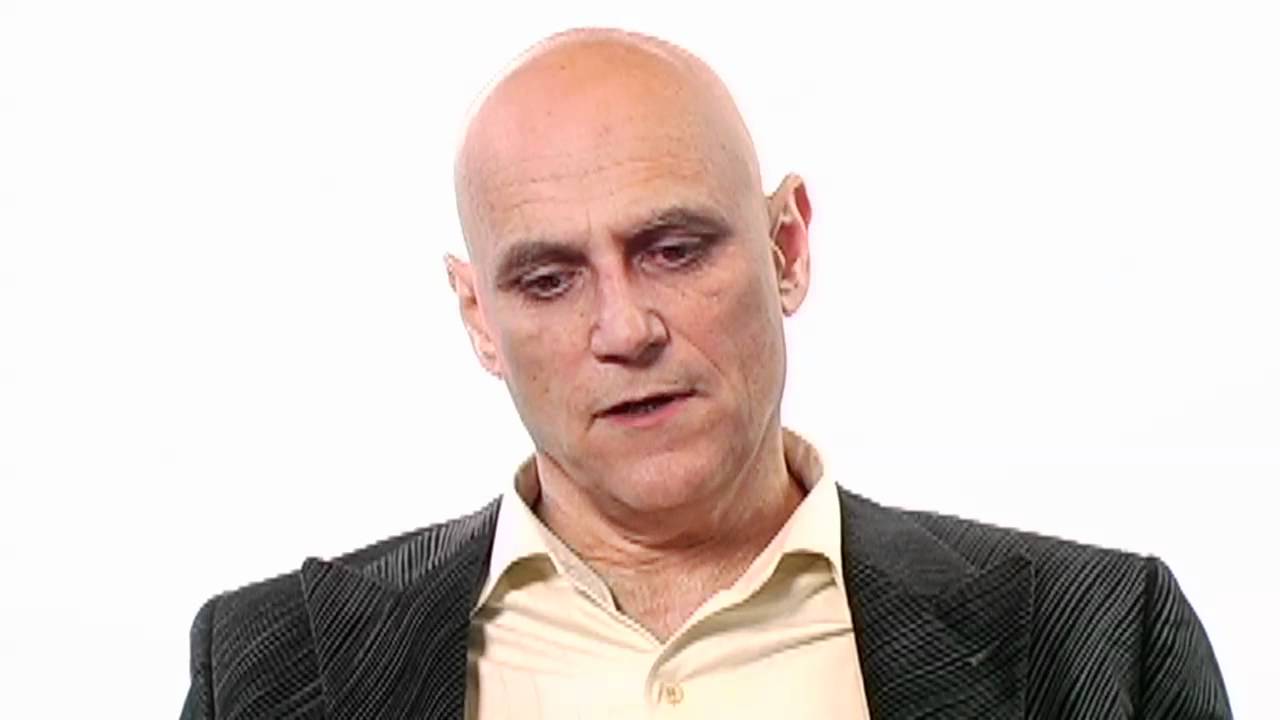
Ken Burns's Greatest Themes | Ken Burns | Big Think
Posted
April 24, 2012
Views
1,046
Likes
9
Engagement
0.86%
April 24, 2012
1,046
9
0.86%
Every word spoken in this episode is indexed. Type any phrase to jump straight to the moment it was said.
Type any word or phrase that may have been spoken. Click a result to seek the player to that exact moment.
Try a name, a topic, or a quoted line
You’re on April 24, 2012. Earlier episodes are to the left, later ones to the right — the row keeps loading as you go. Click any card to open it.
 Apr 24, 20126:52Now Playing
Ken Burns's Greatest Themes
New videos DAILY
Join Big Think Edge for exclusive videos
----------------------------------------------------------------------------------
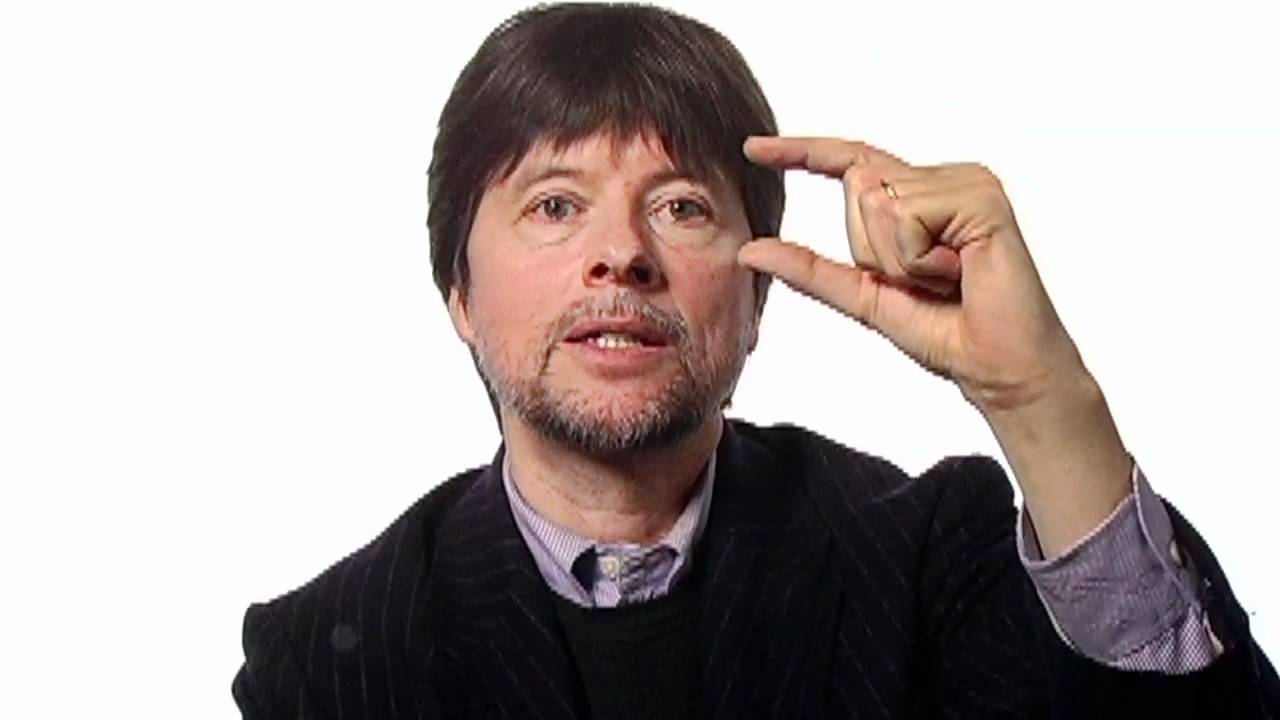
Inspired by Twain’s own example, the “Mark Twain” documentarian seeks to explore quintessentially American issues of “race and space.”
----------------------------------------------------------------------------------
Ken Burns:
Born in Brooklyn, New York, in 1953, Ken Burns is a Peabody Award-winning documentary filmmaker whose career spans over 30 years. His first film, "Brooklyn Bridge," was nominated for an Academy Award in 1981. He was the director, producer, co-writer, chief cinematographer, music director, and executive producer of the groundbreaking documentary "The Civil War," the highest-rated series in the history of American public television. His other major films include "Baseball," "The West," "Jazz," and "The War." His most recent film, "The National Parks: America's Best Idea," premiered on PBS in 2009.
----------------------------------------------------------------------------------
TRANSCRIPT:
Question: Are your films patriotic?
Ken Burns: Well I don’t know what your definition of patriotism is, and mine is so complicated that it would take up some time. I do think that it is a form of patriotic expression. We have now come to use patriotism in the most superficial and politically isolating way. We use it to tar people whose opinions we don’t agree with or use it as a weapon to tell people why their opinions render them unpatriotic. That’s not what I’m interested in. I think that for some reason or another, this combination of an interest in film and an interest in American history has also formed in me a kind of deep and abiding love, not without criticism. Every one of my films because it deals with race is implicitly critical of the United States and the path that it quite often takes, but at the same time it understands something larger. I’m interested in listening to the voices of a true, honest, complicated past that is unafraid of controversy and tragedy, but equally drawn to those stories and moments that suggest an abiding faith in the human spirit and particularly the unique role this remarkable but also sometimes dysfunctional republic seems to play in the positive progress of mankind. That’s my creed and I think that is a higher form of patriotism.
Question: Do you consciously make films on subjects that appeal to “buffs”?
Ken Burns: The quirky appeal they might or might not appeal to others or so-called buffs, as your question says, doesn’t interest me at all. I’m interested in that complicated past. I’m interested in telling stories. The fact that my interest might intersect with others who are drawn to the Civil War is I guess, good, but that’s not what I need to focus on. All I’m trying to do is tell a good story and telling a good story is an incredibly difficult and hard undertaking that requires the talents of a lot of amazing people that I had the good fortune to work with to do that.
I’m not sure that your question is entirely correct. Buffs don’t sort of attend to these films. It is true that there are Civil War buffs and they find in my film and other books and other films that have been made a kind of reenergizing of their interests, but the films themselves exist quite above whatever superficial sentimental nostalgic relationship that so often buffs have. I’m disinterested in sentimentality and nostalgia and in fact it’s not only the enemy of good storytelling it’s the enemy of good history. I’d rather though not retire to a kind of rational world in which one and one equals two all the time. That’s the safety of the empirical world, the rational world. All of us want deep down in some unexpressed way for one and one to equal three and it’s that calculus that an artist pursues. It’s that calculus that drives you. That improbable mathematical possibility that one and one could equal three is part of what we do. We say all the time that we wish the whole to be greater than the sum of the parts, but we don’t really examine the difference between the sum of the parts and the whole and that difference is what makes art, art, which makes literature work, what makes us love, which compels the most important aspects of our lives and that has nothing to do with buffs.
Question: What do you see as the central themes of your work?
Read the full transcript at
Sentinel Indexing in Progress
Metadata and chapters are available. Claim extraction for this episode is pending.
All video content is delivered via YouTube embedded players in accordance with the YouTube Terms of Service. Sentinel provides research tools that promote discovery and accountability across political media.