Big Think
@bigthink·8.8M subscribers·10.1K videos
Selling Them "The Brooklyn Bridge" | Ken Burns | Big Think
Posted
April 24, 2012
Views
2,009
Likes
23
Comments
1
Engagement
1.19%
April 24, 2012
2,009
23
1
1.19%
Every word spoken in this episode is indexed. Type any phrase to jump straight to the moment it was said.
Type any word or phrase that may have been spoken. Click a result to seek the player to that exact moment.
Try a name, a topic, or a quoted line
You’re on April 24, 2012. Earlier episodes are to the left, later ones to the right — the row keeps loading as you go. Click any card to open it.
 Apr 24, 20125:46Now Playing
Selling Them "The Brooklyn Bridge"
New videos DAILY
Join Big Think Edge for exclusive videos
----------------------------------------------------------------------------------
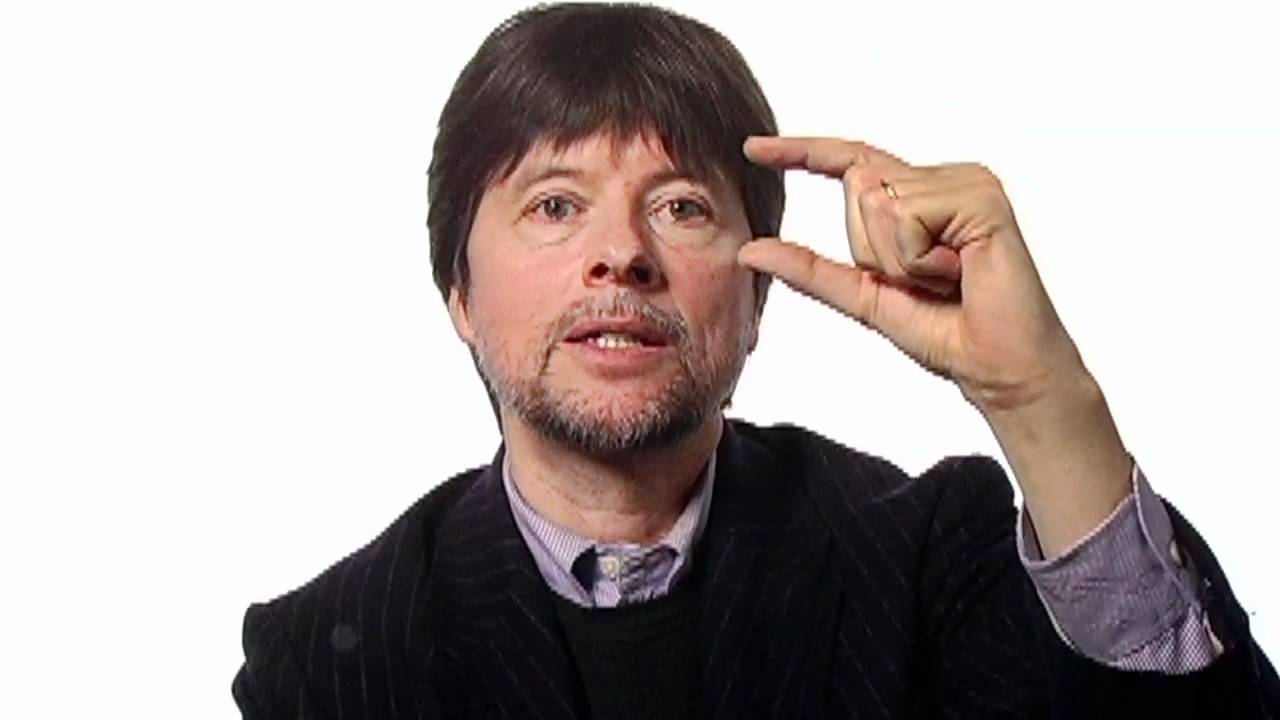
As a young director with a risky film, Ken Burns had countless doors slammed in his face. How did he push past them, and how would he advise today’s young artists to do the same?
----------------------------------------------------------------------------------
Ken Burns:
Born in Brooklyn, New York, in 1953, Ken Burns is a Peabody Award-winning documentary filmmaker whose career spans over 30 years. His first film, "Brooklyn Bridge," was nominated for an Academy Award in 1981. He was the director, producer, co-writer, chief cinematographer, music director, and executive producer of the groundbreaking documentary "The Civil War," the highest-rated series in the history of American public television. His other major films include "Baseball," "The West," "Jazz," and "The War." His most recent film, "The National Parks: America's Best Idea," premiered on PBS in 2009.
----------------------------------------------------------------------------------
TRANSCRIPT:
Question: How did you overcome the early obstacles in your career?
Ken Burns: Well I think filmmaking is obstacles. In fact, every film is a set of millions, literally, no exaggeration, millions of problems, but I use the word problems not so much pejoratively as if it’s just resistances, friction that you have to overcome. I’m 56 right now. I’ve been making films for over 30 years. I don’t look 56. You can imagine what I looked like when I started off and the first film I wanted to do was to tell the story of the Brooklyn Bridge, so people would slam the door and say, “This child is trying to sell me the Brooklyn Bridge. No.” And for many years I kept two thick binders, three-ring binders of literally hundreds of rejections, so I guess the biggest sort of outer resistance was just finding the money to be able to produce these films that I wanted to produce, convincing people that even making a film on a bridge was a worthy subject, that it was going to be hard to keep it at an hour when they couldn’t understand why a film on a bridge shouldn’t be a short that was five or six minutes in length.
Inwardly I think it was trying to find a form. I mean a style that adheres to someone has to be an authentic process and style is the authentic application of technique and in my world that meant trying to refine dozens and dozens of techniques to make the past come alive and in my case I guess for the purposes of simplicity and brevity here I deal with eight elements. Four are oral and four are visual. The visuals are pretty obvious, the live cinematography, the interviews that we do, the newsreel footage and the still photographs in which I was most keenly interested in because of my training in still photography as well in which I wanted to go into and old photograph, not just hold it at arm’s length as had been the want of my colleagues, but to live in it, to listen to it, what sounds were making to take that old desire to be a feature filmmaker and see each still photograph as a master shot that had a wide, a medium, a close up, the possibility to tilt, to pan, to reveal and to make the photograph come alive. Orally we had a third person narrator, the voice of God, that’s sort of the traditional way that you communicated in documentary, but also I added first-person voices read off-camera by actors reading diaries, journals, letters, newspaper accounts of the period, and then a complicated sound effects track, as complicated as a feature film, that would hopefully help to will to life the still photographs and the archival footage we had, and a complex music track that was recorded not after the editing, but before, so the music became as organic as an element as anything else, and that’s what I needed inwardly, creatively to figure out how to perfect or how to understand what the… how the various elements would coexist before I could really call myself a filmmaker.
Question: What advice would you give filmmakers starting out today?
Ken Burns: You know the advice that I give is… always sounds so platitudinous because it isn’t specific to the medium of film. It’s totally specific to life. I’m in a medium in which people are attracted to it because they think it’s glamorous and only a small fraction of it is. It’s mostly a lot of hard work, so I think the most important thing that I would say would be two things. One, you have to be true to yourself.
Read the full transcript at
Sentinel Indexing in Progress
Metadata and chapters are available. Claim extraction for this episode is pending.
All video content is delivered via YouTube embedded players in accordance with the YouTube Terms of Service. Sentinel provides research tools that promote discovery and accountability across political media.