Big Think
@bigthink·8.8M subscribers·10.1K videos
Matthew Nisbet On Barack Obama as Master Communicator | Big Think.
Posted
April 24, 2012
Views
295
Comments
1
Engagement
0.34%
April 24, 2012
295
1
0.34%
Every word spoken in this episode is indexed. Type any phrase to jump straight to the moment it was said.
Type any word or phrase that may have been spoken. Click a result to seek the player to that exact moment.
Try a name, a topic, or a quoted line
See what was published immediately before and after this episode.
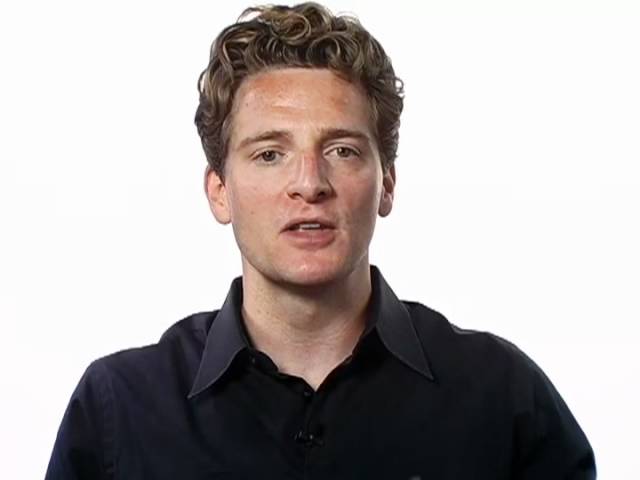 2:17Now Playing
Matthew Nisbet On Barack Obama as Master Communicator
New videos DAILY
Join Big Think Edge for exclusive videos
----------------------------------------------------------------------------------
Matthew Nisbet explains Obama’s appeal.
----------------------------------------------------------------------------------
Matthew C. Nisbet:
Matthew C. Nisbet, Ph.D. is Associate Professor of Communication Studies, Public Policy, and Urban Affairs at Northeastern University. Nisbet studies the role of communication and advocacy in policymaking and public affairs, focusing on debates over over climate change, energy, and sustainability. Among awards and recognition, Nisbet has been a Visiting Shorenstein Fellow on Press, Politics, and Public Policy at Harvard University's Kennedy School of Government, a Health Policy Investigator at the Robert Wood Johnson Foundation, and a Google Science Communication Fellow. In 2011, the editors at the journal Nature recommended Nisbet's research as “essential reading for anyone with a passing interest in the climate change debate,” and the New Republic highlighted his work as a “fascinating dissection of the shortcomings of climate activism."
----------------------------------------------------------------------------------
TRANSCRIPT:
Matthew Nisbet: Well, I think Barack Obama, what he does so well is that he translates compassion and empathy and emotion. Positive emotion is what Barack Obama does so well. He inspires, he motivates, in some ways he's—- you know, watching Hilary Clinton and Barack Obama on the primary trail, you saw two heavy weights really going at it in terms of campaign heavy weights and also a campaign team. Both of them were excellent communicators with excellent strategies. They needed to go in different directions based on their natural attributes. In some ways Barack Obama stole the theme of Bill Clinton in 1992, change and hope. And without that theme, Hilary Clinton had to go in a different direction about experience and really focusing on some of the types of fear appeals that Republicans have used so well in the past. But if you notice just like in a science debate, what the media was covering and what the public was most interested in was not in the complexity of the policy issues or the policy differences between these two candidates. It boiled down to information shortcuts and heuristics about character, experience, race, gender, religion and most of the strategic messaging and communication were around those attributes and appealing to those heuristics.
Question: What can we learn from the Monica Lewinsky scandal?
Matthew Nisbet: Well, first you have to- you have to be transparent with all the information. Don't be slow in producing the information, get it all out there. Why? Because if you don't have all the information out there, the media is going to engage in a media frenzy. He was caught in shading the truth and that became the story then and he probably would have been better off early on admitting that he had a "sexual relationship with that woman," instead of denying it.
Sentinel Indexing in Progress
Metadata and chapters are available. Claim extraction for this episode is pending.
All video content is delivered via YouTube embedded players in accordance with the YouTube Terms of Service. Sentinel provides research tools that promote discovery and accountability across political media.