Big Think
@bigthink·8.8M subscribers·10.1K videos
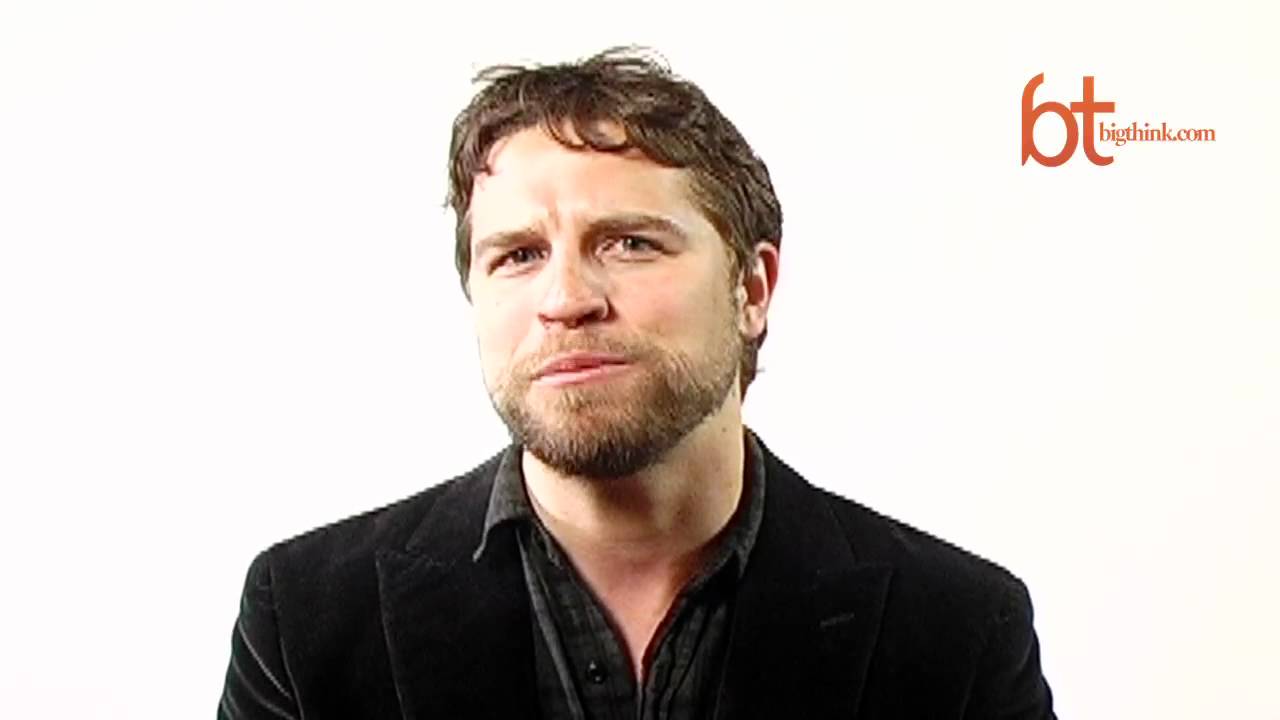
Michael Eric Dyson: Responsibility in the Black Community | Michael Eric Dyson | Big Think
Posted
April 24, 2012
Views
8,807
Likes
78
Comments
237
Engagement
April 24, 2012
8,807
78
237
3.58%
Every word spoken in this episode is indexed. Type any phrase to jump straight to the moment it was said.
Type any word or phrase that may have been spoken. Click a result to seek the player to that exact moment.
Try a name, a topic, or a quoted line
 5:40Now Playing
Michael Eric Dyson: Responsibility in the Black Community
New videos DAILY
Join Big Think Edge for exclusive videos
----------------------------------------------------------------------------------
Dyson on class responsibilities.
----------------------------------------------------------------------------------
Michael Eric Dyson:
Michael Eric Dyson, named by Ebony as one of the hundred most influential black Americans, is the author of sixteen books, including Holler if You Hear Me, Is Bill Cosby Right? and I May Not Get There With You: The True Martin Luther King Jr. He is currently University Professor of Sociology at Georgetown University. He lives in Washington, D.C.
----------------------------------------------------------------------------------
TRANSCRIPT:
Question: Does the upper-middle class black community have a responsibility to the lower class?
Michael Eric Dyson: I think there is no question that upper middle class black people have a responsibility to help those who are in the lower class. Now let me say at the outset that I certainly believe that the lion’s share of responsibility does not rest with the black middle class because the black middle class didn’t create the problem. The black middle class can’t solve it. Now it can help relieve it. It can help resolve it. It can help share its largesse so to speak. Look at what happened during Hurricane Katrina. Millions of well-to-do black people stepped up and addressed the lag between American ideals and American practices, of the failure to address the economic exigency of the people who were left behind in the Gulf Coast. The rallying together of the black elite to provide relief for their poorer brothers and sisters is important, but Martin Luther King Jr. said, “Let’s not confuse charity and justice.” Charity occurs because we are impelled by some internal dimension, some internally driven aspect of our character or persona to be charitable, to reach out and to help, but justice were it to exist would alleviate the necessity for charity. Charity is made possible by radical economic inequality. The reason Bill Gates, God bless him, can be so charitable toward inner city schools and other peoples who need it is because of the economic system so to speak that allows the radical proliferation of capital and the accumulation of capital in ways that ultimately don’t pan out to be fair, just and equal, because the people who have a better shot of getting that kind of cash are the people who have gotten that kind of cash or people who know the rituals, the insides. I’m not suggesting there are no self-made millionaires or billionaires in America. Of course there are, but what I am suggesting is that the lion’s share of wealth in this country is distributed among and between people who have wealth and the trickle-down effect is not nearly as powerful as one would like to see it, George Gilder and Ronald Reagan not withstanding. So there is no question that black people must deal with this strategically and in terms of the mainstream but rich black people and well-to-do black people must not use their bully pulpit as a means to extract from poor people promises to behave better while demonizing them. If anybody had a reason to demonize the poor, it was Martin Luther King Jr., but he didn’t do that.What did he do? He loved poor people. He went to live with them. He identified with them. He was mad at poverty and loved poor people. Some rich black people now tend to be mad at poor people and not mad at the poverty that produces the ill effects that they must endure. The remarkable thing is most poor people behave well. They don’t rob and kill and steal. There is a small percentage of people who do so and that small percentage of people is now meant to represent the main and that’s just not true. The majority of poor black people don’t steal, kill, rob, murder or destroy. What they end up doing is trying to make the best out of a bad situation and they create opportunities, if not for themselves for their children, as best they can, but we have to look at the policies that prevail in America that disallow or at least discourage this- the flourishing of the most vulnerable. So for instance I think that Dr. King would have had a huge problem with comedians of note traveling the country on the kind of self-help circuit castigating and casting aspersion against the vulnerable black poor. This is not the best way to engage the situation that they confront. There is no question that accountability is necessary, that personal responsibility is a vital element to the social reconstruction of the poor, but why begin with the poor?
Read the full transcript at
Sentinel Indexing in Progress
Metadata and chapters are available. Claim extraction for this episode is pending.
All video content is delivered via YouTube embedded players in accordance with the YouTube Terms of Service. Sentinel provides research tools that promote discovery and accountability across political media.