Big Think
@bigthink·8.8M subscribers·10.1K videos
Must-Have Jazz | Gary Giddins | Big Think
Posted
April 24, 2012
Views
2,411
Likes
53
Comments
3
Engagement
2.32%
April 24, 2012
2,411
53
3
2.32%
Every word spoken in this episode is indexed. Type any phrase to jump straight to the moment it was said.
Type any word or phrase that may have been spoken. Click a result to seek the player to that exact moment.
Try a name, a topic, or a quoted line
Episode Timeline
Every episode in order around the one you’re watching — click any card and the page flips straight to it.
 4:30Now Playing
Must-Have Jazz
New videos DAILY
Join Big Think Edge for exclusive videos
----------------------------------------------------------------------------------
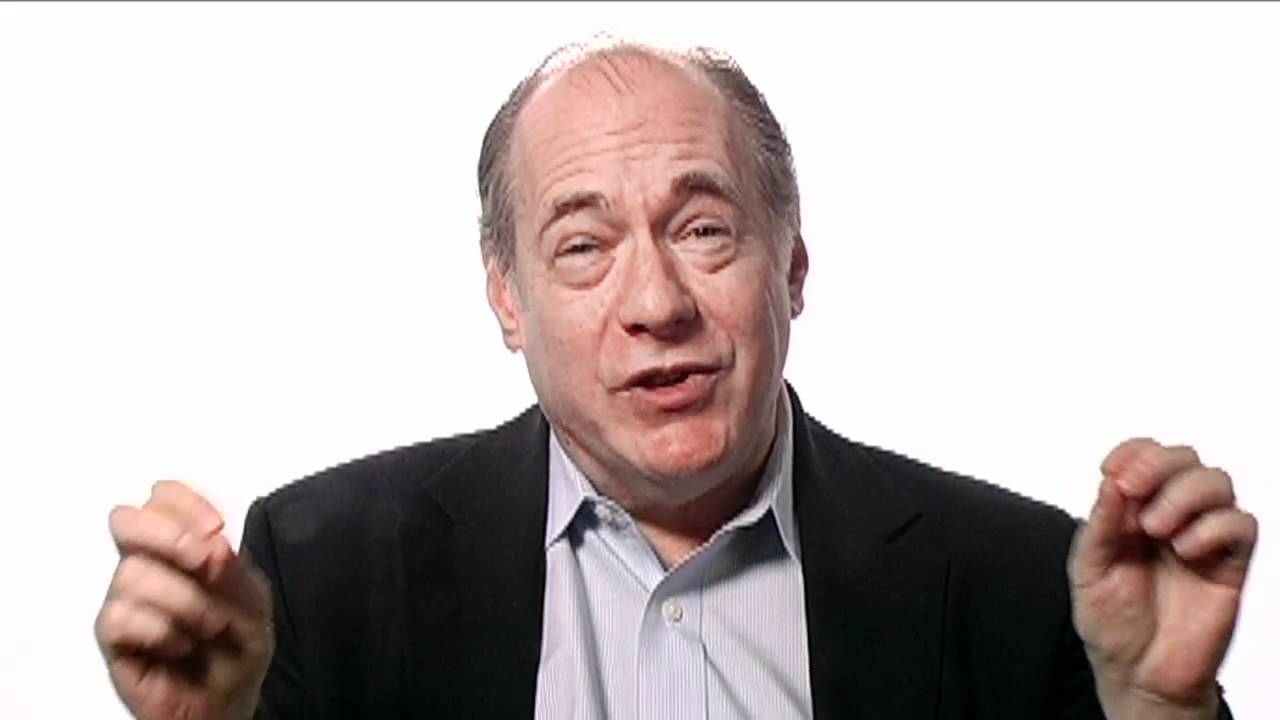
What are the five jazz albums everyone should own? It’s an impossible question, Gary Giddins says (then mentions six or seven).
----------------------------------------------------------------------------------
Gary Giddins:
Gary Giddins is an award-winning American jazz and film critic. His column "Weather Bird" appeared in The Village Voice from 1973 through 2003 and won six ASCAP Deems Taylor Awards for Excellence in Music Criticism. He has also won a Peabody Award for writing (for the PBS documentary "John Hammond: From Bessie Smith to Bruce Springsteen") and a Grammy Award (for his liner notes to "Sinatra: The Voice"). He currently writes a music column for Jazz Times. His latest book, "Jazz," was published by W. W. Norton in 2009.
----------------------------------------------------------------------------------
TRANSCRIPT:
Question: Which five jazz albums should everyone own?
Gary Giddins: Oh God, I wish I had a dollar for every time someone has asked me that question. And I never have an answer. I mean, I would say that Louis Armstrong is the be-all and the end-all. And you should certainly listen to something by Armstrong, the 1928 recordings, or one of the great recordings from the 1950's.
Of modern jazz, Ellington certainly. There should be an album by Ellington, probably a collection from the early 40's, or maybe a late work like—it's funny the other night, I was listening, just by coincidence I was listening to Stravinsky's “Pertrushka” and it reminded me of a piece, “The Bird of Delhi,” one movement of it, from Ellington's “Far East Suite.” And I played Ellington's ‘Far East Suite,” a piece I've always loved. And it's greater than I – and I always thought it was great, but it's greater, it's even greater than I thought and I really feel like now I want to write about it now in a completely different way.
So, if you start there, you'll know who Ellington is. It doesn't have to be with “Mood Indigo,” or some agreed-upon, received-wisdom masterpiece.
Everybody loves Miles Davis' “Kind of Blue.” So, be different, choose something else, like “Milestones,” or “My Funny Valentine,” or “Porky & Bess.” These are all such magnificent recordings. Monk, I think “Solo Monk,” no one can resist “Solo Monk.” When I was in school, the one thing that my rock n' roll friends who really didn't have any interest in jazz, they all ended up buying Monk. You just can't resist “Solo Monk.” Nobody can. It's just too happy and swingy and surprising and whimsical and witty and brilliant and it just makes you think about everything in a different way.
That's more than five already, I suppose. But you know, one of the things we say in this book is, my job is to be a jazz historian and a critic. So, I've got to listen to everything, but you don't. You may love the Swing Era; you may really get turned on by Ellington and Basie, and Jimmy Luncerin and Benny Goodman and Artie Shaw, Andy Kirk and all these fantastic swing bands. It doesn't mean you're necessarily going to love the avant-garde. I think one of the great periods is 1945 to 1949 when Bebop was really pure. I'm not aware of a bad record that was made in those four years by anybody.
But you may be completely obsessed with that and you may find traditional jazz or swing dull, and then at some point in your life you may go back to it and say, "Hey, now I get that." The point is to go with what really turns you on. People should not feel intimidated by received wisdom. You have to discover it yourself. If I tell you that Armstrong is great, it's meaningless; you have to hear it.
Every once in a while I meet somebody who's just had the Armstrong experience and it's always the same and I love it. Because at one point you think, well he's entertaining, or he's this or he's that. But then suddenly they get it the way they get Bach's “B-Minor Mass,” which to me was a benchmark as a kid. And suddenly they know. They know that this guy really was God. That there's nothing—Bing Crosby said that Armstrong is “the beginning and the end of music in America,” and he wasn't far wrong.
Read the full transcript at
Sentinel Indexing in Progress
Metadata and chapters are available. Claim extraction for this episode is pending.
All video content is delivered via YouTube embedded players in accordance with the YouTube Terms of Service. Sentinel provides research tools that promote discovery and accountability across political media.