Big Think
@bigthink·8.8M subscribers·10.1K videos
"You Gotta Hear This!" | Gary Giddins | Big Think
Posted
April 24, 2012
Views
541
Likes
7
Engagement
1.29%
April 24, 2012
541
7
1.29%
Every word spoken in this episode is indexed. Type any phrase to jump straight to the moment it was said.
Type any word or phrase that may have been spoken. Click a result to seek the player to that exact moment.
Try a name, a topic, or a quoted line
Episode Timeline
Every episode in order around the one you’re watching — click any card and the page flips straight to it.
 6:42Now Playing
"You Gotta Hear This!"
New videos DAILY
Join Big Think Edge for exclusive videos
----------------------------------------------------------------------------------
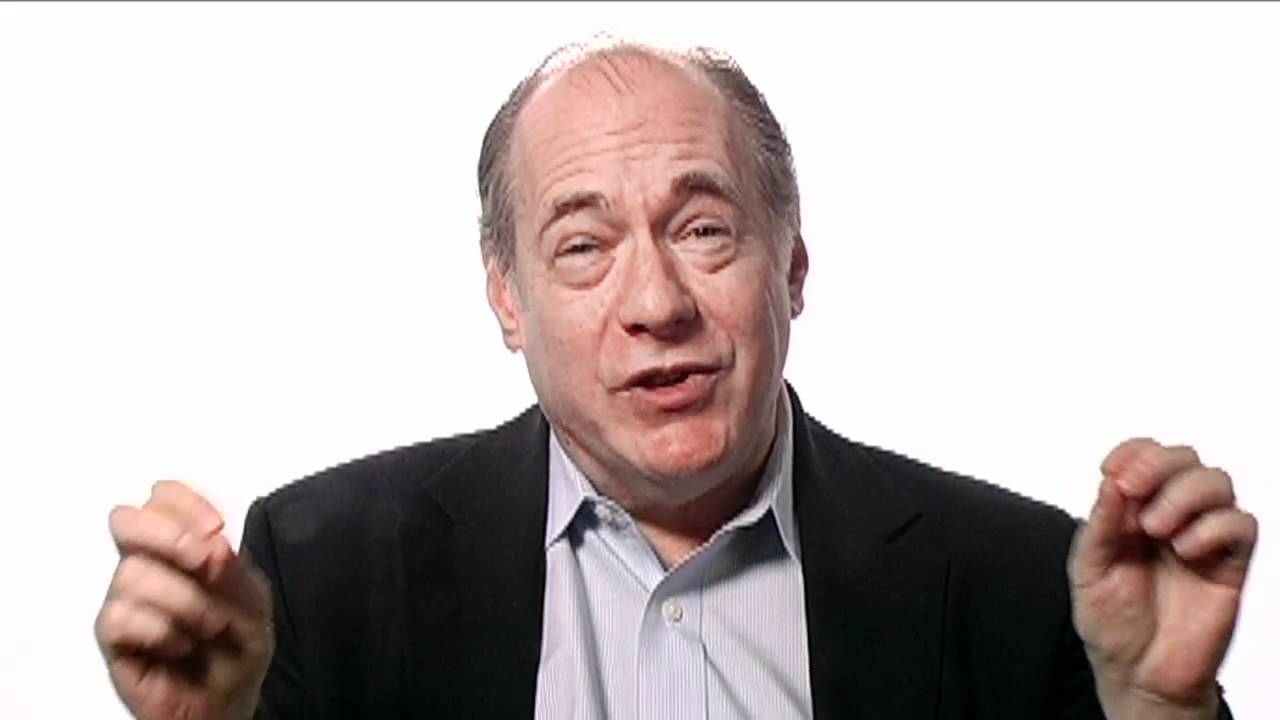
“Jazz” author Gary Giddins explains why critics should err on the side of gushing, not bashing.
----------------------------------------------------------------------------------
Gary Giddins:
Gary Giddins is an award-winning American jazz and film critic. His column "Weather Bird" appeared in The Village Voice from 1973 through 2003 and won six ASCAP Deems Taylor Awards for Excellence in Music Criticism. He has also won a Peabody Award for writing (for the PBS documentary "John Hammond: From Bessie Smith to Bruce Springsteen") and a Grammy Award (for his liner notes to "Sinatra: The Voice"). He currently writes a music column for Jazz Times. His latest book, "Jazz," was published by W. W. Norton in 2009.
----------------------------------------------------------------------------------
TRANSCRIPT:
Question: How has your criticism changed over the years?
Gary Giddins: Yeah, sure. The early years of my work, I have to say, I often felt guilty because I was having such a good time and I couldn't believe I was allowed to make a living, first of all, listening to this music that I loved and writing about it. And there is something bizarre about spending your day exploring the obsessions of your adolescence. But as you get older, you want to do different things. At first, you're sort of delivering yourself of everything you know, and a part of your early writing; and I notice this in young critics all the time and I'm certainly guilty of this, is that there is a bit of showing off. Because you just entered the stage and you want to prove that you have something. So, sometimes you are making statements that are louder than they need to be; ‘this is too many masterpieces,’ and ‘this is beneath contempt,’ and you're not really dealing with art in the right proportion.
For me, one way it changed was that I was primarily concerned with live performance for many years. I loved writing about recordings, but I was out there on average four nights a week for the first 15 years, I would say, when I was at the “Voice.” And most of the pieces that I did were about what I had heard live. And I had invented this job for myself at the “Voice.” It didn't really exist in any other publication.
I never really wanted to be a daily critic who goes out every night and writes 300 word reviews, I wanted to write essays. And that gave me the luxury to be able to go out and if it was lousy, I could just say, well the hell with that, I’ll go to hear something else, or, I'll go tomorrow night; I as writing for a weekly. And I only wanted to write about things that interested me as a writer as well as, as a listener.
But then, my daughter was born in the late '80's, and suddenly I started resenting being out. I wanted being home; I wanted to be able to put her to sleep. You know, you don't get those chances again. And so without even realizing it at first, I started going out less and I started doing more and more columns about recordings. In the course of that I began—my aesthetic changed a lot I think because, first of all, I was exploring a lot of recordings that I thought I knew cold, but as you get older they change as you change and you begin to hear different things. So, that was one. And I still wrote live about important concerts and certainly festivals.
But at the same time, something else changed with me and that's this; the “Village Voice,” once I had got my column, after I'd been there for a year, I had a column for 30 years and I wrote it every other week. Eighteen hundred words for the most part and occasionally down to 1,600 or something like that. It was my page and nobody ever told me how to fill it. After a while, you begin to realize that spending 1,800 words, telling people not to buy a recording that they've never heard of in the first place, is stupid. It's a waste of your time, it doesn't tell the reader anything. So, I became much more of an enthusiast. I became much more of a critic who wants to tell you, "You gotta hear this!" That's what I kept looking for.
Now, I listen to things blind. I have an assistant and she puts – I have one of those CD players that you can put five discs in. She puts the discs in and keeps the boxes in the other room and I go through them with the remote and if I see something I like and usually I recognize it, but frequently I don’t, and in that way, frequently you're surprised. People that you think, I don't want to bother with, will sometimes grab you, and other times, well, it can go either way.
Question: Do you worry more about positive or negative reviews?
Read the full transcript at
Sentinel Indexing in Progress
Metadata and chapters are available. Claim extraction for this episode is pending.
All video content is delivered via YouTube embedded players in accordance with the YouTube Terms of Service. Sentinel provides research tools that promote discovery and accountability across political media.