Big Think
@bigthink·8.8M subscribers·10.1K videos
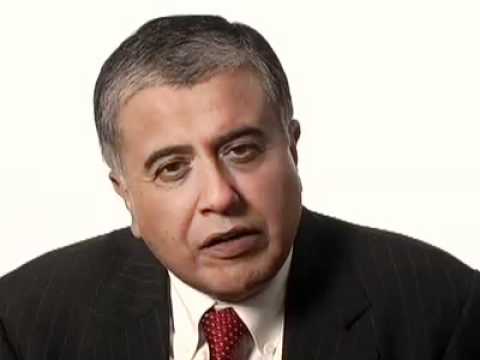
Nadine Strossen: Is privacy a 20th-century concern? | Big Think
Posted
April 24, 2012
Views
286
Likes
4
Engagement
1.40%
April 24, 2012
286
4
1.40%
Every word spoken in this episode is indexed. Type any phrase to jump straight to the moment it was said.
Type any word or phrase that may have been spoken. Click a result to seek the player to that exact moment.
Try a name, a topic, or a quoted line
Episode Timeline
Every episode in order around the one you’re watching — click any card and the page flips straight to it.
 3:08Now Playing
Nadine Strossen: Is privacy a 20th-century concern?
New videos DAILY
Join Big Think Edge for exclusive videos
----------------------------------------------------------------------------------
Strossen looks to Louis Brandeis’ very broad definition of privacy.
----------------------------------------------------------------------------------
Nadine Strossen:
Nadine Strossen is the John Marshall Harlan II Professor of Law at New York Law School. From 1991 through 2008, she served as President of the American Civil Liberties Union, the first woman to head the nation’s largest and oldest civil liberties organization. Her most recent book is HATE: Why We Should Resist It With Free Speech, Not Censorship.
----------------------------------------------------------------------------------
TRANSCRIPT:
Question: Is privacy a 20th-century concern?
Nadine Strossen: I don’t know exactly what he means by that even though I have read his writing and I have debated him, but if he is saying that it doesn’t exist as a constitutional right, it shouldn't exist as a constitutional right, it doesn’t exist as a technological reality, I disagree with any or all of those propositions. I would go back to a judge that I admire even more than I admire Judge Posner, namely Louis Brandeis in a famous case in the early 20th century who said and he said it far more eloquently than my paraphrase, but basically that privacy is the greatest right…the one that is most valued by people and he had this very encompassing concept of privacy, which I share and it is…but he summed it up very succinctly when he said "the right to be let alone" and I think that is really a nice way of summarizing pretty much all of civil liberties and human rights, which is that you as an individual have the right to self determination and autonomy free of intrusion by the government or for that matter by private sector, interlopers, free of intrusion in any way, whether it is intrusion in watching you, whether it is intrusion in listening to you, monitoring you, whether it is intrusion in interfering with your ability to make private decisions for yourself and they are all interrelated and I think it is no coincidence that George Orwell's 1984, which I re-read every few years and it really stands the test of time and it is one of those books that takes on new and enhanced meaning every few years that I read it in light of what has happened since the last time I read it. If people who haven’t read it recently might not remember this, it is not that the government is engaging in torture or abuse or kangaroo court military commissions or some of the dramatic violations we are seeing now, the damage is done simply by the omnipresence of Big Brother and the notice that Big Brother is watching you. That is doesn’t cause killings, it doesn’t cause even the physical or psychological damage of torture, but it is the dehumanization, the loss of individual dignity when you know that you are never going to get beyond the government's radar screen and that has a chilling impact on how you conduct your life. You know what you read, what you see, whom you see, whom your relationship, so I couldn't disagree with him more.
Sentinel Indexing in Progress
Metadata and chapters are available. Claim extraction for this episode is pending.
All video content is delivered via YouTube embedded players in accordance with the YouTube Terms of Service. Sentinel provides research tools that promote discovery and accountability across political media.