Big Think
@bigthink·8.8M subscribers·10.1K videos
Rational Medicine: A Big Think Interview With Ron Dixon About Reinventing Healthcare | Big Think
Posted
April 24, 2012
Views
409
April 24, 2012
409
Every word spoken in this episode is indexed. Type any phrase to jump straight to the moment it was said.
Type any word or phrase that may have been spoken. Click a result to seek the player to that exact moment.
Try a name, a topic, or a quoted line
See what was published immediately before and after this episode.
 12:55Now Playing
Rational Medicine: A Big Think Interview With Ron Dixon About Reinventing Healthcare
New videos DAILY
Join Big Think Edge for exclusive videos
----------------------------------------------------------------------------------
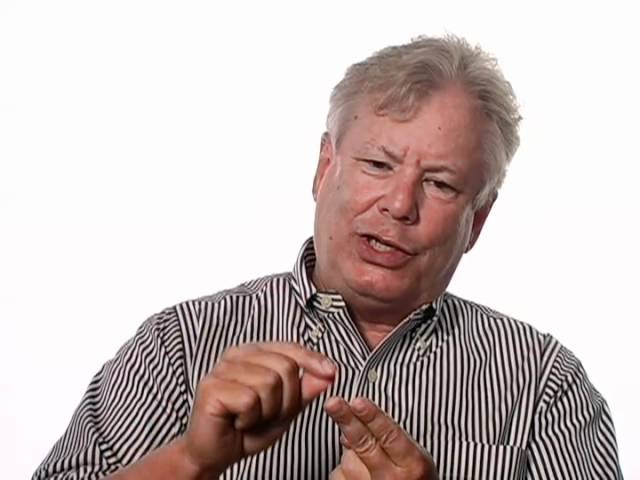
A conversation with Associate Medical Director, Massachusetts General Hospital, about incentivizing care givers to spend extra time with patients and focus on health outcomes.
----------------------------------------------------------------------------------
Ronald Dixon:
Ronald Dixon, M.D., M.A, is the Associate Medical Director at Massachusetts General Hospital (MGH) Beacon Hill Internal Medicine Associates, and the Director of the Virtual Practice Pilot at Massachusetts General Hospital.
Dr. Dixon completed his undergraduate work at McGill University, graduate work in clinical neuropsychology at University of Buffalo, and medical training at Dartmouth Medical School. He completed residency training at Massachusetts General Hospital. He recently completed an Administrative Fellowship with the Massachusetts General Physicians Organization (MGPO), and currently serves as a Project Director for the MGPO.
Dr. Dixon’s interests are in alternative methods of health care delivery, specifically relating to general internal medicine. Dr. Dixon sits on a number of committees designed to make care delivery more efficient and effective for patients and physicians. He is actively pursuing clinical practice based research in this domain, supported by the MGH and the Center for the Integration of Medicine and Innovative Technology (CIMIT). His current projects include ‘Virtual Visits in General Medicine,’ ‘Primary Care Kiosks,’ ‘Low Acuity Clinics,’ and ‘Remote Physiological Monitoring in Patients at Risk for Chronic Disease.’ Dr. Dixon’s clinical interests are disease prevention, behavior management, chronic disease management, and care of patients with malignancies.
----------------------------------------------------------------------------------
TRANSCRIPT:
Topic: Fixing healthcare.
Ron Dixon: There are a number of things that could address this problem. I think the primary one is the role of so-called primary care as the front line for healthcare delivery, really needs to be reinvented. There are several opportunities to innovate around what a so-called primary care physician does.
Unfortunately since the current model rewards physicians for actually doing things, such as procedures, as opposed to thinking about things and coordinating things, we don’t really have a workforce that is engaged in thinking innovatively about primary care and primary care delivery.
If you are able to start thinking about paying for efficiency, paying for so-called performance, paying for coordination of care and paying for a person who acts as the pinpoint for the patient, paying in a way for that relationship between that primary care provider and the patient, then you would have a way to build some efficiencies into the system.
Question: What is patient-centric care and why does it matter?
Ron Dixon: I think patient-centric care is really the ethos of primary care. We as general internists, pediatricians and family doctors are really interested in doing what’s best for the patient. I think that can become rather difficult given the pressures put upon us by folks who actually pay for the care, because sometimes they might be more interested in what is the actual cost of providing care for a population.
There are two counterintuitive forces at hand here. You want the best care for your patient who is sitting in front of you, who might be a diabetic, but then you also want the best care for the population of diabetics within a practice.
Primary care doctors don’t really have the tools to provide both, and what we end up doing is providing patient-centric care, but not in the way that we would like to do it, simply because we don’t have the time to really sit and talk with patients and think about informed decisions. We want patients to have the information and then be able to make shared decisions with the primary care doctor as the person who’s sharing that decision with the patient.
So, that would really be what patient-centric care is about. Unfortunately, in today’s environment we don’t typically have time to practice it.
Well, right now again we’re paid for what we do, which is actually perverse incentive, so it makes us do more. That’s one of the reasons I think you’re seeing the cost of healthcare rise 8% in terms of inflation per year. Now, that obviously can’t continue, and Obama has some proposals on the table to reduce that increase by 1.5% per year over the next few years.
Read the full transcript at
Sentinel Indexing in Progress
Metadata and chapters are available. Claim extraction for this episode is pending.
All video content is delivered via YouTube embedded players in accordance with the YouTube Terms of Service. Sentinel provides research tools that promote discovery and accountability across political media.